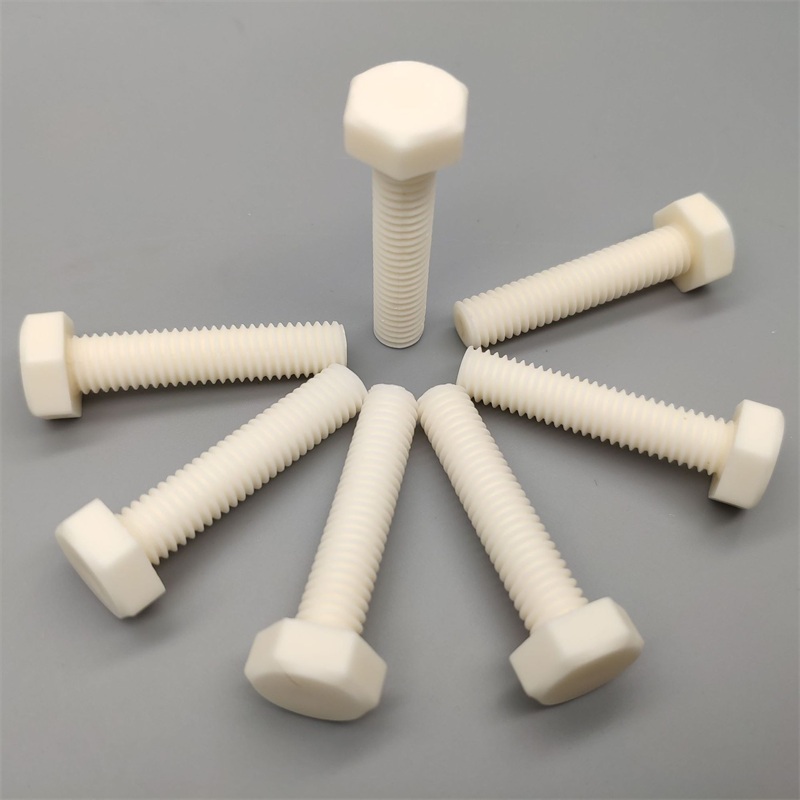
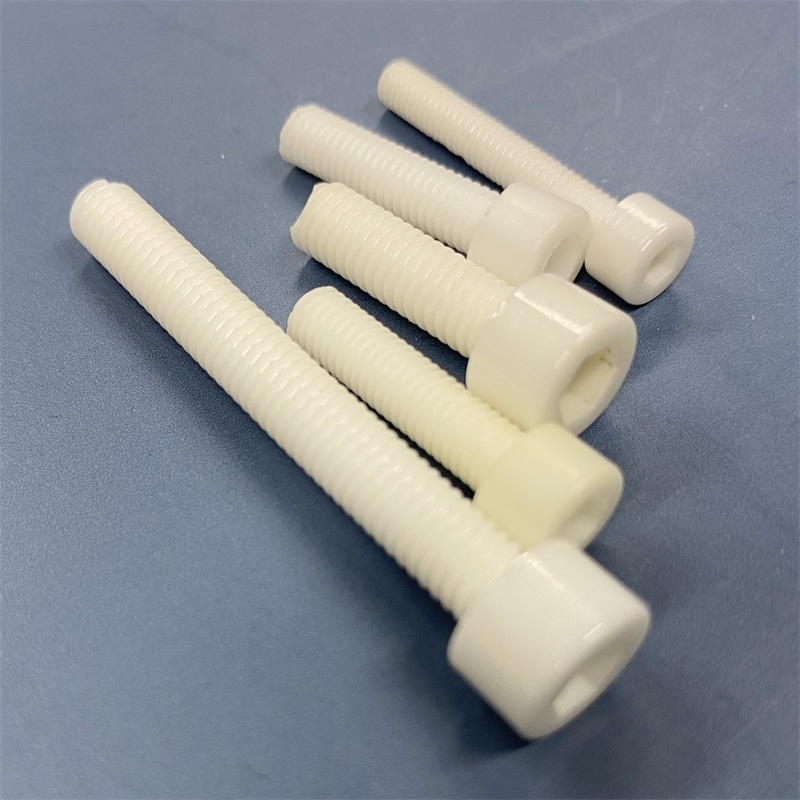
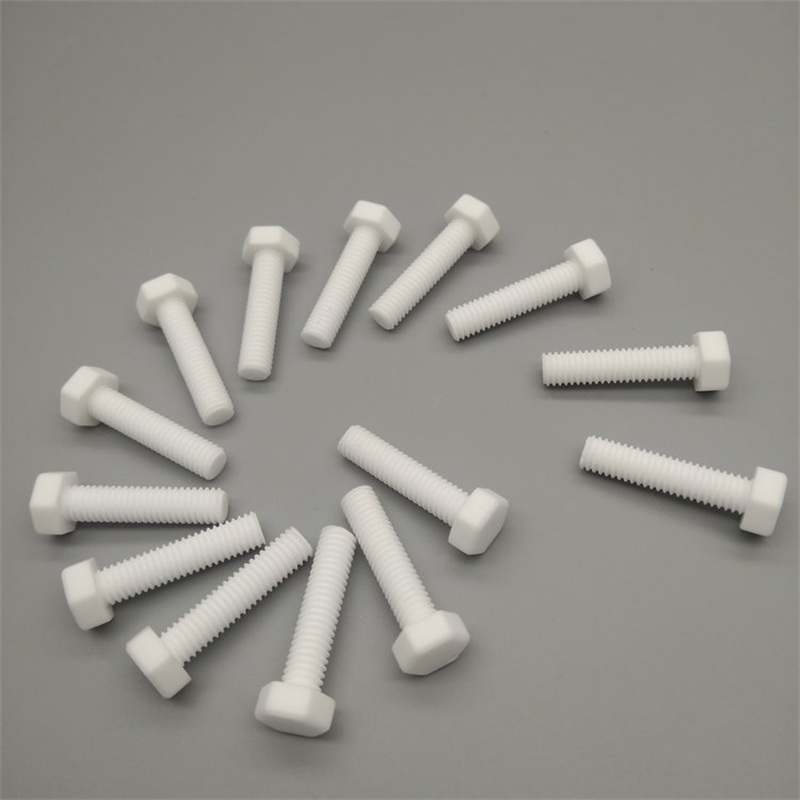
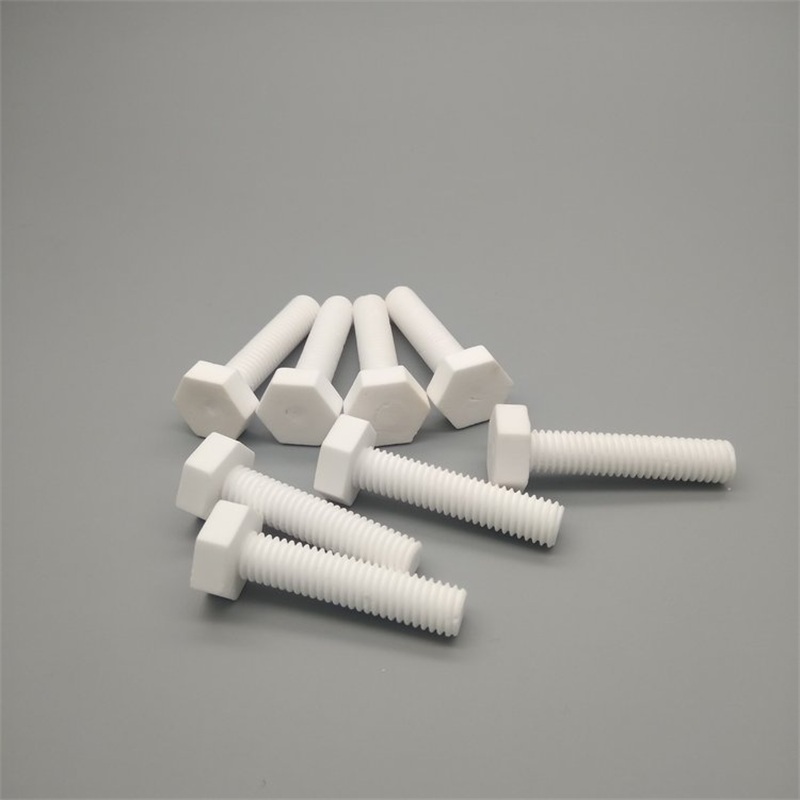
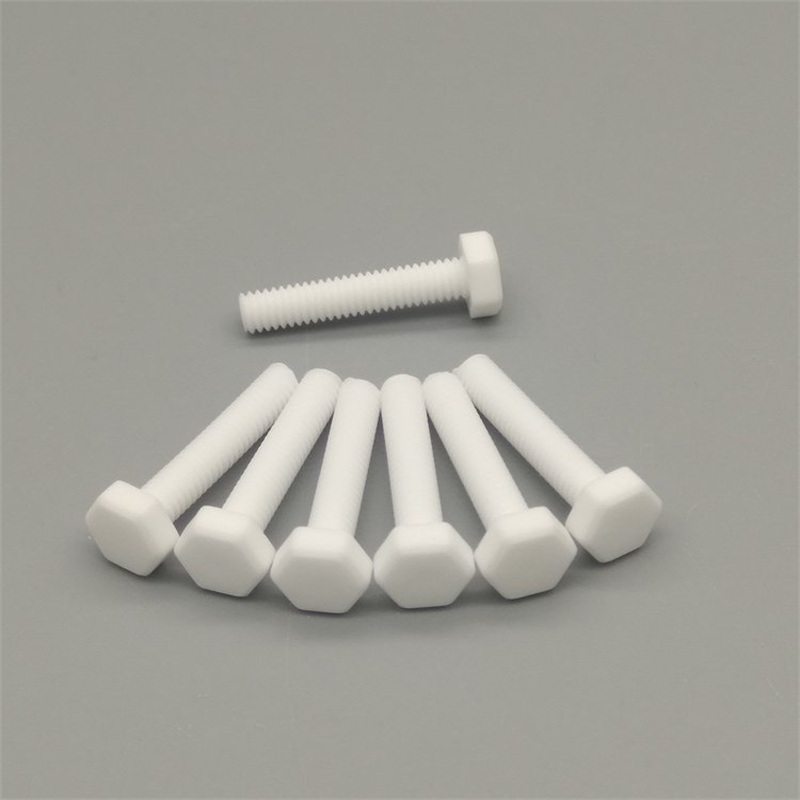
Zirconia Ceramic Screw
Zirconia ceramic screws are precision fasteners machined from zirconium dioxide (ZrO₂), typically in its yttria-stabilized form (Y-TZP). They represent one of the most mechanically robust ceramic fastening solutions available for demanding industrial applications. Unlike alumina ceramic screws, which prioritize hardness and dielectric strength, zirconia screws are selected primarily for their exceptional fracture toughness — a property that makes them uniquely suited for structural fastening where mechanical shock and cyclic loading are concerns.
The growing adoption of zirconia ceramic screws reflects a broader trend in advanced engineering: the need for fasteners that can operate in extreme chemical, thermal, and electrical environments where metallic fasteners fail. From semiconductor processing equipment to biomedical implants, these components serve critical roles that demand both material expertise and careful design consideration.
What Is a Zirconia Ceramic Screw?
Zirconia ceramic screw is a threaded fastener fabricated from zirconium dioxide ceramic, most commonly in its yttria-tetragonal polycrystal (Y-TZP) form. The “yttria-stabilized” designation refers to the addition of approximately 3 mol% yttrium oxide (Y₂O₃), which stabilizes the tetragonal crystal phase at room temperature. This phase stabilization is the foundation of zirconia’s remarkable mechanical performance.
These screws are produced through a multi-step manufacturing process: ceramic powder is injection molded or cold-isostatically pressed into near-net shapes, sintered at temperatures typically between 1450°C and 1550°C, and then precision-ground or machined to achieve final thread geometry and dimensional tolerances.
Key Takeaways:
Zirconia screws are made from Y-TZP (3Y-TZP) ceramic
They offer the highest fracture toughness among common structural ceramics
Thread geometry is achieved through precision grinding after sintering
They serve as alternatives to metal fasteners in corrosive, high-temperature, or electrically sensitive environments
Key Material Properties
Understanding why engineers specify zirconia ceramic screws requires examining the material properties that distinguish Y-TZP from other engineering ceramics.
Mechanical Strength and Toughness
Zirconia’s most distinctive characteristic is its transformation toughening mechanism. When a microcrack begins to propagate through the material, the stress field at the crack tip triggers a phase transformation from the metastable tetragonal phase to the monoclinic phase. This transformation is accompanied by a volume expansion of approximately 3–5%, which creates compressive stresses that effectively clamp the crack shut and resist further propagation.
This mechanism gives zirconia a fracture toughness (K_IC) in the range of 5–7 MPa·m^0.5, which is substantially higher than alumina (3–4 MPa·m^0.5) and approaches the toughness of some cast irons. For a ceramic fastener, this translates directly to improved resistance against thread stripping, impact damage during assembly, and fatigue failure under cyclic loading.
Hardness and Wear Resistance
With a Vickers hardness of approximately 1200–1400 HV, zirconia is significantly harder than most metals and provides excellent resistance to galling and thread wear. This is particularly valuable in applications where screws are repeatedly assembled and disassembled, as the threads maintain their geometry over extended service life.
Chemical Inertness
Y-TZP exhibits outstanding chemical resistance across a wide pH range. It is essentially immune to attack by alkalis, resists most acids (with the exception of hydrofluoric acid and hot concentrated sulfuric acid), and does not corrode in saline or biological environments. This makes zirconia screws suitable for chemical processing equipment, marine applications, and implantable medical devices.
Thermal Characteristics
Zirconia has relatively low thermal conductivity (approximately 2–3 W/m·K), which makes it an effective thermal barrier. Its coefficient of thermal expansion (approximately 10.5 × 10⁻⁶/K) is closer to that of many metals than alumina is, which can simplify thermal management in hybrid metal-ceramic assemblies. The maximum continuous service temperature is typically around 300–400°C for structural applications, though the material itself remains stable to much higher temperatures.
Electrical Properties
Zirconia is an electrical insulator at room temperature, with a dielectric constant of approximately 25–30 and dielectric strength exceeding 10 kV/mm. However, it becomes ionically conductive at elevated temperatures (above approximately 600°C), a property exploited in oxygen sensor applications.
Advantages of Zirconia Ceramic Screws
The selection of zirconia ceramic screws over metallic or other ceramic alternatives is typically driven by a combination of the following advantages:
Superior fracture toughness among structural ceramics, reducing the risk of catastrophic brittle failure during installation or service
Complete corrosion immunity in environments that would rapidly degrade stainless steel, titanium, or nickel alloy fasteners
Non-magnetic and electrically insulating, essential for MRI-compatible equipment, semiconductor processing, and high-voltage applications
Biocompatibility — zirconia is widely accepted for long-term implantation in the human body (ISO 13356)
Low thermal conductivity provides thermal isolation between joined components
High hardness ensures thread integrity over repeated assembly cycles
Low density (approximately 6.0 g/cm³) — lighter than steel fasteners, though heavier than alumina (3.9 g/cm³)
Limitations and Design Constraints
No engineering material is without trade-offs, and zirconia ceramic screws have specific limitations that must be addressed during design:
Brittle failure mode — despite its high toughness relative to other ceramics, zirconia remains a brittle material. Over-torquing during assembly can cause sudden fracture without plastic deformation warning
Low-temperature degradation (LTD) — also known as “aging,” this phenomenon involves gradual tetragonal-to-monoclinic phase transformation at the surface when exposed to moisture at temperatures between 100–400°C. High-quality, fine-grained Y-TZP formulations with optimized yttria content and grain size significantly mitigate this risk
Limited high-temperature structural use — above approximately 400°C, the transformation toughening mechanism becomes less effective, and creep may occur under sustained load
Machining constraints — threads and complex geometries must be produced by grinding or EDM (electrical discharge machining is not applicable to insulating ceramics), which increases cost compared to metal fasteners
Cost — zirconia screws are significantly more expensive than metal equivalents due to the complexity of ceramic processing and finishing
Typical Grades and Material Options
In industrial practice, zirconia ceramic screws are most commonly produced from 3Y-TZP (3 mol% yttria-stabilized tetragonal zirconia polycrystal). This grade offers the optimal balance of strength, toughness, and aging resistance for structural fastener applications.
Other zirconia variants exist but are less commonly used for screws:
8Y-FSZ (8 mol% yttria fully stabilized zirconia) — cubic phase, higher ionic conductivity but lower mechanical strength; used primarily in solid oxide fuel cells
Mg-PSZ (magnesia partially stabilized zirconia) — larger grain structure, higher thermal shock resistance, but lower flexural strength than Y-TZP
Ce-TZP (ceria-stabilized zirconia) — exceptionally high fracture toughness (up to 10–15 MPa·m^0.5) but lower hardness and strength; occasionally specified for specialized impact-resistant applications
For standard fastener applications, 3Y-TZP with a density exceeding 99.5% theoretical and an average grain size below 0.5 μm represents the industry-standard specification.
Available Shapes and Common Dimensions
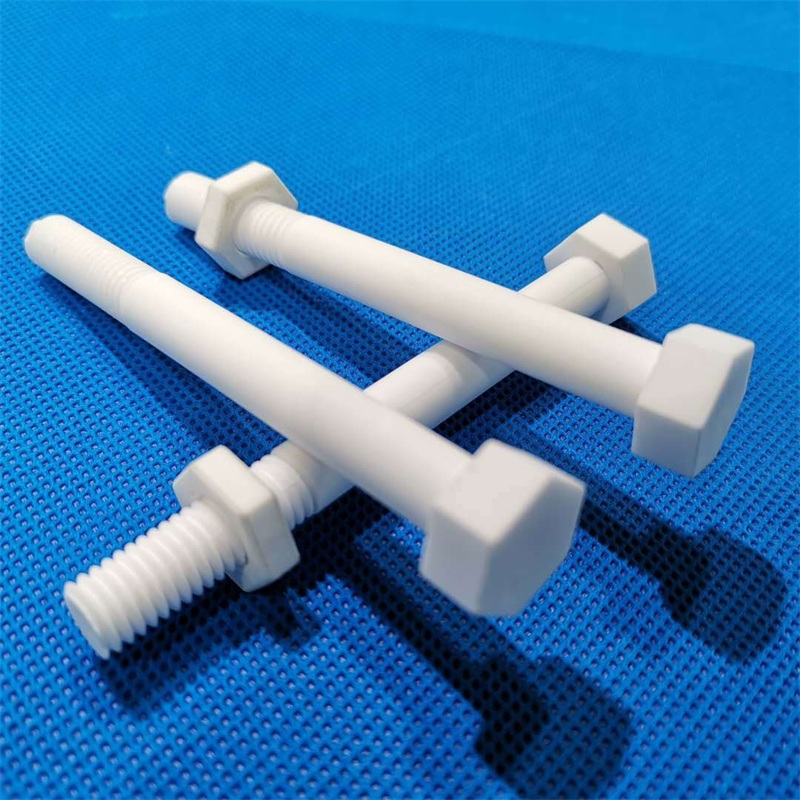
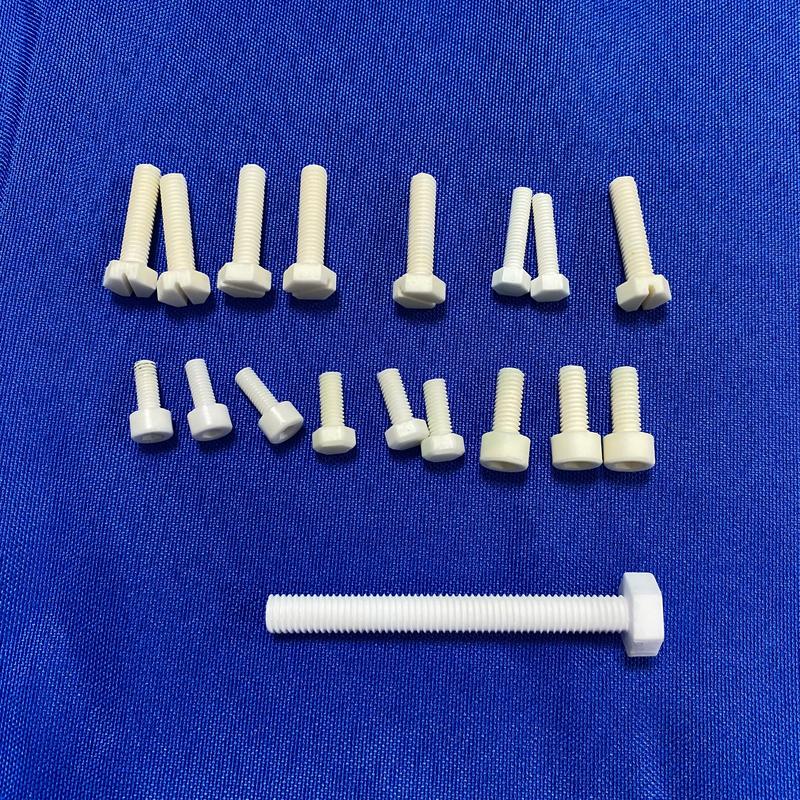
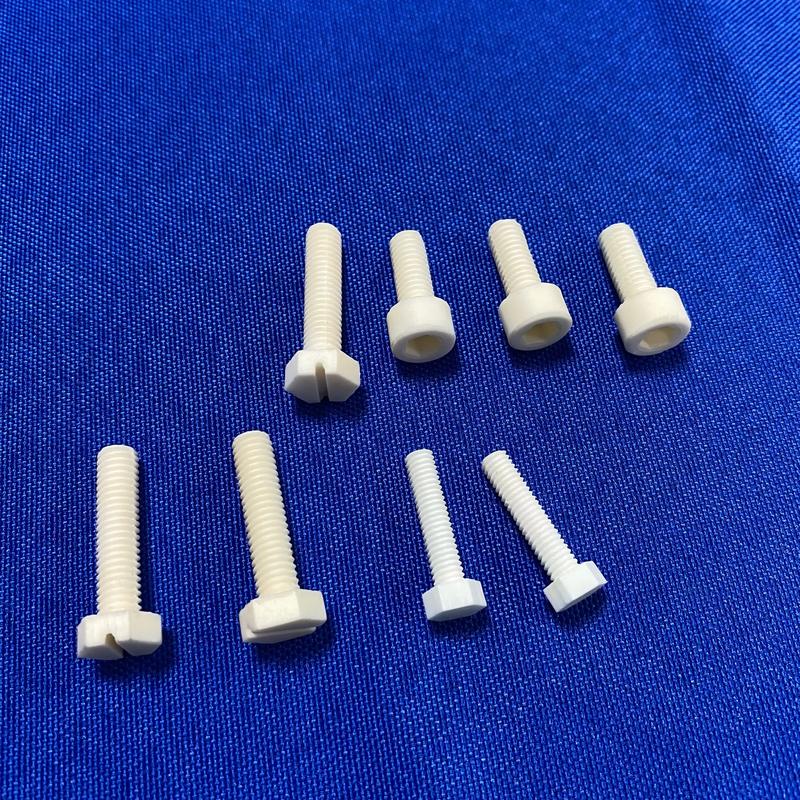
Zirconia ceramic screws are available in several standard head configurations, though the range is narrower than that of metal fasteners due to the constraints of ceramic processing:
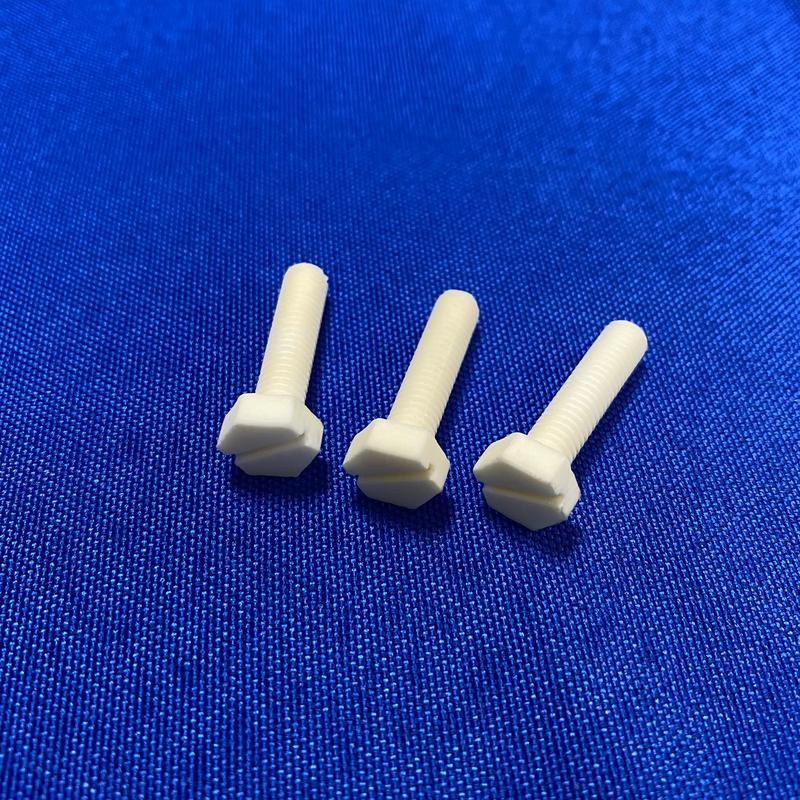
Slotted head — simple geometry, compatible with flat-blade drivers
Phillips/cross-head — more common in precision applications
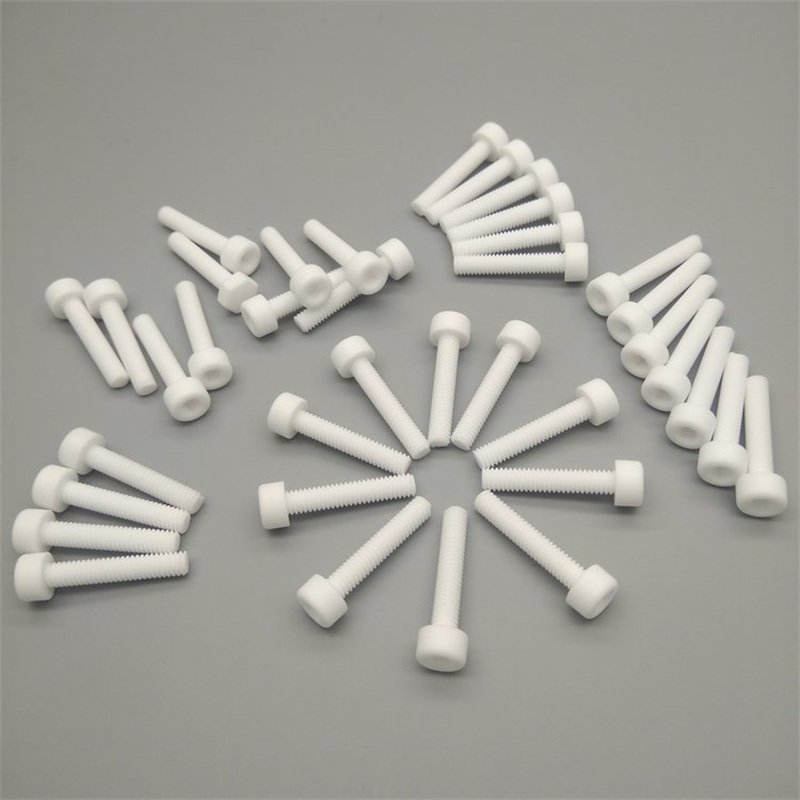
Hex socket (Allen) — preferred for higher torque applications where driver engagement is critical
Flat head (countersunk) — used when flush mounting is required
Pan head and button head — for general-purpose fastening
Common thread sizes in industrial applications include M2, M2.5, M3, M4, M5, and M6 metric threads. Lengths typically range from 4 mm to 30 mm for standard catalog items, though custom lengths and non-standard thread pitches can be produced. Imperial sizes such as #4-40, #6-32, #8-32, and 1/4″-20 are also available from specialized ceramic component producers.
Real-World Applications
Semiconductor Manufacturing Equipment
In wafer processing tools, zirconia screws are used to secure components within plasma etch chambers, CVD (chemical vapor deposition) reactors, and load-lock assemblies. The combination of high purity, particle-free surfaces, and resistance to aggressive plasma chemistries (CF₄, SF₆, Cl₂) makes zirconia an ideal choice. Metallic fasteners in these environments risk contamination through sputtering and corrosion, which can compromise wafer yield.
Biomedical Implants and Surgical Instruments
Zirconia’s biocompatibility, radiopacity, and aesthetic properties (white color) have led to its use in orthopedic fixation screws, dental implant components, and surgical instrument fasteners. The material’s high strength and toughness allow it to withstand the mechanical demands of load-bearing implant applications.
Chemical Processing
In aggressive chemical environments — such as hydrochloric acid handling systems, alkaline process vessels, and halogen service — zirconia screws provide reliable fastening where PTFE-lined or Hastelloy fasteners might otherwise be specified. The ceramic’s complete chemical inertness eliminates concerns about crevice corrosion and stress corrosion cracking.
Electrical and Electronic Applications
Zirconia screws serve as insulating standoffs and fasteners in high-voltage equipment, laser systems, and RF (radio frequency) assemblies where metallic fasteners would introduce unwanted conductivity, eddy currents, or magnetic interference.
Material Comparison: Zirconia vs. Alumina vs. Metal Fasteners
Selecting the appropriate fastener material requires balancing multiple competing requirements. The following comparison highlights the key differentiators:
Fracture Toughness: Zirconia (5–7 MPa·m^0.5) significantly outperforms alumina (3–4 MPa·m^0.5) and silicon nitride (5–6 MPa·m^0.5). Among metals, titanium alloys (50–100 MPa·m^0.5) and stainless steels (100+ MPa·m^0.5) remain far tougher, but at the cost of corrosion resistance and electrical insulation.
Hardness: Alumina (1500–1900 HV) is harder than zirconia (1200–1400 HV), making it preferable when abrasive wear resistance is the primary concern. However, for fastener applications where impact resistance during assembly matters, zirconia’s toughness advantage often outweighs alumina’s hardness advantage.
Density: Alumina (3.9 g/cm³) is significantly lighter than zirconia (6.0 g/cm³). For weight-sensitive applications such as aerospace, alumina may be preferred unless the toughness requirement dictates zirconia.
Thermal Shock Resistance: Silicon nitride (thermal shock parameter ΔT > 500°C) far exceeds zirconia (ΔT ≈ 200–300°C) in thermal shock resistance. If rapid temperature cycling is expected, silicon nitride fasteners may be more appropriate.
Cost: Alumina screws are generally the least expensive ceramic fasteners. Zirconia screws carry a moderate premium due to more complex processing requirements. Metal screws (stainless steel, titanium) are typically less expensive than either ceramic option.
Design Considerations for Engineers
When specifying zirconia ceramic screws in a design, several critical factors must be addressed:
Torque Control
The most common cause of zirconia screw failure is over-torquing during assembly. Unlike metal fasteners, which yield plastically and provide visual or tactile warning before failure, zirconia screws fracture suddenly. Engineers should:
Establish and strictly enforce maximum torque specifications (typically 20–40% of the equivalent metal fastener torque)
Use calibrated torque drivers or torque-limiting tools
Consider using torque-angle methods for critical joints
Account for friction coefficient variations (μ ≈ 0.3–0.5 for ceramic-to-ceramic contact)
Thread Engagement
Adequate thread engagement length is essential. As a general rule, the engagement length should be at least 1.5 times the nominal screw diameter for ceramic-to-ceramic joints and 1.0 times for ceramic-to-metal joints. Insufficient engagement concentrates stress on the first few threads and dramatically increases the risk of thread stripping.
Thermal Expansion Mismatch
When zirconia screws are used to join dissimilar materials, differential thermal expansion can generate significant clamping forces during temperature cycling. The CTE of zirconia (10.5 × 10⁻⁶/K) is relatively high for a ceramic, which helps when mating with metals but requires careful analysis when joining to low-CTE materials such as silicon or carbon fiber composites.
Surface Finish and Mating Surfaces
The mating surfaces should be smooth and flat to distribute clamping loads evenly. Rough or uneven surfaces create stress concentrations that can initiate cracks in the ceramic screw head or threads.
Frequently Asked Questions
What is the maximum torque for a zirconia ceramic screw?
The maximum installation torque depends on screw size, thread pitch, and the materials being joined. As a general guideline, M3 zirconia screws are typically torqued to 0.3–0.5 N·m, while M5 screws may accept 0.8–1.2 N·m. These values are approximate and should be validated through application-specific testing. The critical principle is that zirconia screws must never be torqued to the same values as equivalent metal fasteners. Engineers should always use calibrated torque tools and establish conservative torque limits based on joint analysis and test data.
Can zirconia ceramic screws be used at high temperatures?
Zirconia ceramic screws can operate at elevated temperatures, but their structural performance degrades above approximately 300–400°C under sustained mechanical load. The transformation toughening mechanism that gives zirconia its high fracture toughness becomes less effective at elevated temperatures. For applications requiring continuous service above 400°C, silicon nitride or silicon carbide fasteners may be more appropriate. However, for intermittent exposure to higher temperatures or applications where the screw carries minimal structural load, zirconia can function at temperatures up to 800–1000°C.
How does zirconia compare to alumina for screw applications?
Zirconia offers approximately twice the fracture toughness of alumina, making it significantly more resistant to impact damage and crack propagation during assembly. This makes zirconia the preferred choice when screws must withstand mechanical shock or when installation conditions are difficult to control. Alumina, however, offers higher hardness, lower density, better high-temperature stability, and lower cost. For applications where the screw is installed once in a controlled environment and never subjected to impact, alumina may be the more economical choice. The decision ultimately depends on whether toughness or cost/weight is the governing design constraint.
Are zirconia ceramic screws biocompatible?
Yes. Yttria-stabilized zirconia is widely recognized as biocompatible and is used in orthopedic and dental implant applications. It meets the requirements of ISO 13356 (standard specification for zirconium dioxide-based ceramic materials for surgical implants). The material exhibits excellent tissue compatibility, does not provoke adverse immune responses, and maintains its mechanical properties in the physiological environment. Zirconia screws are used in bone fixation, dental prosthetics, and surgical instrument assemblies.
What causes low-temperature degradation in zirconia screws?
Low-temperature degradation (LTD), also known as “aging,” is a phenomenon where the metastable tetragonal phase at the surface of Y-TZP gradually transforms to the monoclinic phase when exposed to water or moisture at temperatures between 100°C and 400°C. This transformation is accompanied by volume expansion and microcracking, which can lead to surface roughening and strength degradation over time. Modern high-quality zirconia formulations mitigate this risk through fine grain size control (sub-micron grains), optimized yttria distribution, and controlled sintering protocols. For critical applications, engineers should specify zirconia from producers with documented LTD resistance data.
Can zirconia ceramic screws be reused?
Zirconia screws can generally be reused if they have not been subjected to excessive torque or impact damage. However, each disassembly and reassembly cycle introduces a risk of thread damage or microcrack initiation. Engineers should inspect threads visually (under magnification if possible) before reuse and discard any screw showing visible chips, cracks, or thread deformation. In critical applications, single-use installation is recommended. The high hardness of zirconia means that thread wear is minimal under normal conditions, but the brittle nature of the material means that damage, once initiated, will not self-arrest as it might in a ductile metal.
What industries commonly use zirconia ceramic screws?
Zirconia ceramic screws find application across a diverse range of industries. The semiconductor industry uses them in wafer processing equipment for their purity and chemical resistance. The medical device industry relies on their biocompatibility for implant and surgical instrument applications. Chemical processing plants specify them for corrosion-resistant fastening in aggressive environments. The electronics industry uses them for electrical insulation in high-voltage and RF applications. Additionally, they appear in analytical instrumentation, aerospace components, and research equipment where their unique combination of properties provides advantages over metallic alternatives.
Zirconia ceramic screws occupy a distinctive niche in the fastener landscape, offering a combination of fracture toughness, chemical inertness, electrical insulation, and biocompatibility that no metallic fastener can match. Their transformation toughening mechanism provides a level of damage tolerance that makes them the most reliable ceramic fastener option for applications involving mechanical shock or uncertain assembly conditions.
However, their successful implementation requires careful attention to torque control, thread engagement design, thermal expansion compatibility, and awareness of low-temperature degradation risks. Engineers who understand both the capabilities and limitations of zirconia ceramic screws can leverage them effectively in applications ranging from semiconductor manufacturing to biomedical implants, where conventional fasteners simply cannot perform.