
Application Scope of Zirconia Ceramic Structural Components
Zirconia ceramic structural components are engineered for applications that demand high mechanical strength, exceptional wear resistance, and reliable performance under demanding operating conditions. As one of the most mechanically capable advanced ceramics, zirconia is frequently selected when metallic or polymer components cannot meet service requirements related to hardness, toughness, corrosion resistance, or dimensional stability.
Zirconia, or zirconium dioxide (ZrO₂), is a polycrystalline ceramic that can be stabilized in different crystal structures depending on composition and processing. The most commonly used engineering grades are yttria-stabilized zirconia (YSZ), typically containing 3 mol% yttria, and partially stabilized zirconia (PSZ). These stabilized forms retain a tetragonal or mixed-phase microstructure at room temperature, which gives zirconia its characteristic combination of high strength and fracture toughness compared with many other oxide ceramics.
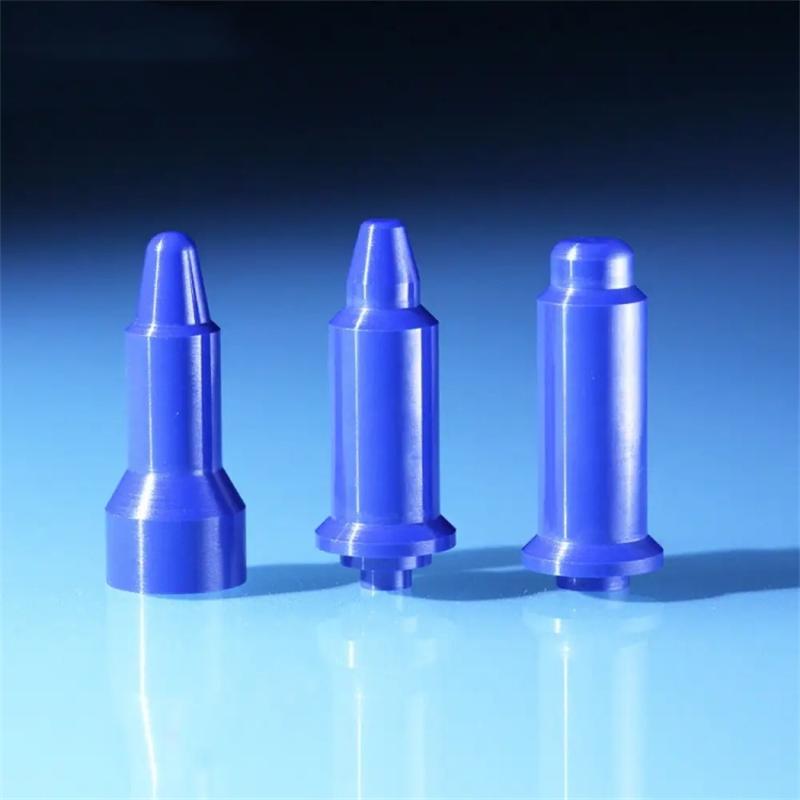
Why Zirconia Is Suitable for Structural Applications
The structural performance of zirconia ceramics is closely related to their phase transformation behavior. Under mechanical stress, metastable tetragonal grains can transform into the monoclinic phase near a crack tip. This transformation is accompanied by a small volume expansion that generates compressive stress around the crack, helping to resist crack propagation. This mechanism, often referred to as transformation toughening, is one of the main reasons zirconia exhibits higher fracture toughness than alumina and many other conventional ceramics.
In addition to toughness, zirconia ceramics typically offer high flexural strength, fine grain structure, and good wear resistance. Their relatively low thermal conductivity can also be beneficial in applications where thermal insulation or reduced heat transfer is required. However, these properties vary with composition, density, grain size, sintering conditions, and surface finish, so material grades should be evaluated according to specific design requirements.
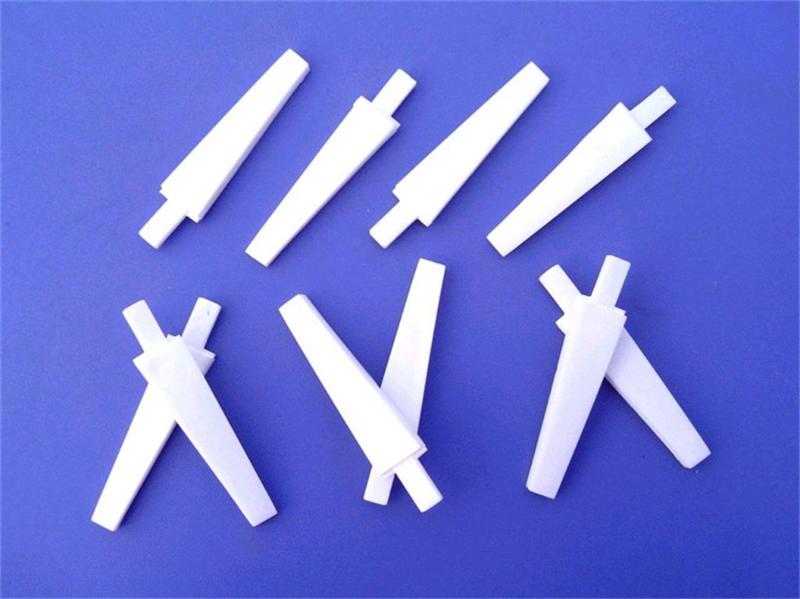
Key Mechanical and Physical Characteristics
Zirconia ceramic structural components are generally valued for:
High flexural strength and fracture toughness among oxide ceramics
Excellent wear resistance in sliding, abrasive, or high-load contact conditions
Good chemical stability in many aqueous, acidic, and alkaline environments
Low thermal conductivity compared with metals and some other ceramics
High hardness and good dimensional stability after precision machining
Electrical insulation behavior in most general engineering contexts
These characteristics make zirconia especially suitable for components that must maintain mechanical integrity under repeated loading, abrasive contact, or chemically aggressive conditions.
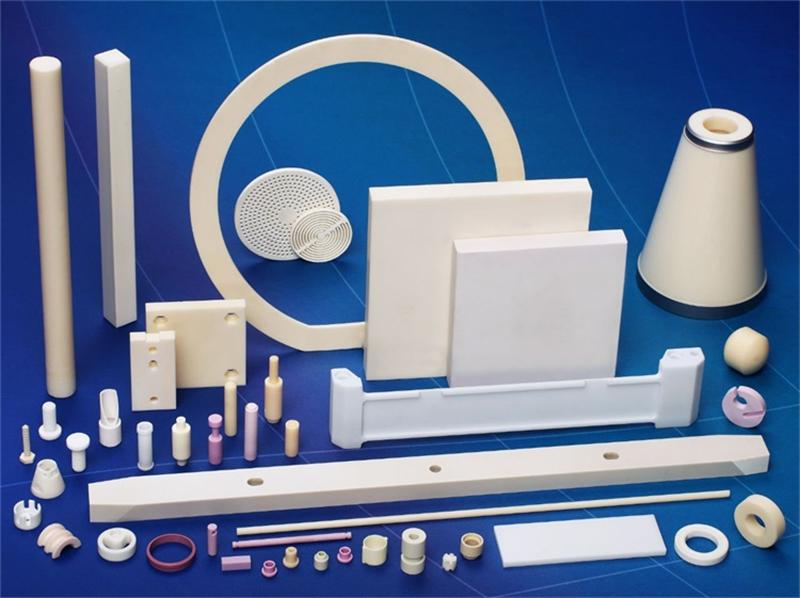
Typical Application Scope of Zirconia Ceramic Structural Components
The application scope of zirconia ceramic structural components is broad because the material can replace metals, plastics, or other ceramics in situations where reliability and service life are critical.
Wear-Resistant Mechanical Parts
Zirconia is widely used for wear parts such as plungers, valve seats, pump sleeves, guide pins, nozzles, bearings, and cutting tool components. Its high hardness and transformation-toughened microstructure allow it to resist surface damage and microcracking better than many brittle ceramics. This makes it suitable for mechanical systems where repeated contact, friction, or particle abrasion occurs.
Valve and Pump Components
In fluid handling systems, zirconia components are used for valve balls, valve seats, sealing rings, and pump plungers. These parts benefit from zirconia’s combination of wear resistance, corrosion resistance, and dimensional stability. Because zirconia does not rely on metallic alloys for hardness, it can perform well in environments where metal components may corrode, gall, or deform under load.
Industrial Cutting and Forming Tools
Zirconia ceramics are used in certain cutting, forming, and guiding applications where high hardness and edge stability are required. Examples include ceramic blades, thread guides, extrusion dies, and wear inserts. The material’s fine microstructure and resistance to abrasive wear help maintain geometric accuracy during service.
Medical and Dental Structural Components
Zirconia is extensively used in medical and dental applications, including dental crowns, bridges, implant abutments, and surgical instrument components. Its biocompatibility, high strength, and aesthetic potential make it suitable for load-bearing biomedical devices. In these applications, material purity, surface finish, and long-term reliability under cyclic loading are especially important.
Sensor and High-Temperature Structural Parts
Yttria-stabilized zirconia is also used in oxygen sensors, solid oxide fuel cells, and high-temperature fixtures. Its ionic conductivity at elevated temperatures and thermal stability make it useful in sensing and energy-related systems. However, structural use at high temperature must consider phase stability, thermal cycling, and compatibility with surrounding materials.

Advantages in Engineering Design
Zirconia ceramic structural components offer several advantages over metals and polymers in demanding environments. They do not corrode like many metallic alloys, can maintain hardness at elevated temperatures, and are less prone to plastic deformation under contact loading. Compared with alumina, zirconia generally provides higher fracture toughness and impact resistance, which reduces the risk of sudden brittle failure in certain mechanical designs.
For designers and engineers, zirconia is particularly attractive when a component must combine ceramic-level hardness with improved damage tolerance. It is also suitable when electrical insulation, non-magnetic behavior, or chemical inertness is required alongside mechanical strength.
Limitations and Engineering Precautions
Despite its advantages, zirconia is not universally superior to other ceramics. One important limitation is its sensitivity to long-term low-temperature degradation in certain environments. In the presence of moisture and moderate temperatures, some zirconia grades may undergo gradual phase transformation, which can affect surface integrity and mechanical performance over time. This issue must be considered for components used in humid, aqueous, or biomedical environments.
Zirconia also has lower thermal shock resistance than some other advanced ceramics such as silicon nitride or alumina. Rapid temperature changes can induce thermal stress, especially in thick sections or components with sharp geometries. Therefore, thermal cycling conditions should be carefully evaluated during material selection.
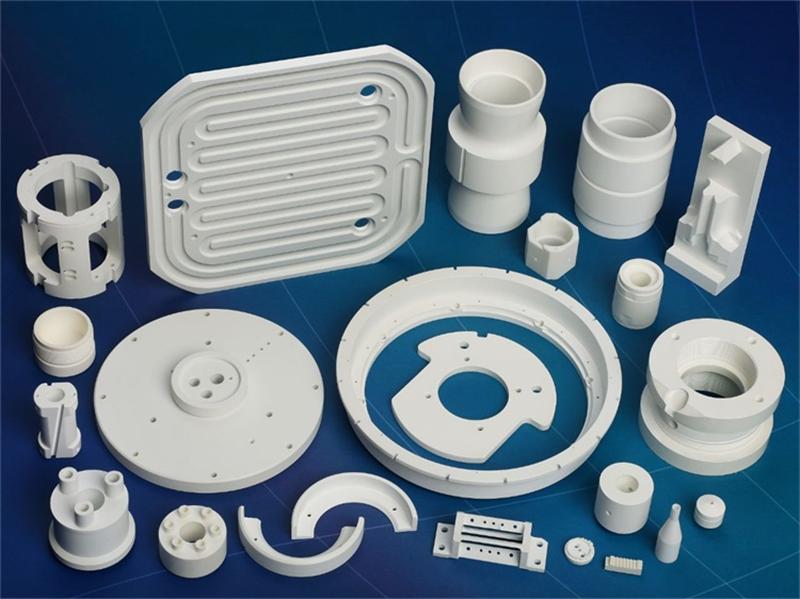
Another consideration is machining and finishing. Zirconia is extremely hard and requires diamond-based processing. Complex geometries, tight tolerances, and fine surface finishes are achievable but typically increase manufacturing complexity. Designers should avoid unnecessarily thin walls, sharp internal corners, or features that create stress concentration.
FAQ
What are zirconia ceramic structural components mainly used for?
They are mainly used for wear-resistant parts, valve and pump components, cutting and forming tools, medical and dental devices, bearings, seals, and high-performance mechanical components that require high strength, hardness, and corrosion resistance.
Why is zirconia tougher than many other ceramics?
Zirconia benefits from transformation toughening, where stress-induced phase transformation near crack tips generates compressive stress that helps resist crack propagation. This gives it higher fracture toughness than many conventional oxide ceramics.
Is zirconia suitable for high-temperature applications?
Zirconia can be used at elevated temperatures, especially in stabilized forms such as YSZ. However, its thermal shock resistance is lower than that of some other advanced ceramics, so rapid temperature changes and thick-section designs must be evaluated carefully.
How does zirconia compare with alumina for structural applications?
Zirconia generally offers higher fracture toughness, flexural strength, and wear resistance, making it better suited for impact-prone or high-contact-load applications. Alumina may be preferred when cost, electrical insulation, or simpler processing is more important.
What are the main limitations of zirconia ceramics?
Key limitations include potential low-temperature degradation in moist environments, moderate thermal shock resistance, machining difficulty, and sensitivity to design features that create stress concentration.
When should zirconia not be selected?
Zirconia may not be the best choice when extreme thermal shock resistance, very high continuous service temperature, maximum thermal conductivity, or lowest material cost is required. In such cases, alumina, silicon nitride, or silicon carbide may be more appropriate.
 What Is Polyimide (PI)
What Is Polyphenylene Sulfide (PPS)
What Is Polyimide (PI)
What Is Polyphenylene Sulfide (PPS)
 What is PEEK-for Engineers and Buyers
 Guide to Selecting Specialty Engineering Plastics