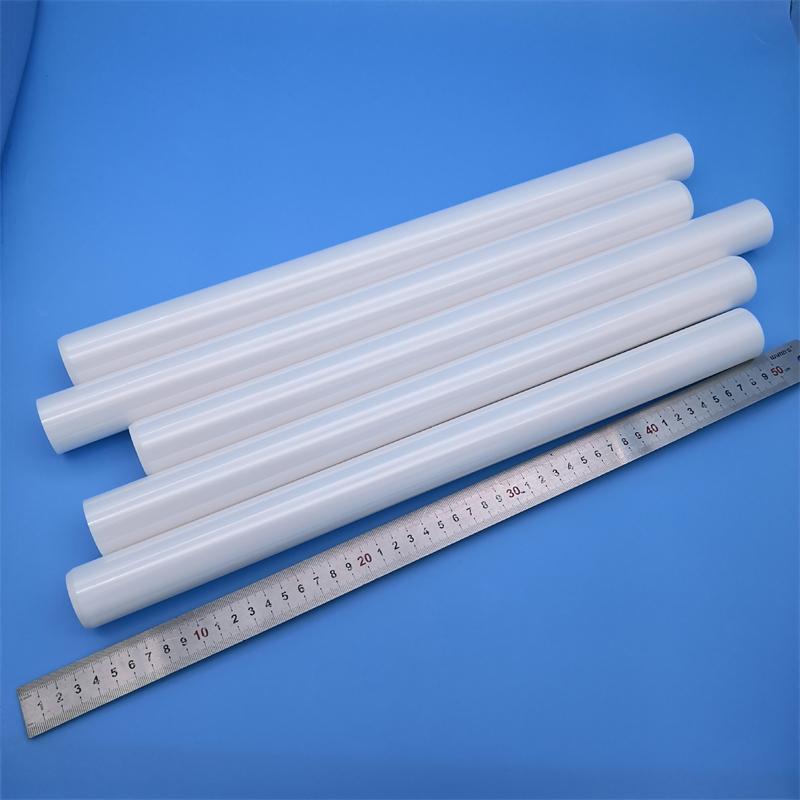
Zirconia Ceramic Center Rods
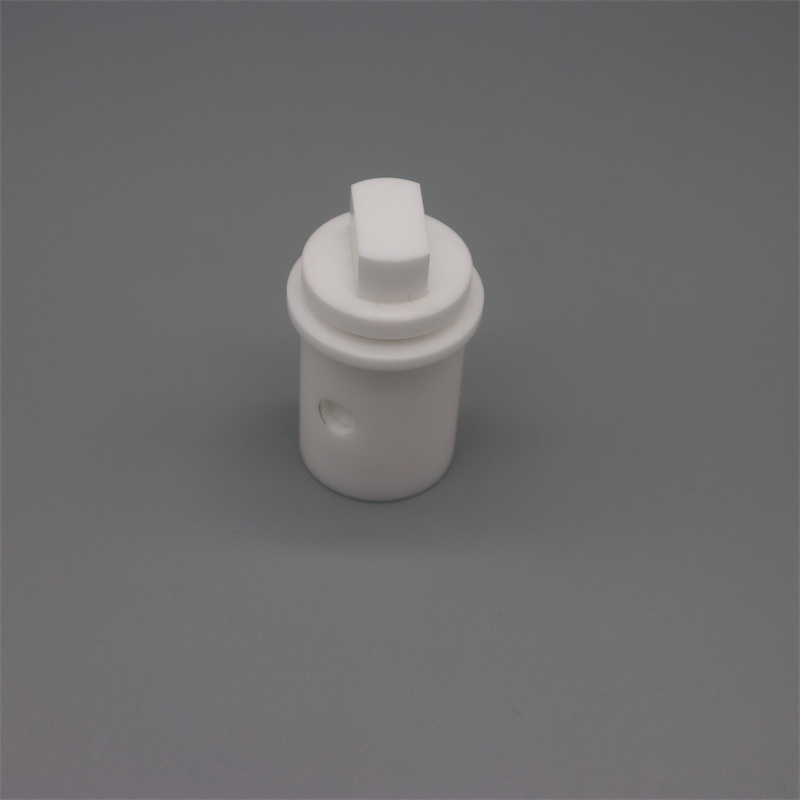
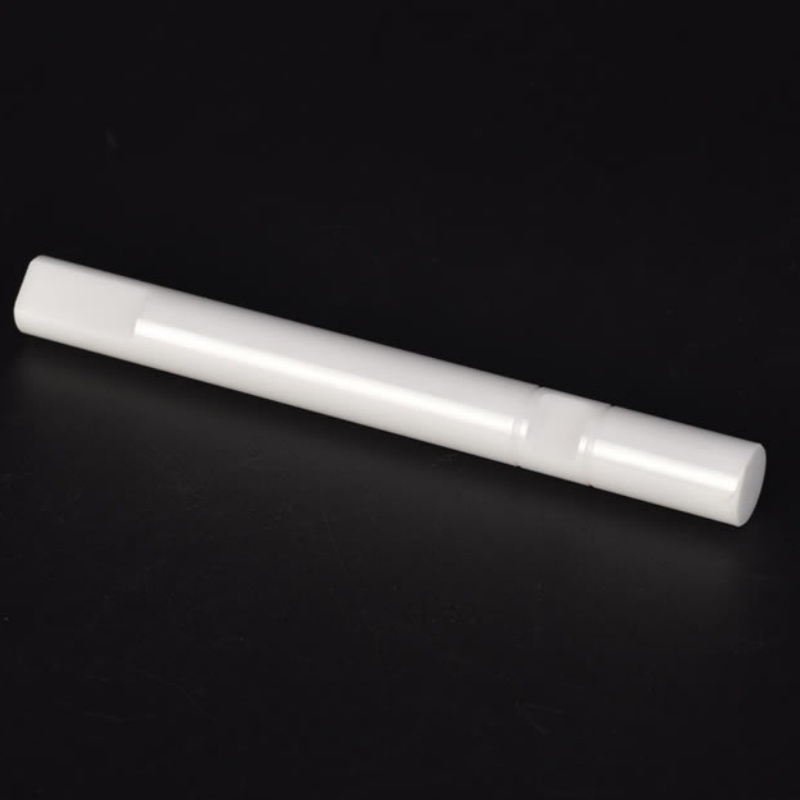
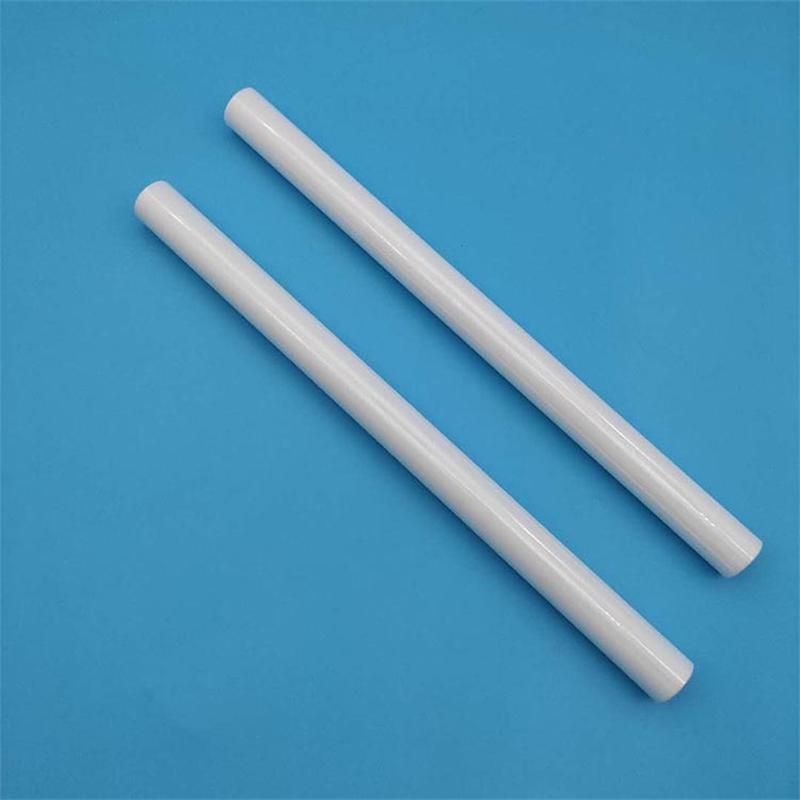
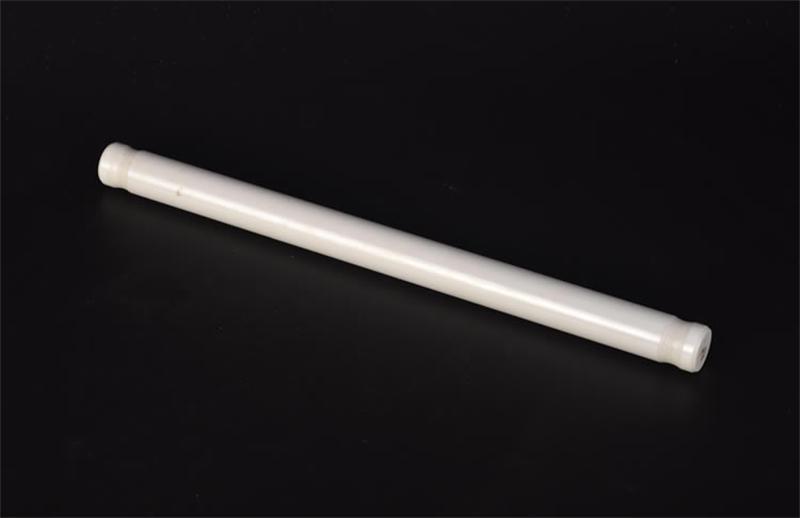
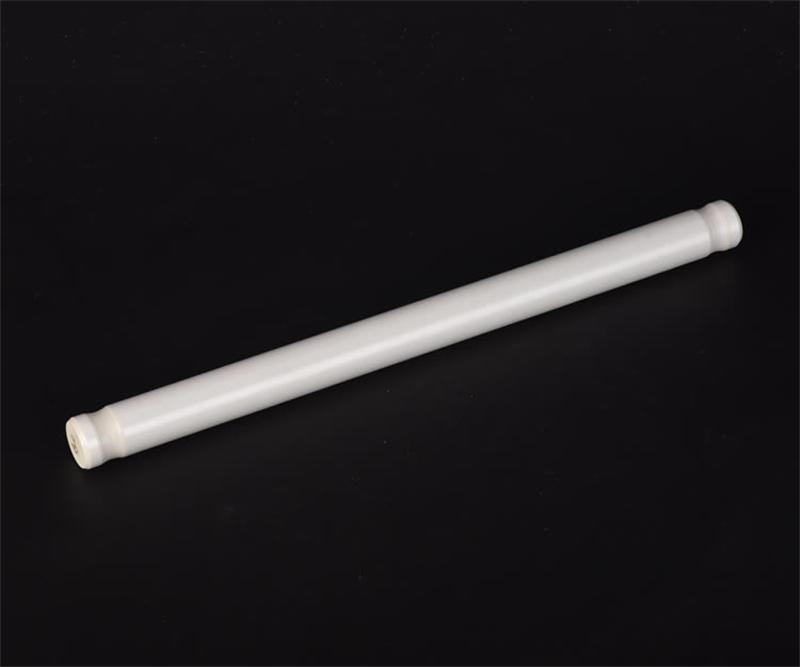
Zirconia ceramic center rods are precision cylindrical components used for axial alignment, positioning, and support in tooling, fixturing, and rotating equipment. What distinguishes them from oxide ceramic rods made of alumina or from silicon nitride alternatives is a specific combination of properties: high fracture toughness, exceptional wear resistance, and the ability to maintain dimensional stability under contact stress. For engineers dealing with sliding contact, repeated insertion cycles, or abrasive environments, understanding where zirconia’s toughness advantage translates into real service life—and where its thermal limitations become a liability—is essential for correct material selection.
Why Zirconia Center Rods Resist Chipping and Wear
The mechanical behavior of zirconia center rods originates from a transformation-toughening mechanism. In yttria-stabilized tetragonal zirconia polycrystal (Y-TZP), the metastable tetragonal phase can transform to monoclinic under stress at a crack tip, accompanied by a volume expansion that generates compressive stresses and impedes crack propagation. This mechanism produces fracture toughness values in the range of 8–10 MPa·m¹ᐟ² for typical Y-TZP grades, substantially higher than alumina’s 3–4 MPa·m¹ᐟ². The practical consequence is that a zirconia center rod can tolerate impact, edge loading, and localized stress concentrations that would cause chipping or fracture in an alumina rod of similar geometry.
Wear resistance follows from this combination of high hardness (typically 88–90 HRC) and toughness. In sliding or reciprocating contact against hardened steel or other ceramic counterfaces, zirconia resists both abrasive wear and the surface fatigue that leads to grain pullout. For center rods functioning as alignment pins or wear guides, this means the rod maintains its diameter and surface finish over extended service intervals. Zirconia also exhibits a degree of self-lubricity under certain conditions, which can reduce friction and wear on mating components.
Material Grades and Relevant Specifications
The most common material for precision center rods is Y-TZP containing approximately 3 mol% yttria as a stabilizer. This grade balances toughness with dimensional stability; higher yttria content improves hydrothermal aging resistance but sacrifices some toughness. Typical properties for a well-processed Y-TZP rod include a density near 6.0 g/cm³, flexural strength of 900–1,200 MPa, and a coefficient of thermal expansion around 10.5 × 10⁻⁶/K.
Zirconia-toughened alumina (ZTA), which contains zirconia as a dispersed phase within an alumina matrix, represents an alternative for applications requiring slightly better thermal stability than pure Y-TZP while retaining improved toughness over monolithic alumina. However, for center rod geometries where maximum fracture resistance is the priority, Y-TZP remains the standard choice.
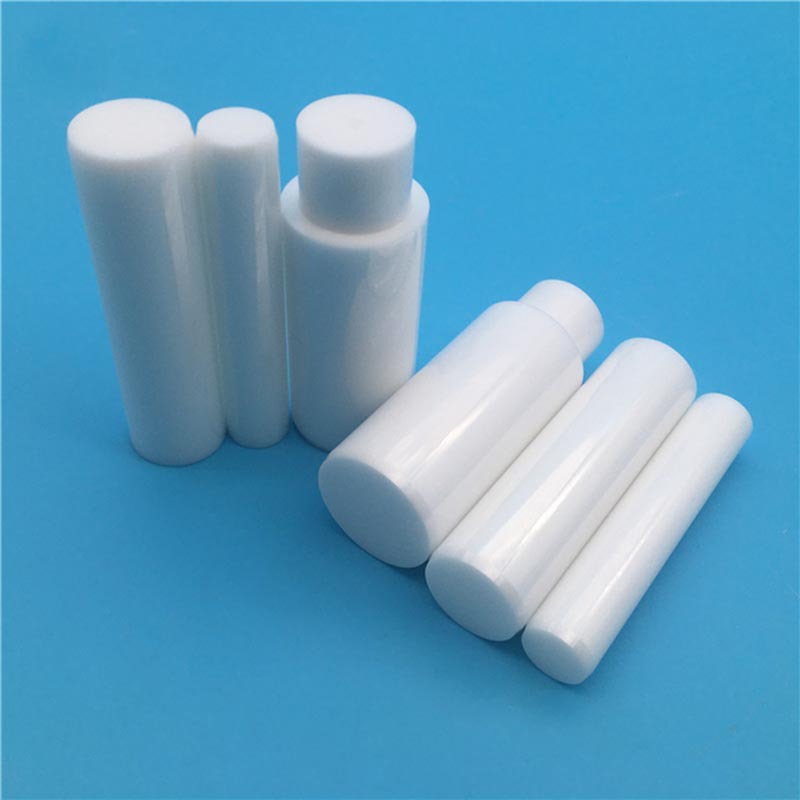
Precision ground zirconia rods are available in diameter ranges from sub-millimeter sizes up to approximately 80 mm, with length capabilities extending to several hundred millimeters. Dimensional tolerances depend on the specific grade and grinding process; precision centerless-ground rods can achieve outer diameter tolerances in the range of ±0.002 mm for small diameters.
Applications Where Zirconia’s Property Balance Fits
Zirconia center rods are most appropriate when the application combines moderate mechanical loads with a need for wear resistance and electrical insulation. Common examples include alignment pins and centering bars for machine tools, where the rod must locate a workpiece or fixture with high repeatability without galling or deforming. The non-magnetic and non-conductive nature of zirconia also prevents adhesion of ferrous chips and eliminates electrical shorting risks in sensitive setups.
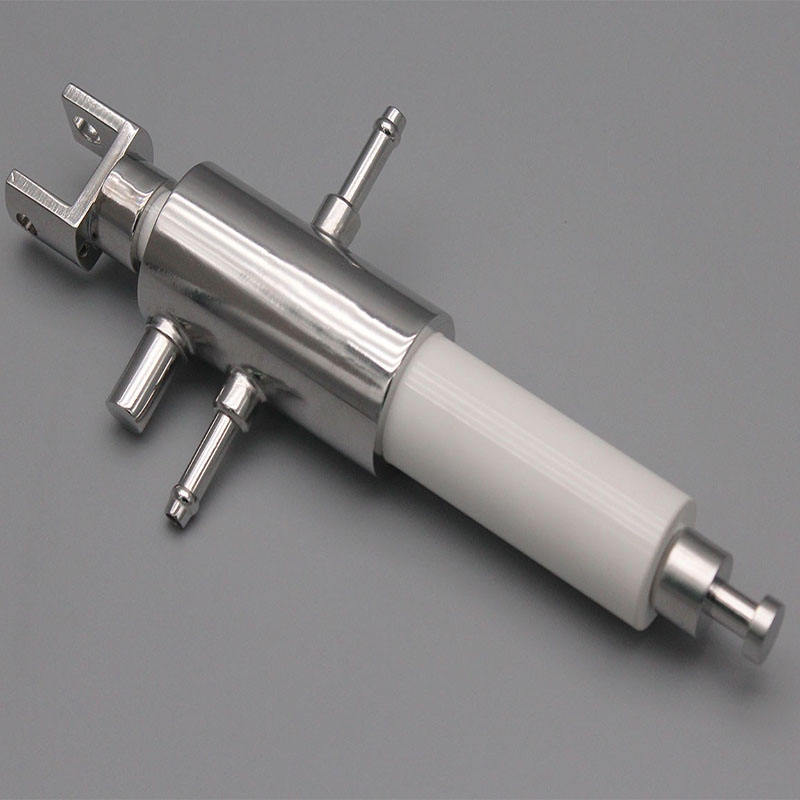
In rotating equipment, zirconia rods serve as shafts, axles, and plungers where metal alternatives would require lubrication or would wear excessively. The material’s stiffness and low density compared to steel reduce inertial loads and enable higher rotational speeds without vibration issues. For pump plungers and dosing units handling corrosive or abrasive fluids, zirconia’s chemical inertness and wear resistance extend service life beyond what stainless steel can offer.
A less obvious but important application is in heat pipe molding and other precision forming processes, where the center rod must resist both wear from repeated demolding cycles and thermal exposure without dimensional change. In these roles, the rod acts as a consumable tooling element, and its resistance to edge chipping directly determines how many cycles it can endure.

Limitations: Thermal Shock and Temperature Ceiling
The principal engineering limitation of zirconia center rods is thermal shock sensitivity. Standard Y-TZP grades are susceptible to strength degradation when subjected to rapid temperature changes, particularly in the range where the tetragonal-to-monoclinic transformation can occur uncontrollably. While the continuous use temperature of zirconia is sometimes cited in the range of 1,350°C for short-term exposure, practical long-term service in air is typically limited to lower temperatures, often below 400–500°C for standard grades, due to hydrothermal aging and phase instability.
For applications involving repeated thermal cycling or simultaneous thermal and mechanical stress, silicon nitride rods offer a better combination of thermal shock resistance and strength retention at temperature. Where maximum continuous temperature capability is the driving requirement, alumina may be preferable despite its lower toughness, as it maintains useful properties to higher temperatures without the phase transformation concerns inherent to zirconia.
A second consideration is cost. Zirconia raw material and the precision grinding required to achieve tight tolerances on a brittle ceramic make these rods significantly more expensive than hardened steel or even alumina alternatives. The justification rests on service life and reliability in applications where failure or frequent replacement carries high costs.
Selection Guidance
Choose a zirconia ceramic center rod when the application involves sliding or rolling contact, repeated impact or insertion cycles, and a need for electrical insulation or non-magnetic behavior—provided the operating temperature remains moderate and thermal gradients are not severe. For high-temperature alignment fixtures, rapid thermal cycling, or applications where alumina’s lower cost is acceptable and its brittleness can be managed through careful design, other ceramic materials may be more appropriate.
FAQ
What is a zirconia ceramic center rod typically used for?
It is used for axial alignment, positioning, and support in precision tooling, machine fixtures, pump plungers, and rotating shafts where wear resistance, toughness, and electrical insulation are required.
Why choose zirconia over alumina for a center rod?
Zirconia offers roughly two to three times the fracture toughness of alumina, making it far more resistant to chipping and fracture under impact or edge loading in sliding contact applications.
What is the maximum operating temperature of a zirconia center rod?
Practical continuous service temperature depends on the grade and environment. Standard Y-TZP grades are often limited to below 400–500°C in long-term air exposure; short-term excursions to higher temperatures are possible but may affect strength.
Is zirconia ceramic electrically insulating?
Yes. Zirconia is an electrical insulator at room temperature, making center rods suitable for applications requiring isolation or use near sensitive electronic components.
How does zirconia compare with silicon nitride for center rod applications?
Silicon nitride offers superior thermal shock resistance and strength retention at elevated temperatures. Zirconia generally provides higher fracture toughness and wear resistance at moderate temperatures.
Can zirconia center rods be machined to tight tolerances?
Yes. Precision grinding and centerless grinding processes can achieve outer diameter tolerances in the ±0.002 mm range for small rods, though tolerances widen as diameter increases.