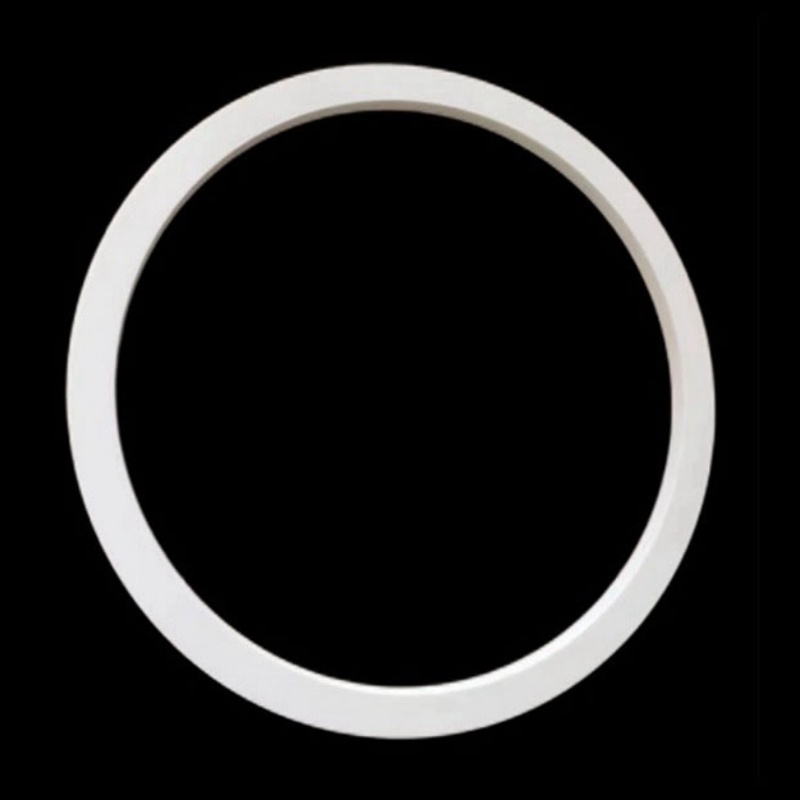
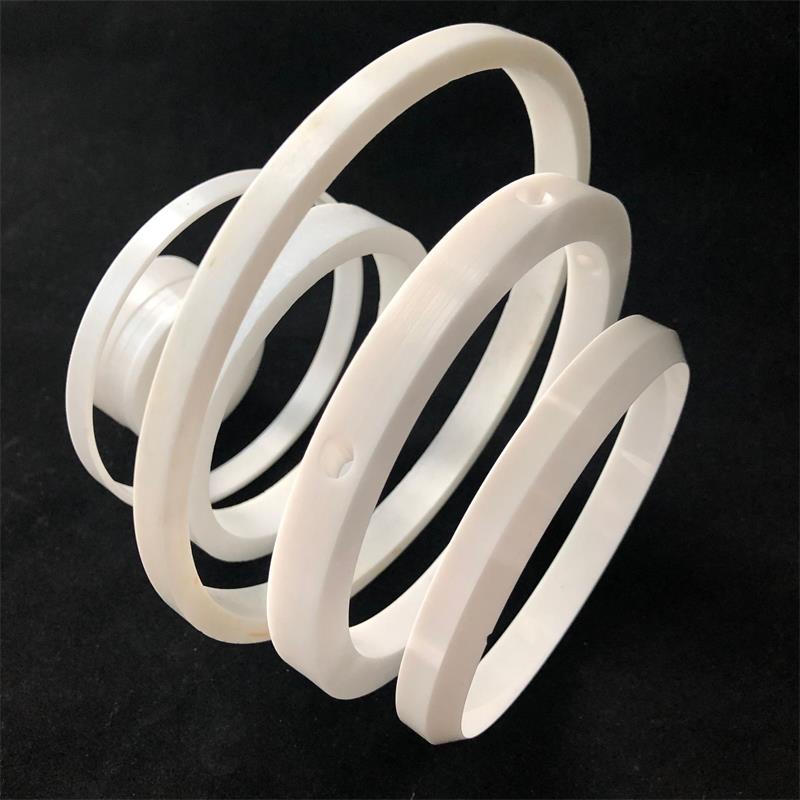
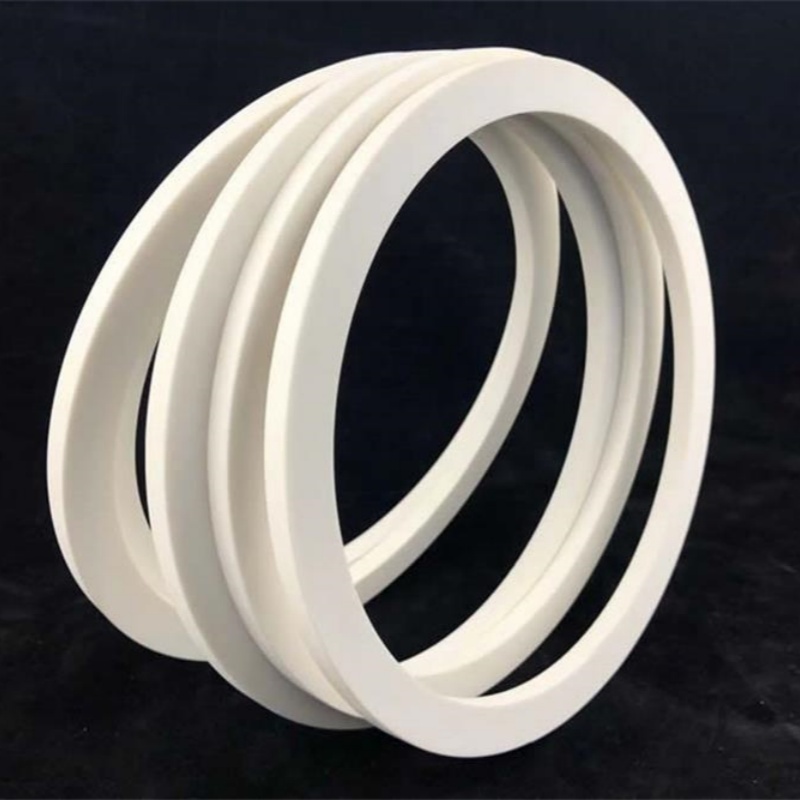
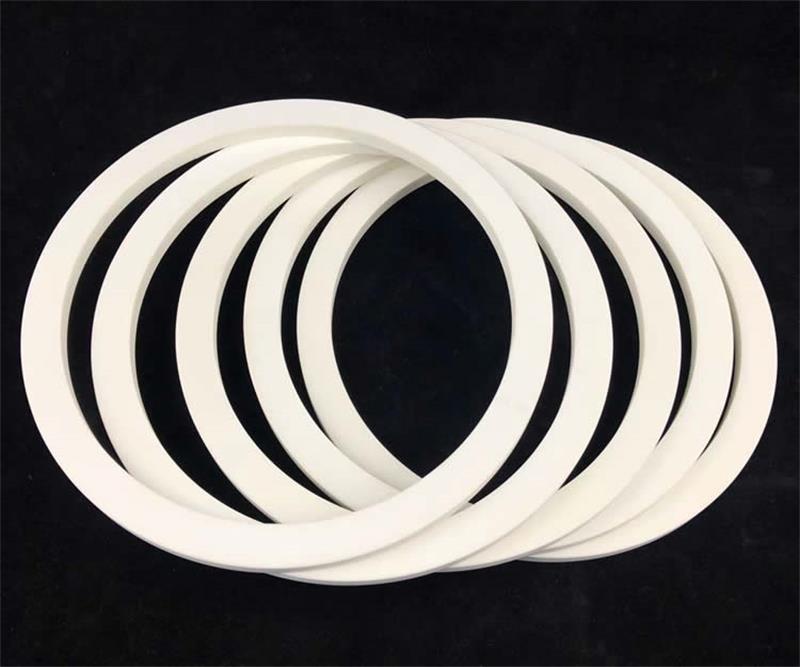
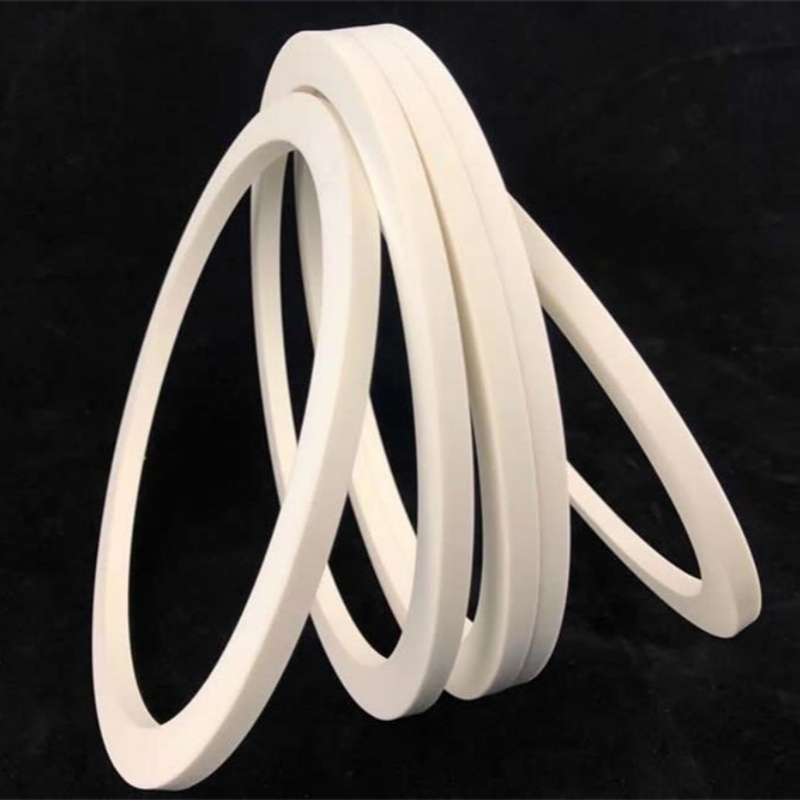
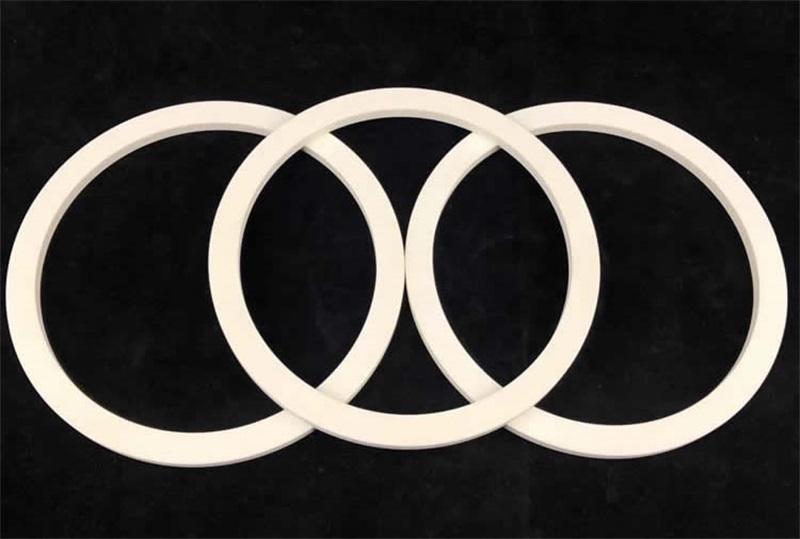
Wear-Resistant Zirconia Ceramic Rings
Wear-resistant zirconia ceramic rings are precision components made from yttria-stabilized zirconia (YSZ), a polycrystalline ceramic whose combination of high fracture toughness and low thermal conductivity makes it one of the most reliable choices for abrasive, impact-loaded, and thermally cyclic service. Unlike oxide ceramics that rely mainly on hardness, zirconia derives its durability from a transformation-toughening mechanism — and that distinction drives nearly every engineering decision around it.
Why Zirconia Resists Wear Differently
Commercially available zirconia rings are typically 3 mol% yttria-stabilized tetragonal zirconia polycrystal (3Y-TZP). In this metastable tetragonal state, stress at a crack tip triggers a local phase transformation to the monoclinic structure. The accompanying volume expansion of roughly 3–5% compresses the crack and arrests its propagation. The result is a material with flexural strength commonly in the 900–1,200 MPa range and fracture toughness near 5–6 MPa·m^1/2 — substantially higher than alumina’s typical 3–4 MPa·m^1/2.
Hardness (about 1,200–1,400 HV) is lower than alumina or silicon carbide, so zirconia is not the hardest option. Its wear resistance comes from resisting crack initiation and chipping rather than from abrasion resistance alone. This matters in selecting the right application.
Key Characteristics
Low thermal conductivity (2–3 W/m·K) and thermal expansion close to that of steel, which reduces thermal stress in metal-bonded assemblies.
Good thermal shock resistance relative to other structural ceramics, useful in rapidly cycling environments.
Electrical insulation and low dielectric loss, though ionic conductivity rises above roughly 600–800 °C, which can matter in electrochemical or high-temperature electrical service.
Excellent chemical stability in water, steam, and many acids and alkalis, with known vulnerability to hydrothermal degradation in hot humid environments above about 250 °C over long durations.
Typical Applications
Zirconia rings are used where impact and abrasion combine rather than where pure sliding abrasion dominates. Common uses include:
Pump and valve components — seats, seals, and wear rings handling abrasive slurries. The toughness prevents the catastrophic chipping that brittle ceramics suffer under pressure surges.
Textile and wire-processing guides — low friction against fiber or metal wire, with dimensional stability preserving tolerances over long service life.
Semiconductor and chemical equipment — insulating rings and support components, where purity, electrical insulation, and chemical inertness are required simultaneously.
Medical and food-contact hardware — biocompatibility and ease of sterilization make zirconia suitable where polymeric alternatives degrade.

Limitations to Consider
Zirconia is not universally superior. Its hardness is insufficient for severe sliding abrasion against hard particulates, where alumina or silicon carbide perform better. Long-term exposure to hot water or steam can cause surface degradation and strength loss. Machining is difficult and costly — grinding with diamond tooling is required, and tight tolerances on thin-walled rings demand careful process control. Cost per component is generally higher than alumina.
When to Choose Something Else
Choose alumina when abrasion resistance and cost are the primary drivers and impact loads are low. Consider silicon carbide or silicon nitride for high-temperature, high-wear environments where thermal conductivity or creep resistance matters. Select zirconia when fracture toughness, thermal cycling, or impact resistance is the governing failure mode.
FAQ
What makes zirconia ceramic rings wear-resistant?
Transformation toughening — a stress-induced phase change that compresses cracks and prevents propagation — rather than hardness alone.
Are zirconia rings electrically insulating?
Yes at ambient and moderate temperatures, but ionic conductivity increases significantly above roughly 600–800 °C.
Can zirconia rings be used in high-temperature service?
They perform well in thermal cycling, but long-term strength limits are typically below 1,000 °C, and hot steam or humid conditions can degrade the surface over time.
How does zirconia compare with alumina for wear parts?
Zirconia offers higher toughness and better impact and thermal shock resistance; alumina offers higher hardness, better abrasion resistance, and lower cost.
Are zirconia ceramic rings suitable for chemical environments?
Generally yes — they resist water, steam, and many acids and alkalis — but specific media and temperature should be verified for long-term exposure.
What should engineers check before specifying a zirconia ring?
Stabilizer content, grain size, flexural strength data for the actual grade, and whether the service involves hot humid exposure or severe sliding abrasion.