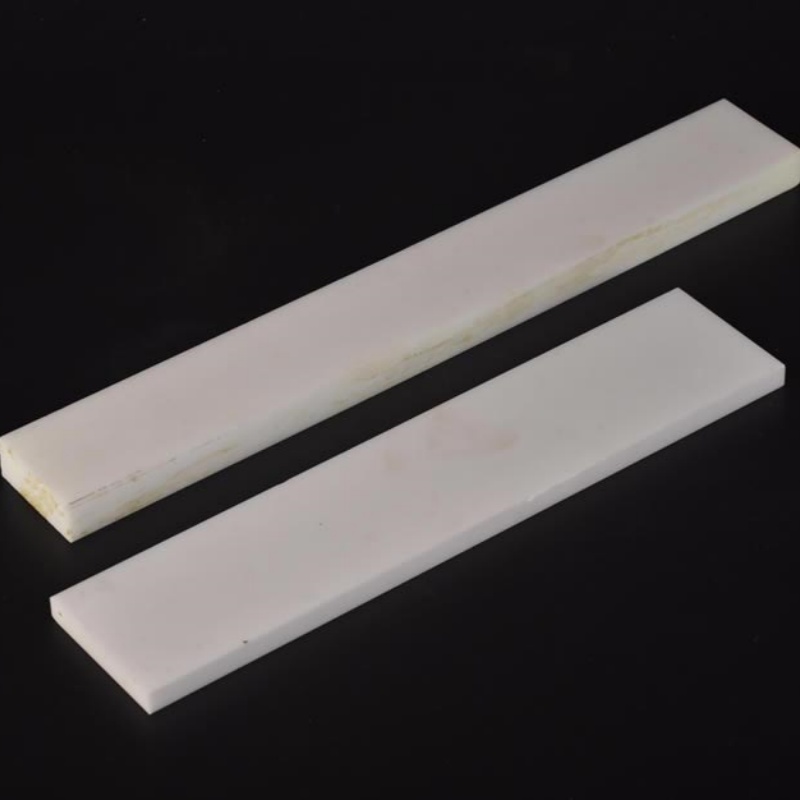
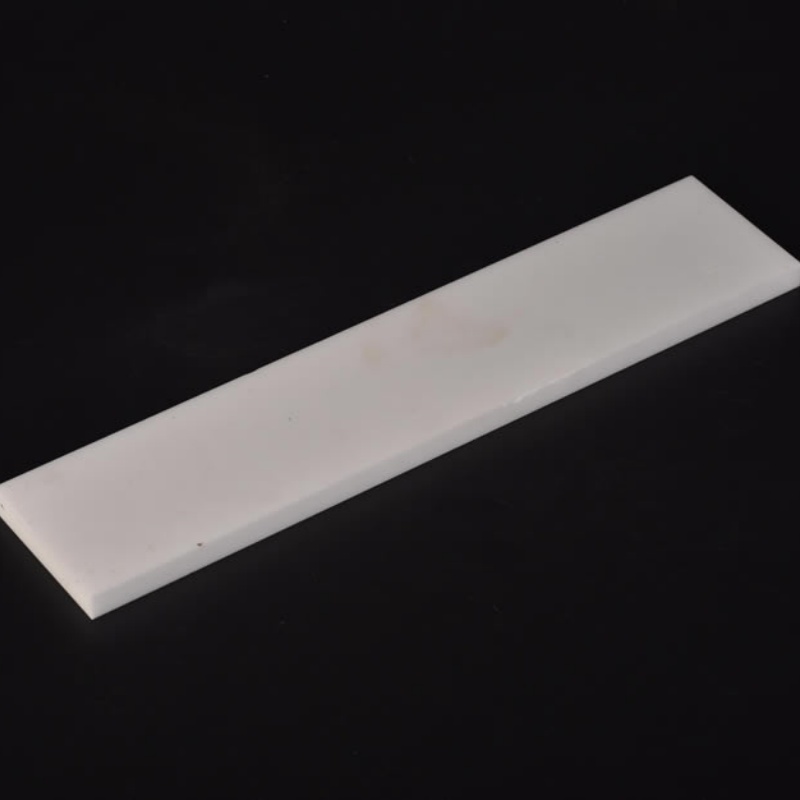
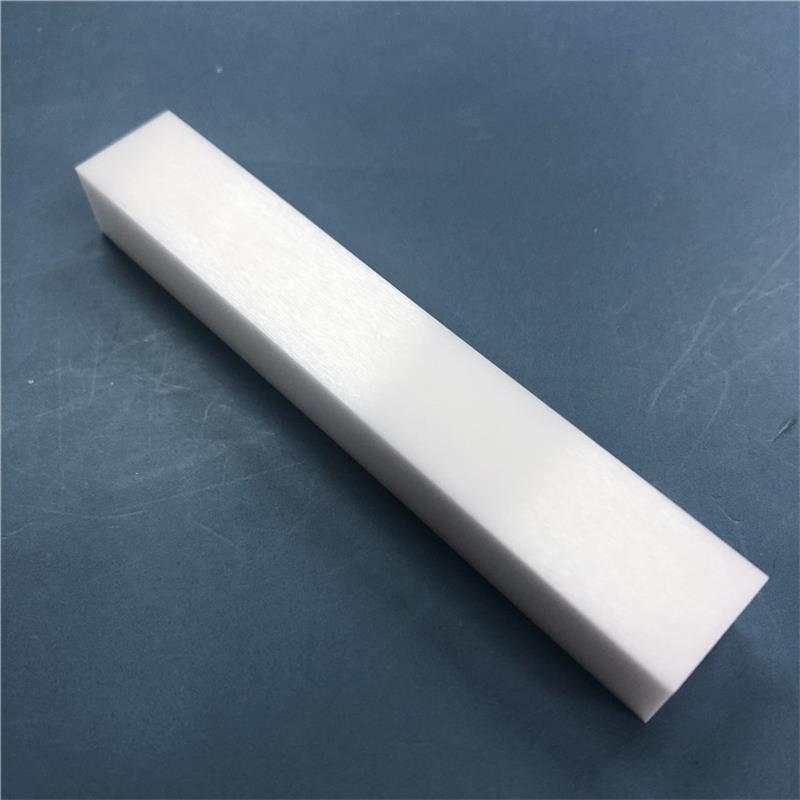
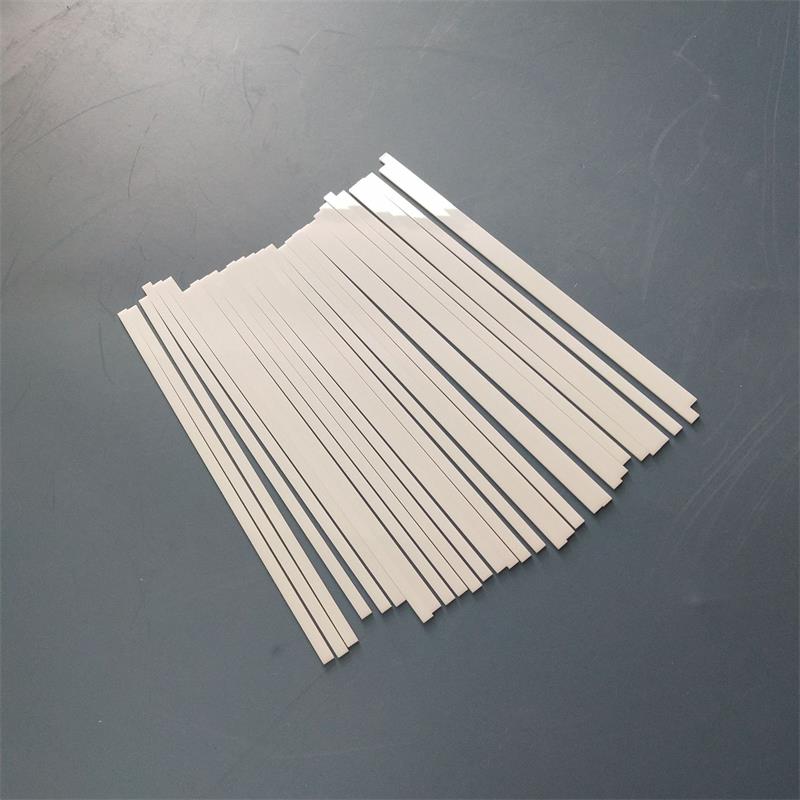
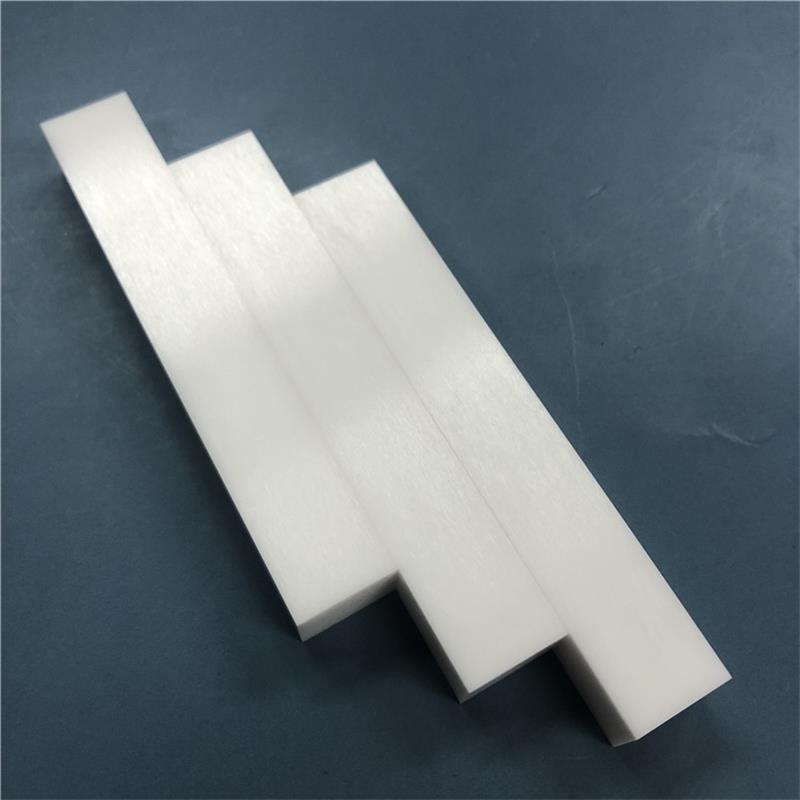
Zirconia Ceramic Plates and Strips
Zirconia ceramic plates and strips occupy a distinct position among advanced technical ceramics. Unlike alumina, which relies primarily on hardness and dielectric strength, zirconia’s engineering value derives from a stress-induced phase transformation that blunts crack propagation. This transformation toughening mechanism gives dense zirconia components fracture toughness roughly two to three times that of alumina, making thin plates and narrow strips viable in geometries that would be prohibitively fragile in other oxide ceramics .
The property basis for zirconia plates and strips lies in the tetragonal-to-monoclinic phase transformation. When a crack attempts to propagate through the tetragonal crystal structure, the stress field at the crack tip triggers a localized transformation to the monoclinic phase. This transformation is accompanied by a volume expansion of approximately 3–5%, which generates compressive stresses that effectively squeeze the crack closed . The result is a material with bend strengths typically in the range of 800–1,200 MPa for yttria-stabilized grades, compared with 300–400 MPa for typical 99% alumina .
Material Types and Their Engineering Consequences
The practical behavior of zirconia plates and strips depends heavily on the stabilizing oxide and microstructure. Yttria-stabilized tetragonal zirconia polycrystal (Y-TZP), usually containing 3 mol% yttria, delivers the highest strength and toughness among monolithic zirconia grades. Dense Y-TZP plates with surface roughness below Ra 0.6 μm are available in standard sizes such as 100 × 100 mm and 150 × 150 mm, with thicknesses from 0.3 mm upward .
Magnesia-partially stabilized zirconia (Mg-PSZ) occupies a different performance space. While its strength is lower than Y-TZP, Mg-PSZ with controlled monoclinic content exhibits excellent thermal shock resistance because the microstructure accommodates thermal strain more gracefully. A porous Mg-PSZ variant with open porosity exceeding 20% achieves thermal shock resistance while maintaining thermal conductivity below 2.5 W/m·K, making it suitable for kiln furniture and high-temperature insulation plates .
For plates and strips used in wear applications, grain size matters as much as chemistry. Research on Y-TZP wear behavior shows that wear resistance increases as grain size decreases, with a Hall-Petch type relationship holding for grain sizes below approximately 0.7 μm . Fine-grained plates are therefore preferred where sliding contact and edge retention are critical.
A less conventional form factor deserves mention: thin zirconia ribbon ceramic produced by roll-to-roll processing. These fully dense strips, as thin as 20 μm and up to 200 mm wide, remain flexible enough to laminate to curved surfaces while retaining bend strengths near 1 GPa. Their near-zero porosity and absence of outgassing suit them to ionic conducting substrates and thin-film sensor applications rather than structural wear parts .
Performance Characteristics in Practice
The thermal expansion behavior of zirconia—approximately 9–11 × 10⁻⁶/K from room temperature to 600°C—is closer to steel than most ceramics are . This relative match reduces interfacial stresses in assemblies where a ceramic strip or plate must be joined to or guided by metallic components. Thermal conductivity, by contrast, is quite low: typically 2.5–4.8 W/m·K for dense grades . This combination of steel-like expansion and ceramic-like insulation is unusual among structural ceramics and directly enables applications such as sensor protection plates and heat element substrates.
The tribological picture is more nuanced. Zirconia’s high hardness does not translate into low friction against itself. Self-mated zirconia couples in dry sliding suffer relatively high friction and wear because the low thermal conductivity prevents frictional heat from dissipating, leading to thermal stress-driven microfracture . Where zirconia strips slide against steel or other dissimilar materials, performance improves. In high-pressure pump plungers, zirconia has demonstrated wear factors superior to alumina under comparable conditions, primarily due to its higher fracture toughness resisting edge chipping and localized fracture .
Chemical resistance is generally good but not universal. Dense zirconia shows stability in dilute hydrochloric acid and sodium hydroxide solutions, and it resists most industrial fluids and cleaning agents . It is, however, susceptible to attack by hydrofluoric acid and hot concentrated sulfuric acid. In high-temperature steam environments, zirconia’s phase stability can be compromised, with metastable-to-stable transformation occurring at temperatures above approximately 600°C, leading to pore structure changes in porous grades .
Applications Where Zirconia Plates and Strips Excel
The properties of zirconia plates and strips translate most directly into applications requiring a combination of wear resistance, toughness, and electrical insulation in a compact form. In pump and valve assemblies, flat zirconia strips serve as wear guides, spacers, and support inserts where metallic components would corrode or deform, and where alumina might chip at thin edges or mounting holes . The toughness advantage is most pronounced in strips with slots, holes, or narrow cross-sections.
In precision machinery, zirconia strips maintain positioning and spacing under repeated sliding contact. The low thermal conductivity can be an asset rather than a liability here: heat generated at a contact point does not readily conduct away, but the plate also protects temperature-sensitive components on the opposite side. Sensor protection plates exploit this duality .
For electrical insulation assemblies, zirconia offers volume resistivity above 10¹² Ω·cm and dielectric strength exceeding 10 kV/mm, sufficient for separating conductive parts in compact designs . The moderately high dielectric constant (approximately 28 at microwave frequencies) is worth noting for high-frequency applications where impedance matching matters .
Thin zirconia plates and strips with thickness below 1 mm also find use as substrate materials for thick-film electronics and heating elements. The combination of electrical insulation, thermal stability, and mechanical robustness suits these applications better than alumina in cases where substrate flexure or thermal cycling is expected .

Selection Considerations and Trade-Offs
Choosing zirconia over alumina for a plate or strip application usually comes down to a single question: is toughness worth the additional cost and density? Zirconia is roughly twice as dense as alumina (6.0 vs. 3.9 g/cm³) and typically more expensive to produce in dense, high-precision form . Where the part geometry is simple and chipping risk is low, alumina’s lower cost, higher hardness, and better thermal conductivity may make it the better choice.
Temperature ceiling is another constraint. Dense Y-TZP plates are generally rated for continuous operation up to approximately 1,000–1,100°C, but prolonged exposure above the tetragonal-to-monoclinic transformation range can degrade mechanical properties through phase destabilization . For applications demanding sustained operation above 1,200°C, porous Mg-PSZ or non-oxide ceramics such as silicon nitride or silicon carbide are more appropriate.
Finally, zirconia’s low thermal conductivity becomes a limitation in any application where frictional heat must be removed from a sliding interface. In dry running or poorly lubricated contacts, this can accelerate wear and limit service life. Where heat dissipation is critical, alumina or a non-oxide ceramic with higher conductivity will outperform zirconia despite its lower toughness.
FAQ
What is the primary advantage of zirconia over alumina for plates and strips?
Fracture toughness. Zirconia’s transformation toughening mechanism gives it two to three times the toughness of alumina, reducing the risk of edge chipping, cracking at holes, and catastrophic failure in thin sections.
Can zirconia plates and strips be used at high temperatures?
Dense Y-TZP grades are suitable for continuous service up to approximately 1,000–1,100°C. Porous Mg-PSZ grades can withstand higher temperatures and better thermal shock, but with lower mechanical strength. Prolonged exposure above the phase transformation range can degrade Y-TZP properties.
Are zirconia strips electrically insulating?
Yes. Dense zirconia has volume resistivity above 10¹² Ω·cm and dielectric strength typically exceeding 10 kV/mm, making it suitable for insulating spacers and separators in compact electrical assemblies.
Why does zirconia sometimes wear poorly against itself?
Low thermal conductivity prevents frictional heat from dissipating at the contact interface, leading to thermal stresses and microfracture. Self-mated zirconia in dry sliding is not an ideal tribological pairing; zirconia against steel or dissimilar materials performs better.
How thin can zirconia plates and strips be made?
Dense plates are commonly available from 0.3 mm thickness upward. Specialized roll-to-roll processed ribbon ceramic can be as thin as 20 μm while remaining fully dense and flexible.
When should silicon nitride or silicon carbide be considered instead?
When thermal shock resistance, high-temperature strength retention, or thermal conductivity are the dominant requirements. Non-oxide ceramics outperform zirconia above approximately 1,200°C and in applications involving rapid temperature cycling.