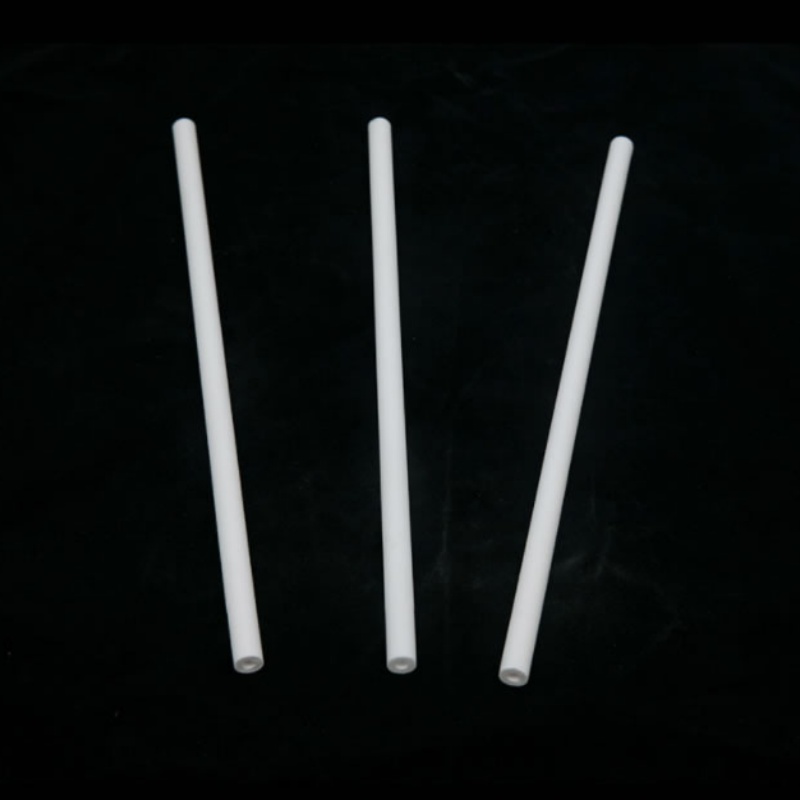
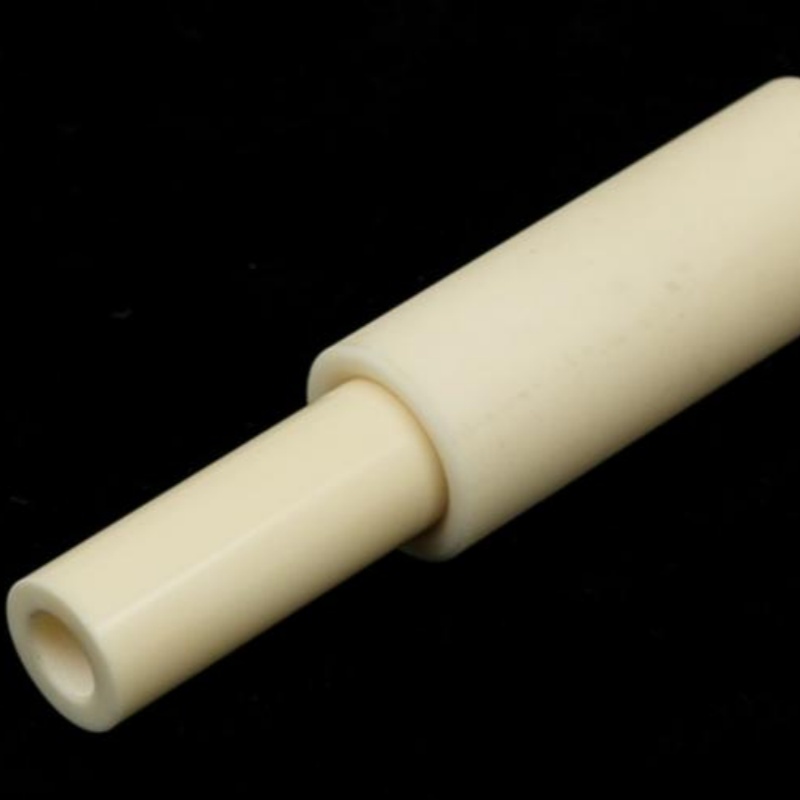
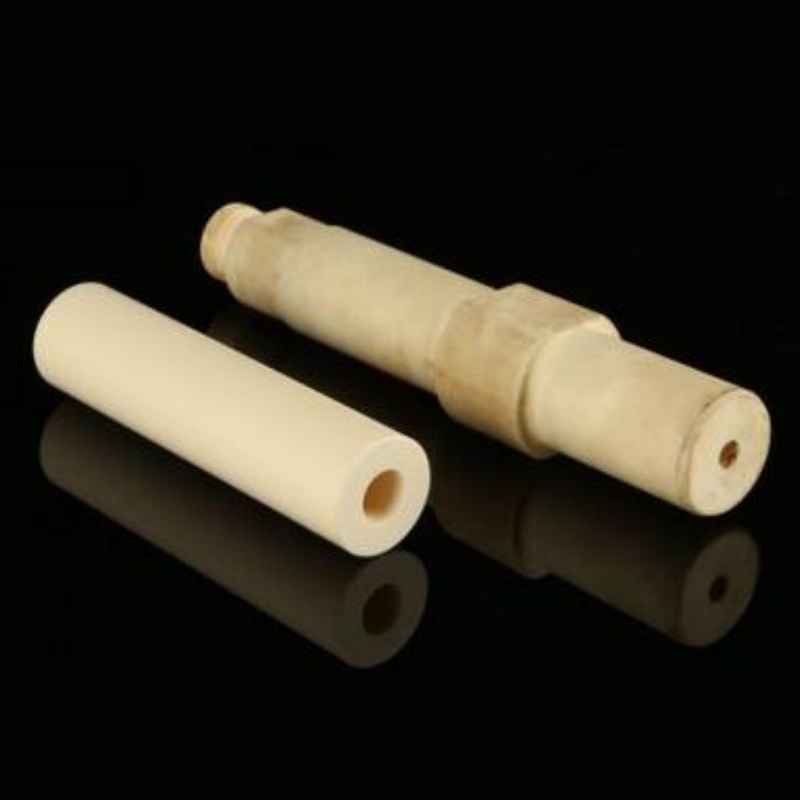
Medical Ceramic Plungers
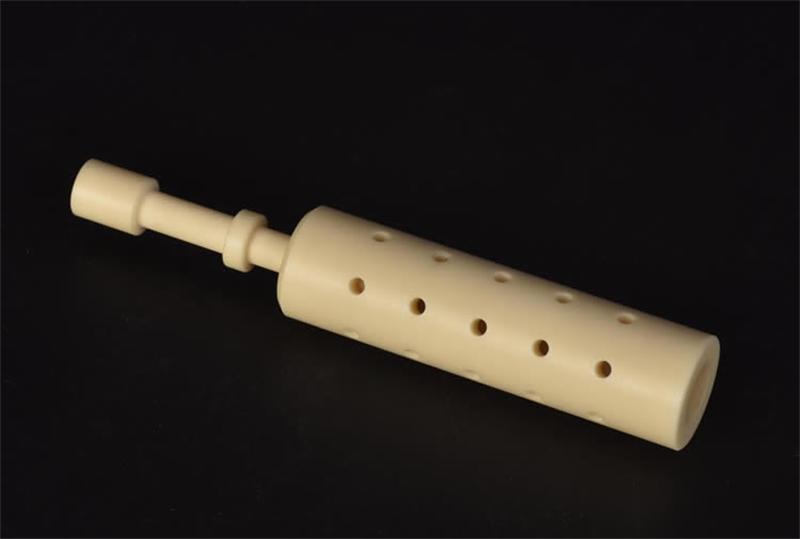
Medical ceramic plungers are precision components used in metering pumps, dosing systems, and analytical instruments where dimensional stability, chemical inertness, and wear resistance directly affect dosing accuracy and device reliability. Unlike general-purpose ceramic parts, medical plungers operate under a combination of constraints: sub-micron tolerances, repeated sterilization cycles, and long-term contact with biological fluids or aggressive reagents.
Why Ceramic Materials Dominate This Application
The primary driver is the requirement for leak-free operation at clearances that often fall below 5 μm. Metals and polymers cannot maintain such tolerances under continuous reciprocating motion. Thermal expansion alone would cause seizure in a metal-on-metal pair. Ceramics offer low thermal expansion coefficients and high elastic modulus, allowing designers to specify tight clearance fits that remain stable across temperature fluctuations and extended service intervals.
Chemical inertness is equally important. Medical plungers encounter body fluids, disinfectants, buffer solutions, and pharmaceutical reagents. Metal ion leaching is unacceptable in diagnostic and pharmaceutical contexts because it can alter reagent chemistry or contaminate samples. Ceramic surfaces are non-porous, non-leaching, and resistant to oxidation and most acids and alkalis within defined concentration and temperature limits.
Alumina and Zirconia: The Two Dominant Material Routes
Two oxide ceramics account for most medical plunger production: high-purity alumina (typically 99.5% Al₂O₃ or higher) and yttria-stabilized tetragonal zirconia polycrystal (Y-TZP).
Alumina provides excellent hardness, compressive strength, and chemical resistance at moderate cost. High-purity grades are favored in analytical instruments and dialysis equipment where the plunger contacts reagents and cleaning solutions. Alumina exhibits high compressive strength—typically in the range of 2,000–4,000 MPa—and maintains dimensional stability under load. Its surface can be ground and polished to Ra values below 0.1 μm, minimizing friction and seal wear. Alumina’s limitations include lower fracture toughness than zirconia and sensitivity to thermal shock if temperature gradients become steep.
Zirconia (Y-TZP) offers a distinct combination: Vickers hardness around 1,200 HV, flexural strength approaching 800–1,000 MPa, and fracture toughness values of 9–10 MPa·m¹ᐟ²—roughly double that of alumina. This toughness translates into greater resistance to chipping and catastrophic fracture, which matters in plungers that experience pressure spikes or occasional misalignment. Zirconia’s grain size is finer, enabling very smooth surface finishes that reduce friction and particulate generation. For pharmaceutical filling and medical fluid delivery, zirconia’s combination of toughness, low friction, and chemical stability is often preferred.
Zirconia is not universally superior. The tetragonal-to-monoclinic phase transformation that provides its toughness mechanism can also create long-term reliability concerns in certain environments. Some studies have raised questions about strength degradation in physiological media and potential wear acceleration in vivo. For medical plunger applications, these concerns are generally less acute than in load-bearing implants, but the possibility of surface transformation under sustained hydrothermal exposure should be considered in devices undergoing frequent steam sterilization.
Performance Requirements That Define Material Selection
Dimensional precision. Medical plunger-cylinder pairs operate with radial clearances typically in the 3–5 μm range. This demands ceramic blanks with uniform density, minimal porosity, and consistent shrinkage behavior. Isostatic pressing followed by diamond grinding and lapping is standard for achieving the required tolerances.
Surface finish and friction behavior. A smooth surface—typically Ra ≤ 0.1 μm—reduces seal friction and prevents stick-slip motion that would degrade dosing accuracy. Alumina and zirconia both polish well, but zirconia’s finer grain structure often achieves lower roughness values with less effort.
Wear and particulate generation. In pharmaceutical and diagnostic applications, particulate shedding is a contamination risk. Ceramic plungers generate far less wear debris than metal alternatives, but the ceramic itself must be dense and free of surface defects that could release particles.
Sterilization compatibility. Autoclave cycling (typically 121–134°C, repeated hundreds of times) imposes hydrothermal stress. Alumina is stable under these conditions. Zirconia’s phase stability under steam sterilization is generally acceptable for medical plunger geometries, but low-temperature degradation remains a theoretical concern worth monitoring in long-life devices.
Engineering Trade-offs and Selection Guidance
Choose high-purity alumina when chemical resistance to a broad range of reagents is the primary concern, when the plunger will contact aggressive cleaning agents or biological samples, and when cost and supply stability matter. Alumina is also preferred when the plunger diameter is large, since alumina’s higher stiffness helps maintain straightness under load.
Choose zirconia (Y-TZP) when fracture toughness and impact resistance are critical—for example, in pumps that may experience pressure surges or in plungers with slender aspect ratios. Zirconia’s lower friction coefficient and finer surface finish also benefit high-cycle applications where seal wear and dosing drift are concerns.
In both cases, the surrounding pump design must accommodate ceramic brittleness. Sharp edges, stress concentrations, and uneven seating can initiate cracks. Plunger ends should be chamfered, and assembly procedures should avoid point loading. The mating cylinder material should be selected to avoid adhesive wear; alumina-on-alumina pairs can experience high friction, while zirconia-on-alumina or dissimilar ceramic pairs generally perform better.
FAQ
What is a medical ceramic plunger used for?
It is a precision component in metering pumps, analytical instruments, dialysis machines, and pharmaceutical filling systems where accurate, contamination-free fluid delivery is required.
Is alumina or zirconia better for medical plungers?
Alumina suits applications demanding maximum chemical resistance and cost efficiency. Zirconia is preferable when fracture toughness, impact resistance, and minimal friction are priorities.
How tight are the tolerances on ceramic plungers?
Radial clearance between plunger and cylinder is commonly controlled to 5 μm or less, with surface finishes of Ra 0.1 μm or better.
Can ceramic plungers withstand repeated autoclaving?
Yes. Alumina and high-quality zirconia maintain dimensional stability and surface integrity through typical autoclave cycles, though zirconia’s long-term hydrothermal stability should be verified for extended service.
Why not use stainless steel for medical plungers?
Steel suffers from wear, corrosion, and ion leaching in contact with biological fluids and disinfectants. It cannot maintain sub-5 μm clearances over extended use without seizure or accuracy degradation.
Are ceramic plungers electrically insulating?
Yes. Alumina and zirconia are electrical insulators, which is advantageous in devices combining fluid handling with electronic sensing or control components.