How to Select Zirconia Ceramic Products
In the field of industrial materials, Zirconia Ceramics are known as “ceramic steel” due to their unique “transformation toughening” mechanism. For engineers and procurement professionals, making the right selection among numerous parameters and suppliers directly impacts equipment performance and service life.
To choose the right zirconia ceramic products, one cannot rely on a single metric. Instead, a systematic evaluation across four dimensions is required: material systems, key performance parameters, processing precision, and application scenarios.
Step 1: Choose the Right Material System (Stabilizers and Formulations)
Zirconia ceramics come in various types, and different stabilizer formulations determine their physical properties. The first step in selection is to identify the specific “character” of zirconia you need.
Yttria-Stabilized Zirconia (Y-TZP/YSZ): This is the most widely used industrial-grade zirconia.
3Y-TZP: Contains 3 mol% yttria. Characterized by high strength and high toughness with extreme hardness. Suitable for wear-resistant parts, cutting tools, and precision structural components.
5Y-TZP: Contains 5 mol% yttria. Maintains good mechanical properties while offering better translucency, commonly used in dental aesthetic restorations or scenarios requiring extremely high surface finish.
8Y-TZP: Contains 8 mol% yttria. Possesses excellent ionic conductivity, primarily used in Solid Oxide Fuel Cells (SOFC) and oxygen sensors.
Magnesia-Partially Stabilized Zirconia (Mg-PSZ): Offers excellent high-temperature resistance and thermal shock resistance, though its mechanical strength is slightly lower than yttria-stabilized zirconia. It is often used in refractory materials or high-temperature molds.
Zirconia-Toughened Alumina (ZTA): Incorporates zirconia particles into an alumina matrix. This is a cost-effective composite material that balances the hardness of alumina with the toughness of zirconia, suitable for applications sensitive to cost but requiring certain wear resistance.
Step 2: Focus on Key Performance Parameters (Hard Metrics)
Once the material system is determined, acceptance standards should be set based on specific operating conditions. The following are core data points engineers must focus:
Density: The most intuitive indicator of compactness. The bulk density of high-quality zirconia ceramics should be ≥6.0 g/cm³. Lower density implies internal porosity, which significantly reduces material strength and wear resistance.
Fracture Toughness (K1c): Zirconia’s “toughness” relies entirely on this metric. Generally, it should be ≥6 MPa·m¹/², with high-end products reaching over 10 MPa·m¹/². Higher toughness means the material is less likely to crack under impact.
Flexural Strength: Measures the material’s ability to resist breaking under bending. Industrial-grade products typically require ≥900 MPa, with some high-strength grades reaching 1200 MPa or higher.
Hardness: Usually expressed in Vickers (HV) or Rockwell (HRA) hardness. The Vickers hardness of premium zirconia should be above 1200 HV (approx. HRA 87-90). High hardness is a prerequisite for wear resistance.
Step 3: Evaluate Process Precision and Machining Capabilities
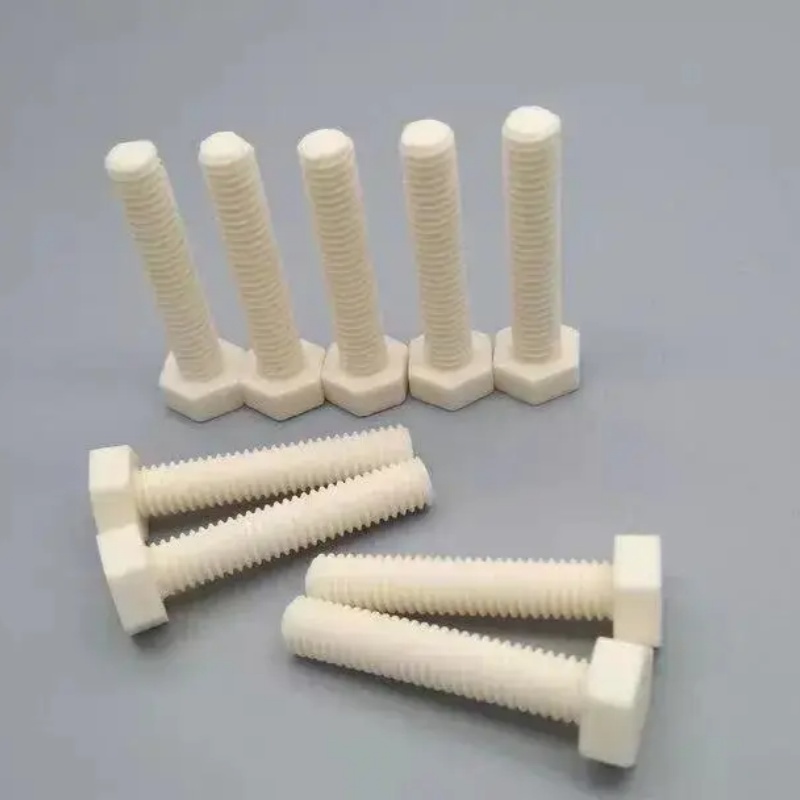
Zirconia ceramics are hard and brittle, making them difficult to machine. For precision structural parts, “making it” and “making it accurate” are two different things.
Dimensional Precision: Standard ceramic machining tolerances are usually around ±0.05 mm, while precision ceramic machining (such as CNC engraving and grinding) can control tolerances to ±0.01 mm or even ±0.001 mm. Procurement teams must confirm if the supplier possesses ultra-precision machining capabilities.
Surface Roughness (Ra): Surface finish is critical for seals or bearings. After grinding and polishing, premium products can achieve an Ra value of 0.05μm – 0.2μm, or even a mirror finish.
Microstructure: Smaller grain sizes lead to more stable material performance. The average grain size of high-quality zirconia should be ≤0.5μm.
Step 4: Final Decision Based on Application Scenarios
Different application scenarios prioritize different material properties. Here are selection recommendations for typical operating conditions:
Wear-resistant and High-load Scenarios (e.g., bearings, seal rings, pump valves):
Preferred: 3Y-TZP (3 mol% yttria-stabilized).
Reason: Leverages its extremely high fracture toughness and hardness to resist friction and mechanical impact.
High-temperature and Thermal Shock Scenarios (e.g., high-temp furnace tubes, sensor housings):
Preferred: Mg-PSZ (Magnesia-stabilized) or specific ZTA formulations.
Reason: These materials exhibit better phase stability at high temperatures and are less prone to Low-Temperature Degradation (LTD).
Medical and Biocompatibility Scenarios (e.g., dental implants, scalpels):
Preferred: High-purity 3Y-TZP or 5Y-TZP.
Reason: Must possess excellent biocompatibility, with extremely strict limits on metal impurities (such as iron and lead), typically requiring <100ppm.
Electronics and Insulation Scenarios (e.g., fiber optic ferrules, electronic substrates):
Preferred: High-purity zirconia.
Reason: Utilizes its high electrical resistivity (>10¹² Ω·cm) and low dielectric loss.

Procurement Guide: Pitfalls to Avoid
In actual procurement, beyond technical parameters, be wary of the following common pitfalls:
Beware of “Fake” Zirconia: Alumina is sometimes passed off as zirconia in the market. The simplest identification method is weighing; for the same volume, zirconia (density ~6.0) is much heavier than alumina (density ~3.9).
Check Powder Sources: 70% of ceramic product performance depends on the powder. Asking suppliers about the powder brand (e.g., Sinocera, Tosoh, etc.) and batch test reports is key to judging quality stability.
Small Batch Trial: For non-standard custom parts, it is recommended to conduct small-batch prototyping and testing first. Do not place orders based solely on sample appearance; actual operating condition tests (such as wear tests and dimensional fit tests) are mandatory.
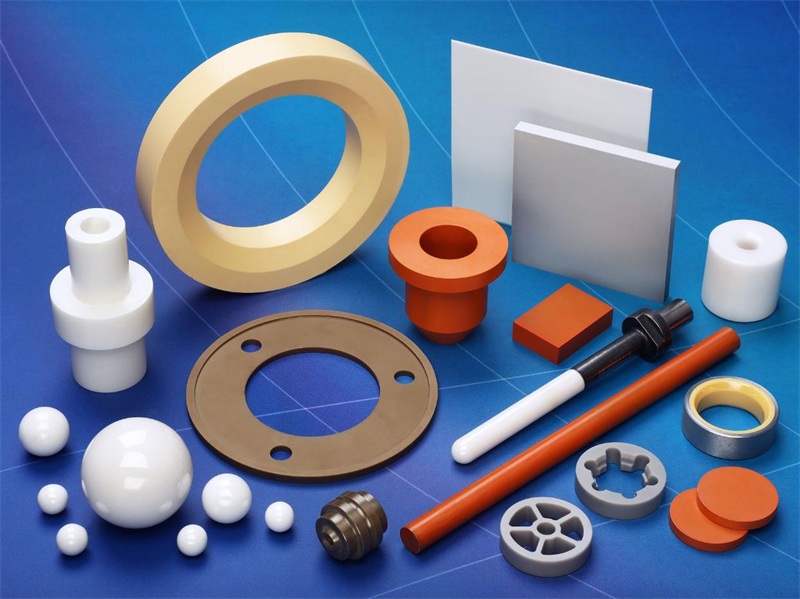
Selecting zirconia ceramic products is essentially about finding the balance between performance, precision, and cost. For engineers, clarifying operating conditions is the premise; for procurement, verifying qualifications and processes is the guarantee. Only by deeply understanding material characteristics can you select industrial ceramics that truly “work well.”