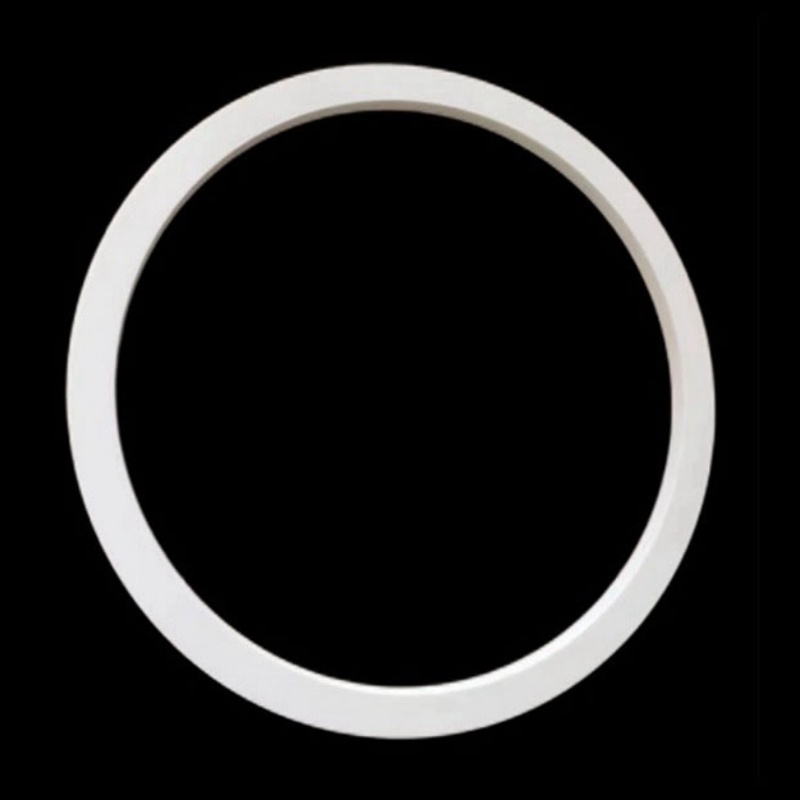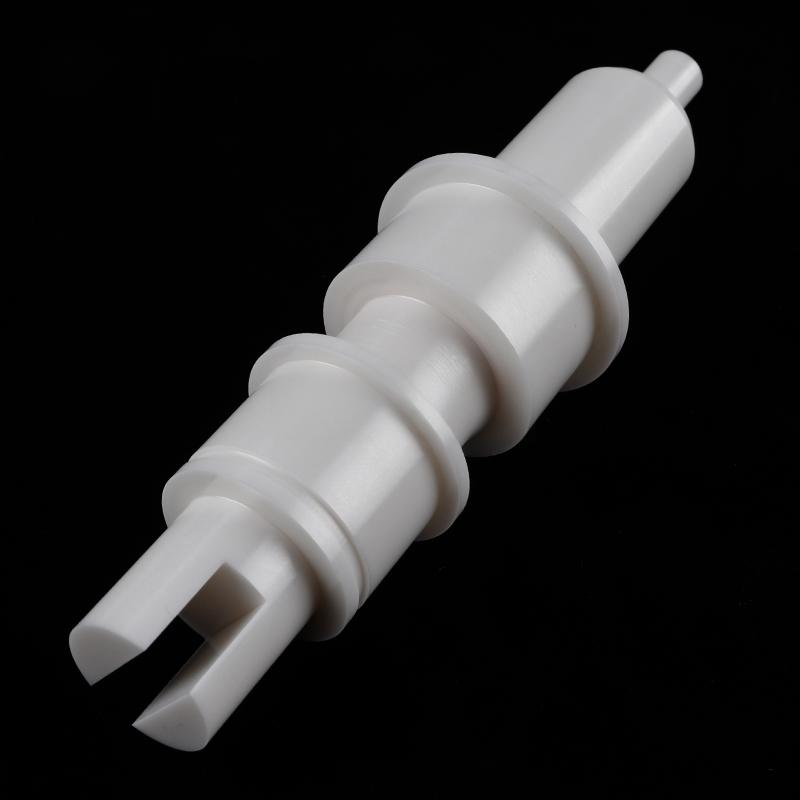
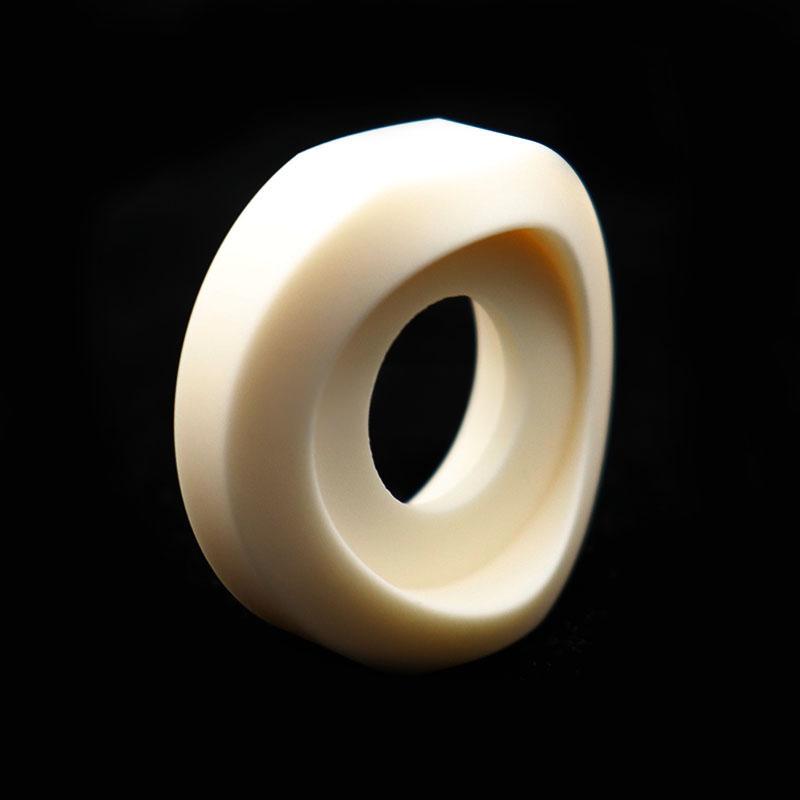
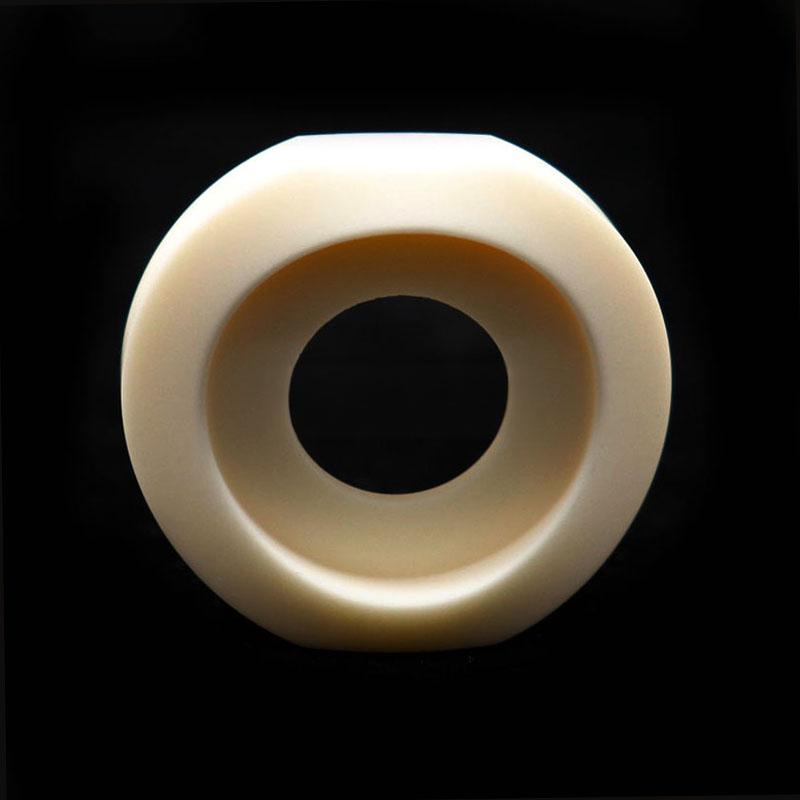
Aluminum Oxide Ceramic Guide Rings
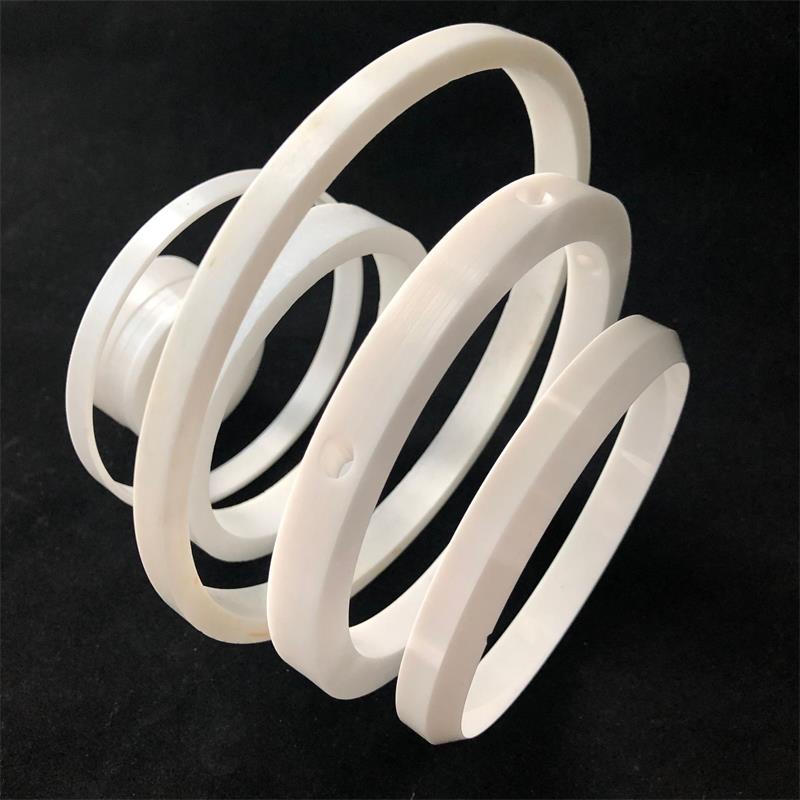
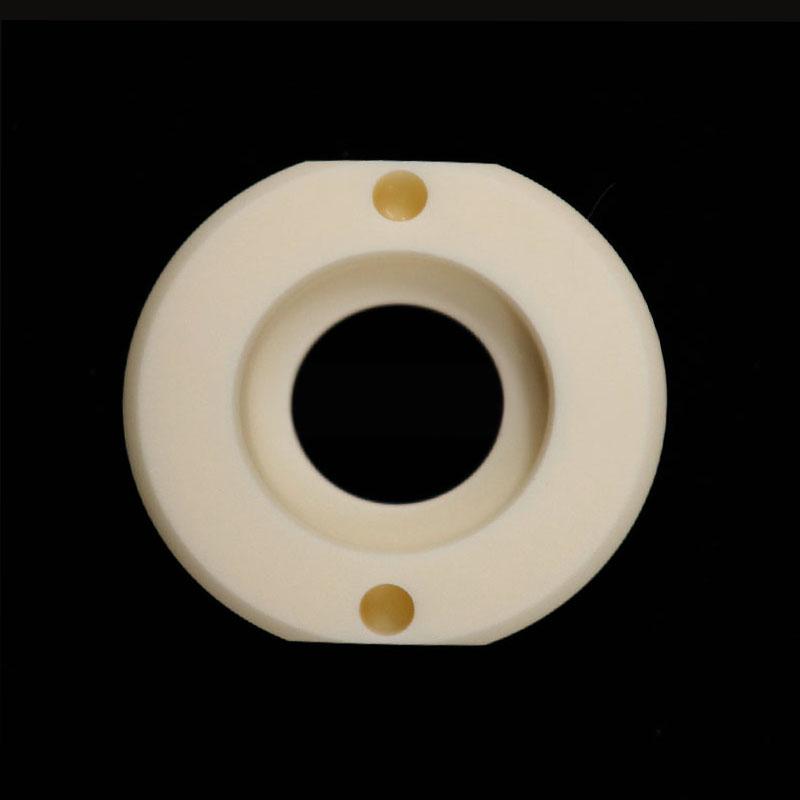
Aluminum oxide ceramic guide ring is a precision component used to control the path, tension, or lateral position of a moving wire, fiber, or yarn. Its engineering value comes from a combination of high hardness, low friction after polishing, electrical insulation, and dimensional stability under load. For designers evaluating guide rings, the most important question is not whether alumina is hard—it is whether a given purity grade and surface finish will survive the specific contact pressure, abrasion mechanism, and thermal cycling of the application without chipping or generating debris.
Why Alumina Works as a Guide Ring Material
Alumina’s wear resistance derives from its covalent and ionic bonding, which produces a hard, stiff lattice. In guide ring service, the ring usually contacts a moving metal wire, synthetic fiber, or glass yarn. The ceramic must resist abrasive scratching from the moving material and from environmental contaminants. High-purity alumina grades achieve Vickers hardness in the range of roughly 1500–1700 HV, depending on purity and grain size, which places them well above hardened steel in abrasion resistance. The polished contact surface, typically finished to Ra values below 0.4 µm and sometimes below 0.2 µm, reduces friction and prevents the guide from abrading the product it is meant to guide.
The material also offers volume resistivity above 10¹⁴ Ω·cm at room temperature for typical 99% grades, making alumina guide rings suitable where stray electrical currents or static discharge must be avoided, such as in wire drawing, textile processing, and semiconductor wafer handling.
Purity Grades and What They Change
Alumina guide rings are commonly available in 95%, 96%, 99%, and 99.5% or higher purity grades. The differences are not cosmetic. Lower-purity grades, such as 95% or 96% alumina, contain sintering aids such as silica and magnesia that form a glassy grain-boundary phase. This phase lowers sintering temperature and cost, but it also reduces hardness and can become a preferential wear or corrosion pathway in aggressive chemical environments. A 95% alumina ring may be entirely adequate for a general-purpose textile guide operating at moderate speeds and loads, where cost is a primary constraint.
As purity rises toward 99% and above, the glassy phase content decreases. The 99% grade is a practical compromise for guide rings that require better wear resistance, improved chemical stability, and higher dimensional consistency after sintering. For semiconductor, vacuum, or high-purity chemical applications, 99.5% and higher grades are specified to minimize extractable impurities and particle generation. Engineers should note that published hardness and strength values for “alumina” often refer to a specific grade; treating 99% data as universal for all alumina guide rings is a common specification error.
Where Aluminum Oxide Guide Rings Are Used
The largest volume of alumina guide rings serves textile and wire processing. In textile machinery, the ring guides yarn at high linear speed. Polished alumina reduces frictional heat and fiber damage, while its hardness resists the abrasive action of synthetic fibers, which can be more aggressive than natural fibers. In wire drawing and cable manufacturing, alumina guide rings and eyelets route wire without introducing metallic contamination or wear debris that could affect conductivity or surface quality.
Semiconductor equipment uses high-purity alumina guide rings for wafer positioning, process fixtures, and precision alignment, where electrical insulation, cleanroom compatibility, and low particle shedding matter. Industrial automation and precision machinery use them as locating rings and wear-resistant support components. In these roles, the ring’s dimensional stability under load and its low thermal expansion—typically around 6–8 × 10⁻⁶/K for 99% alumina—help maintain alignment across temperature changes.
Limitations That Matter in Practice
Alumina is brittle. Guide rings subjected to impact, misalignment, or sudden overloads can chip or fracture rather than deform. A chipped guide ring is not merely a dimensional problem; the fracture edge can abrade the product passing over it. Designs should avoid sharp internal corners and thin unsupported sections, and assembly procedures should prevent point loading on the ring face.
Thermal shock resistance is modest. Alumina has a relatively high elastic modulus and moderate thermal expansion, which together produce poor resistance to rapid temperature gradients. Applications involving frequent thermal cycling or localized heating from friction should be evaluated carefully. Where thermal shock is a dominant concern, partially stabilized zirconia offers higher fracture toughness, though with lower hardness and different wear behavior.
Machining cost is another practical constraint. Alumina guide rings are typically diamond-ground and polished after sintering. Achieving tight tolerances on inner diameter, concentricity, and surface finish adds cost. For less demanding guiding roles, a lower-purity grade with a simpler surface finish may provide adequate service life at lower total cost.
Material Selection Guidance
Choose aluminum oxide ceramic guide rings when the dominant requirements are abrasion resistance, electrical insulation, dimensional stability, and moderate cost for a ceramic. A 99% grade with a polished contact surface is the default engineering choice for most wire and fiber guide applications. Select 95–96% grades where wear loads are moderate and cost sensitivity is high. Specify 99.5% or higher purity only when contamination, extractable ions, or semiconductor cleanliness justifies the higher cost.
Consider zirconia when impact loading, thermal shock, or fracture toughness is the limiting factor rather than pure hardness. Zirconia’s higher toughness reduces chipping risk in mishandling-prone setups, but its lower hardness and different tribological behavior against certain counterfaces may change wear patterns. Silicon carbide may be preferable in extremely high-wear, high-temperature settings where electrical insulation is not required, but it is not a drop-in substitute for alumina in insulating guide applications.
FAQ
What is an aluminum oxide ceramic guide ring used for?
It guides and positions moving wire, fiber, or yarn while resisting abrasion and providing electrical insulation. Common uses include textile yarn guides, wire drawing eyelets, semiconductor alignment components, and precision machinery locating rings.
What purity of alumina is best for a guide ring?
99% alumina is the practical default for general wire and fiber guiding. Lower-purity 95–96% grades suit cost-sensitive, moderate-wear applications. Higher-purity 99.5%+ grades are specified for semiconductor, vacuum, or contamination-sensitive processes.
Is alumina a good choice for high-impact guide applications?
No. Alumina is brittle and prone to chipping under impact or point loading. Zirconia offers higher fracture toughness and is often preferred where mishandling or shock loading is likely.
Can alumina guide rings operate at high temperatures?
Yes, in continuous service without thermal cycling, dense alumina performs well at elevated temperatures. However, its thermal shock resistance is limited, so rapid heating or cooling should be avoided.
How does surface finish affect guide ring performance?
A polished contact surface reduces friction, product wear, and frictional heating. Typical guide rings are finished to Ra below 0.4 µm; critical fiber or fine-wire applications may require Ra below 0.2 µm.
When should I consider zirconia instead of alumina?
Consider zirconia when fracture toughness, impact resistance, or thermal shock resistance is more important than maximum hardness and electrical insulation. Alumina remains superior where hardness, cost efficiency, and insulating properties dominate.