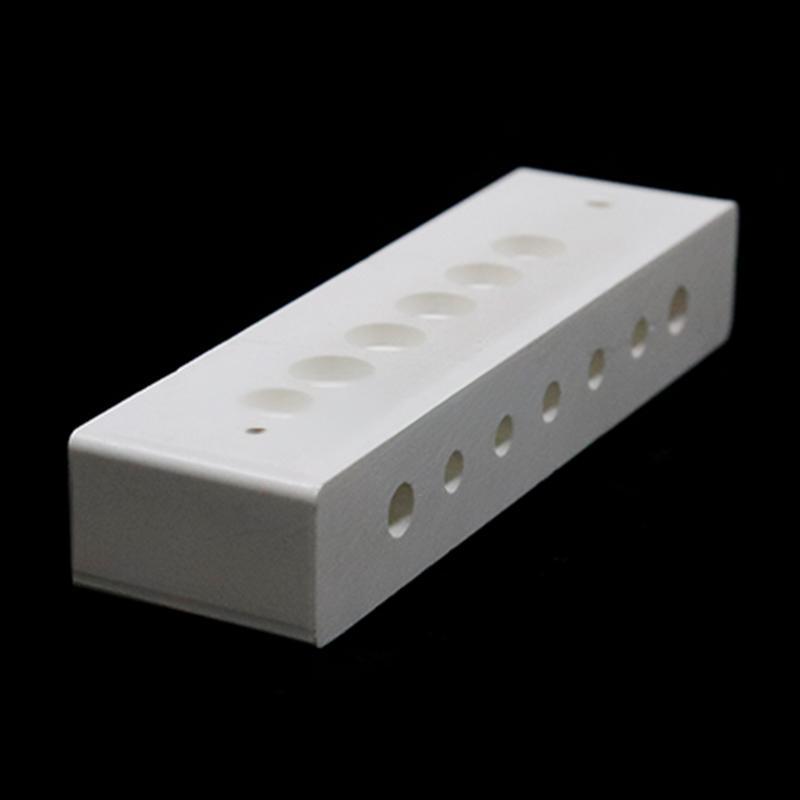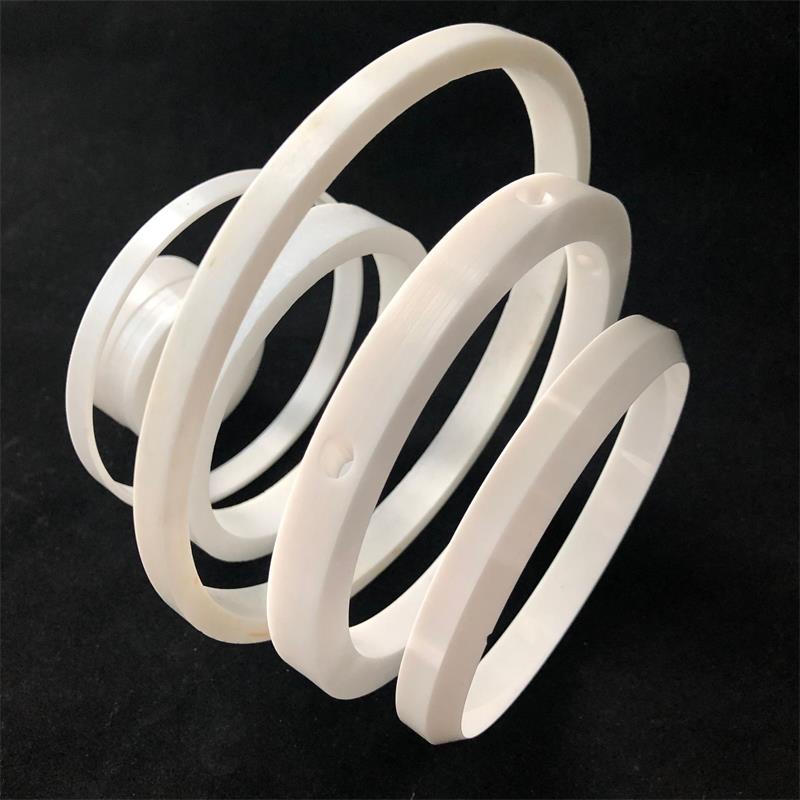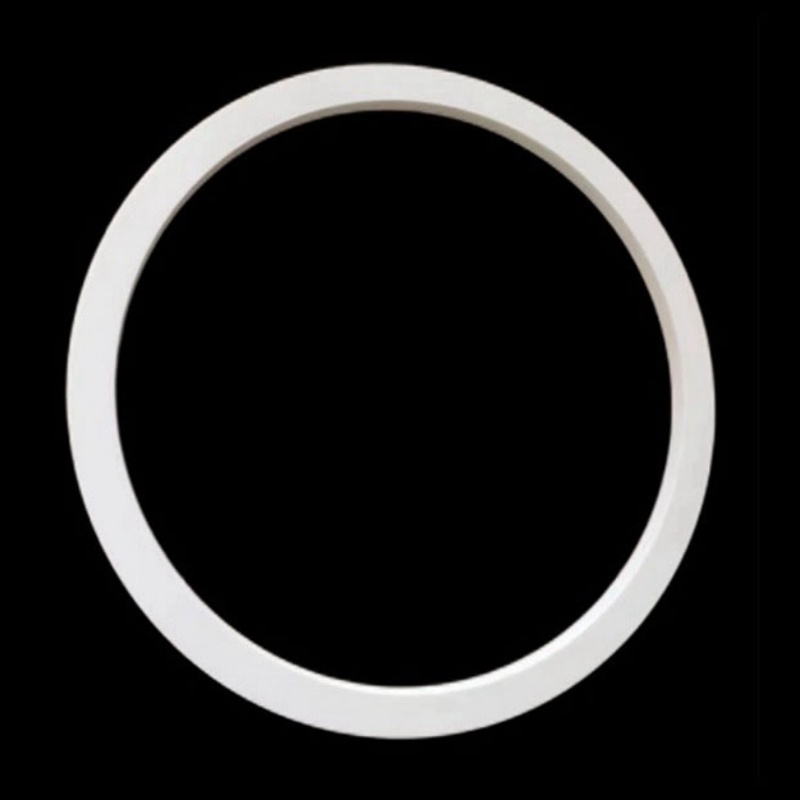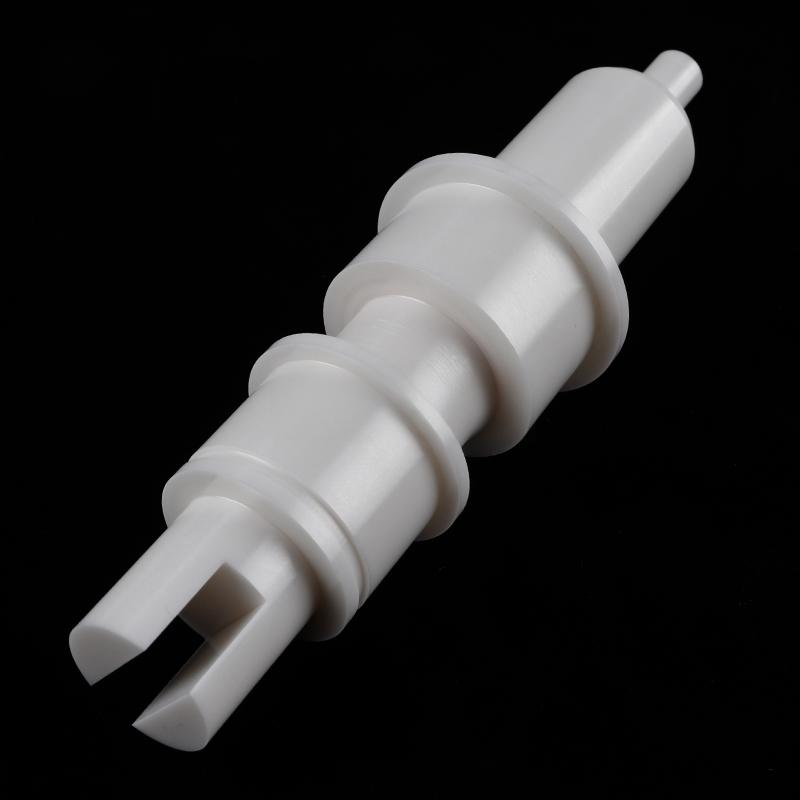
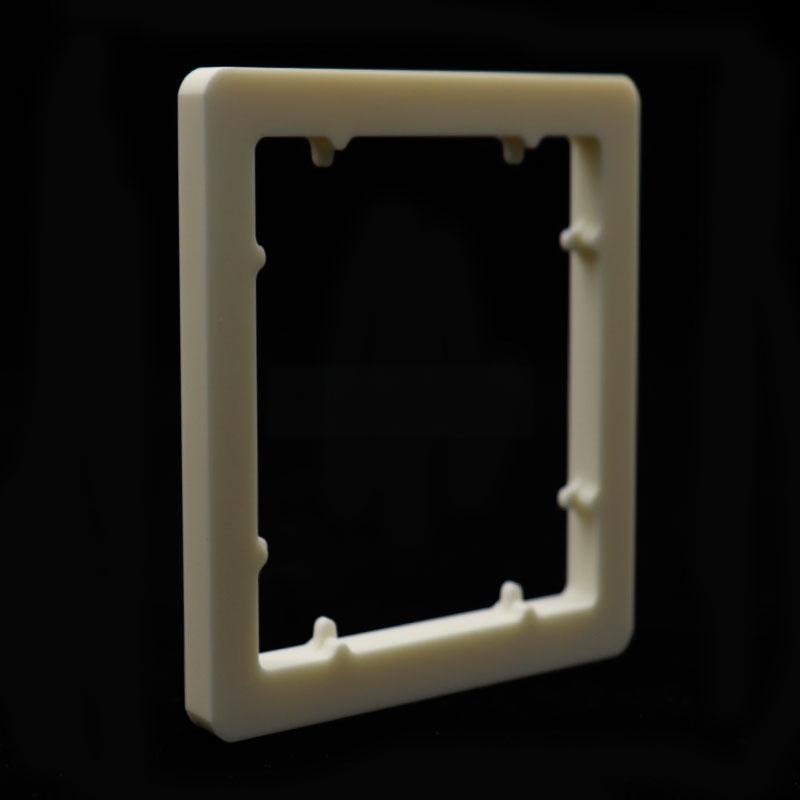
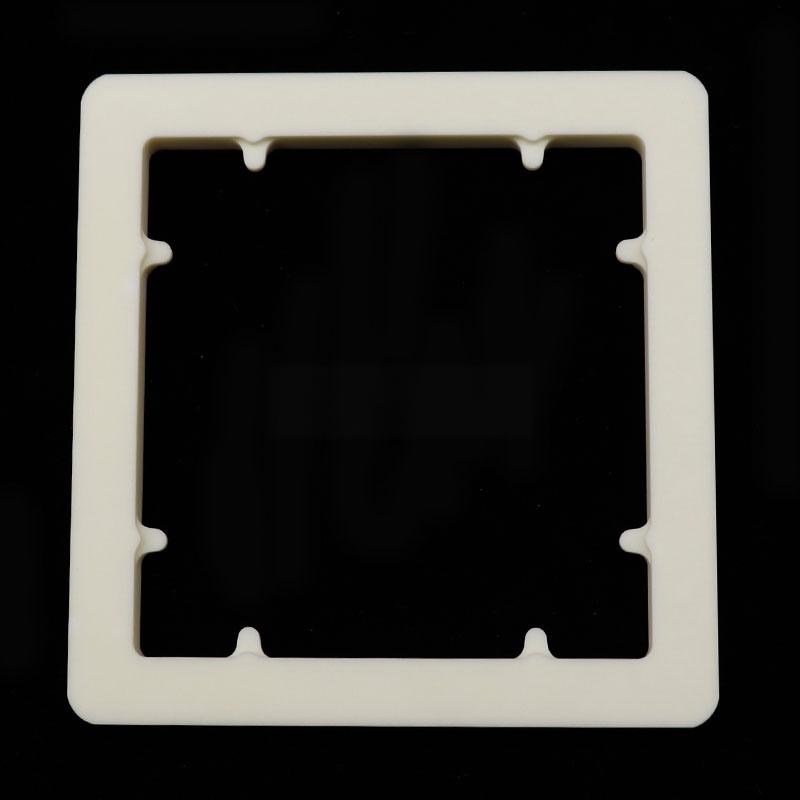
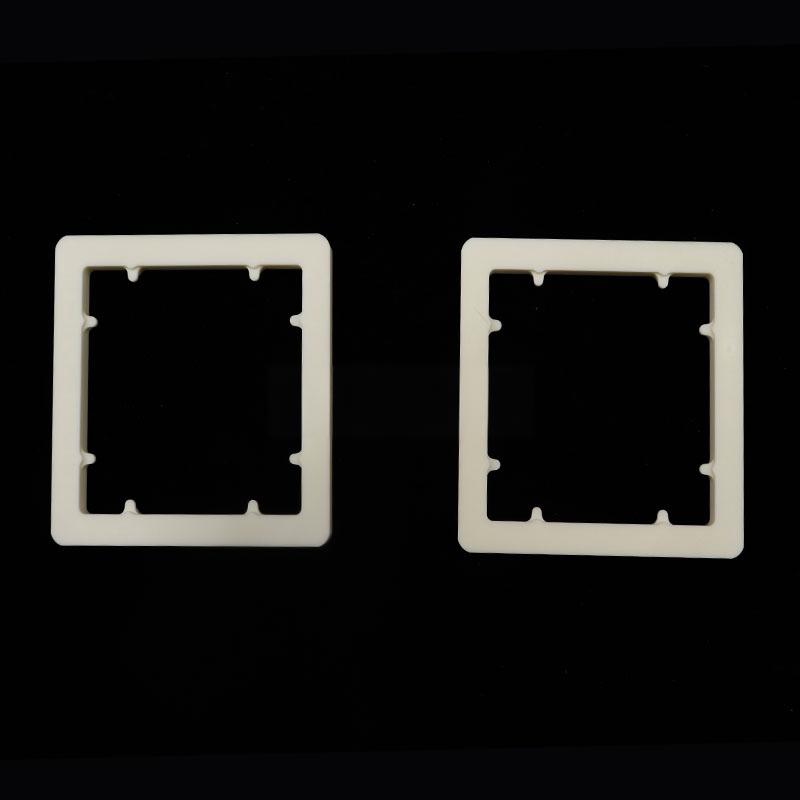
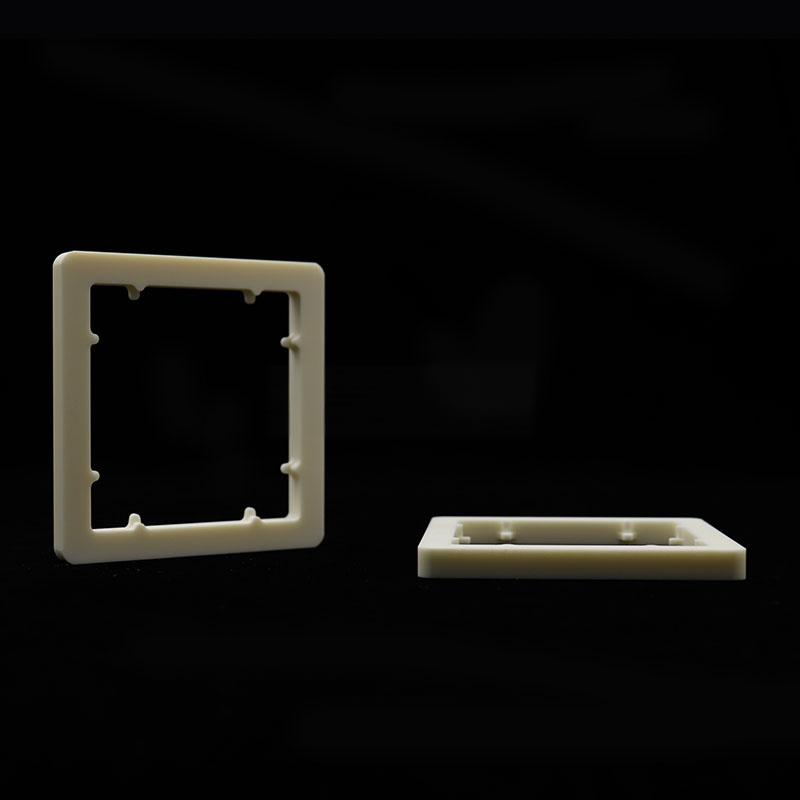
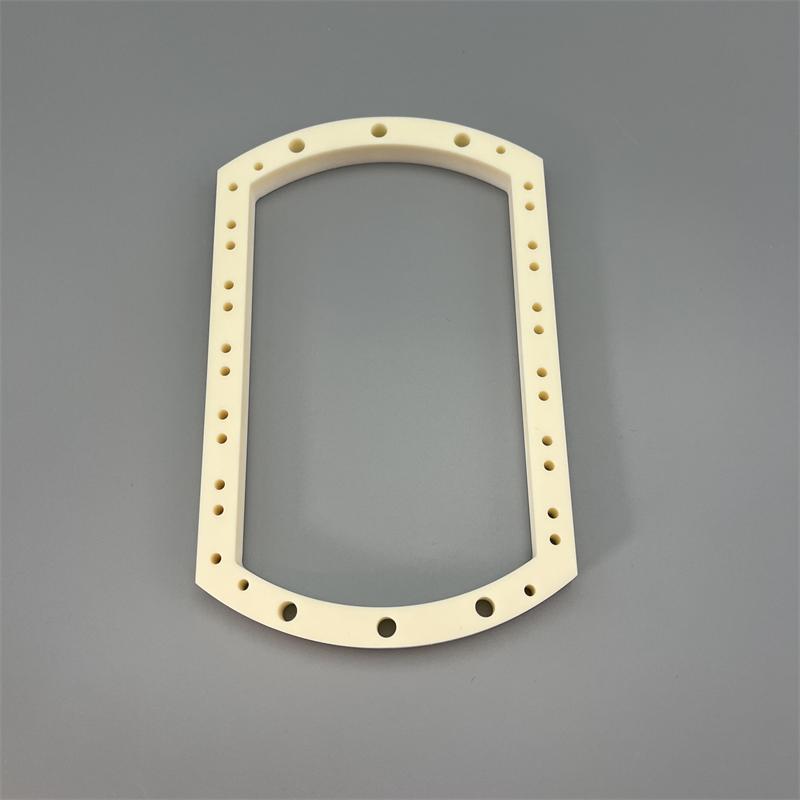
Aluminum Oxide Ceramic Frames
Aluminum oxide ceramic frame functions as a structural and insulating boundary in assemblies where electrical isolation, dimensional stability, and thermal endurance must coexist within a single component. Unlike simple ceramic spacers or washers, these frames define internal windows, mounting features, and clearance paths that directly affect the performance of power modules, RF housings, sensor packages, and vacuum subsystems. The material choice is rarely arbitrary: engineers select alumina frames because the combination of dielectric strength, mechanical rigidity, and thermal stability is difficult to achieve with polymers, metals, or lower-performance ceramics.
The properties of an alumina frame originate from the strong ionic-covalent bonding of aluminum oxide and its high melting point. In polycrystalline form, the material’s performance is governed primarily by purity and microstructure. Commercial grades range from 85% to 99.9% Al₂O₃, with the remainder typically consisting of sintering aids such as silica, magnesia, or calcia that form a glassy grain-boundary phase. That glass phase is useful for densification at lower temperatures but becomes a liability at elevated temperatures and in corrosive environments, where it can soften, leach, or promote creep.
For most industrial frame applications, 95% and 99% alumina represent the practical workhorses. A 95% alumina frame typically offers flexural strength in the 300–350 MPa range, volume resistivity above 10¹⁴ Ω·cm at room temperature, and a dielectric constant near 9.2–9.5 at 1 MHz. Higher-purity grades, particularly 99.5% and above, improve dielectric loss, corrosion resistance, and surface finish while reducing outgassing—an important consideration in vacuum and semiconductor process environments.
Thermal behavior is equally central to frame design. Alumina’s coefficient of thermal expansion is approximately 7–8 × 10⁻⁶/°C in the 25–800°C range, which is reasonably compatible with many metals and silicon, though not perfectly matched. Thermal conductivity sits around 20–30 W/(m·K), sufficient to dissipate localized heat but not so high that the frame becomes an unintended thermal bridge. The material can operate continuously at temperatures well above 1000°C depending on grade, but thermal shock resistance remains a genuine limitation. Alumina’s inherent brittleness means that rapid temperature changes—particularly quenches—can generate cracks that propagate catastrophically.
This trade-off between thermal capability and shock sensitivity often determines where alumina frames are appropriate. In power electronics, RF modules, and sensor packaging operating in the 80–200°C range with moderate thermal cycling, alumina frames perform reliably for years. In furnace fixtures or high-temperature processing equipment exposed to 600°C and above, the frame can still function, but designers must control heating and cooling rates and avoid constraints that convert thermal expansion into tensile stress.
From an electrical standpoint, alumina is a strong insulator with low dielectric loss, which is why it is used for insulating boundaries around high-voltage or high-frequency circuits. Volume resistivity remains above 10¹² Ω·cm even at 300°C, a level that polymers cannot approach. This makes alumina frames suitable for applications where leakage current across a contaminated surface could cause signal degradation or safety hazards. However, the material is not immune to surface tracking if conductive deposits accumulate, so creepage distances and surface cleanliness still matter.
Mechanical design with alumina frames requires acknowledging brittleness as a first-order constraint. Edge chipping from point loads, over-tightened fasteners, or mishandling during assembly is a common failure mode in practice. Unlike metal frames, alumina cannot yield locally to redistribute stress; it fractures. This means clamping should use load-spreading washers or compliant interfaces, and assembly fixtures should avoid forcing misaligned parts into place. Machining alumina into complex frame geometries is possible with diamond tooling, but costs rise with feature complexity and tolerance tightness. Typical achievable tolerances for critical features are in the 0.05–0.10 mm range, with finer tolerances possible at additional cost.
When alumina is compared with other technical ceramics, the trade-offs become clearer. Zirconia offers higher fracture toughness and flexural strength—often two to three times that of alumina—but has lower thermal conductivity and is more expensive. For frames subjected to mechanical shock or high bending loads, zirconia may justify the cost. Silicon nitride provides superior thermal shock resistance, making it a candidate when rapid temperature cycling is unavoidable, though it is also more costly and less readily available in complex frame geometries. Silicon carbide offers higher thermal conductivity and hardness but is electrically semiconducting unless specially processed, eliminating its use as an insulator.
The selection of an alumina frame grade should follow from the application’s dominant requirements. For general electrical insulation with moderate mechanical demands, 95% alumina is often sufficient and cost-effective. When dielectric loss must be minimized, outgassing reduced, or corrosion resistance improved—particularly in semiconductor, vacuum, or analytical instrument applications—higher-purity grades such as 99.5% or 99.8% become appropriate. Where structural loads are high or impact resistance is critical, alumina may be the wrong material entirely, and a zirconia or composite frame should be evaluated.
One practical consideration often overlooked is the difference between as-sintered and machined surfaces. As-sintered alumina has a matte finish with surface roughness in the micrometer range and may contain residual porosity near the surface. Machined surfaces are smoother and dimensionally precise but can introduce subsurface microcracks that reduce strength. For frames requiring sealing surfaces or high dielectric strength across a short path, fine grinding or polishing may be necessary, but the associated strength reduction should be accounted for in the design margin.
FAQ
What is an aluminum oxide ceramic frame used for?
It serves as a structural insulator in assemblies that require electrical isolation, dimensional stability, and thermal endurance—such as power module boundaries, RF component mounting, sensor packaging, and vacuum chamber fixtures.
What are the main advantages of alumina frames over polymer or metal alternatives?
Alumina offers higher temperature capability, better dimensional stability under thermal cycling, superior dielectric strength, and lower outgassing compared with most polymers. Unlike metals, it is electrically insulating and does not corrode or oxidize at elevated temperatures.
What are the limitations of aluminum oxide ceramic frames?
Brittleness and thermal shock sensitivity are the primary mechanical limitations. Alumina frames can chip or fracture under point loads, impact, or rapid temperature changes. They also require diamond machining, which limits achievable complexity and increases cost for tight-tolerance features.
Is alumina suitable for high-temperature applications?
Yes, depending on grade, alumina frames can operate continuously above 1000°C. However, thermal shock resistance is limited, so heating and cooling rates must be controlled, and the frame should not be constrained in a way that generates tensile stress during thermal expansion.
When should I consider zirconia instead of alumina for a frame?
Zirconia is worth considering when fracture toughness or flexural strength is the governing requirement—particularly if the frame will experience mechanical shock, bending loads, or high-stress assembly conditions. Zirconia costs more and has lower thermal conductivity, so the trade-off depends on which property is most critical.
Does higher alumina purity always mean better performance?
Not universally. Higher purity improves dielectric properties, corrosion resistance, and outgassing behavior, which matters for semiconductor and vacuum applications. But 99.9% alumina is more expensive and may be unnecessary for general industrial insulation where 95% or 99% grade provides adequate performance.