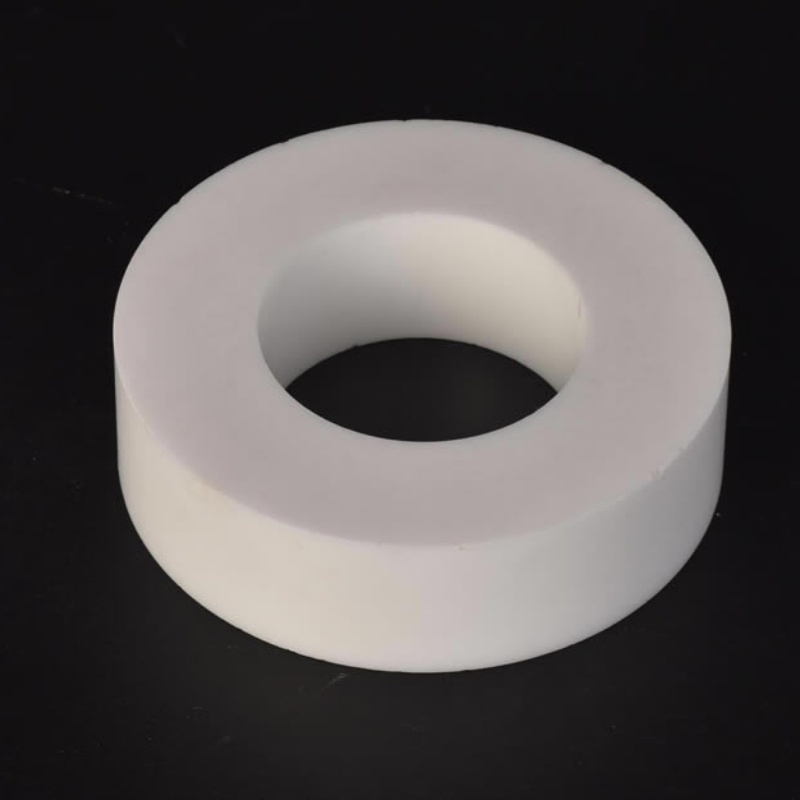
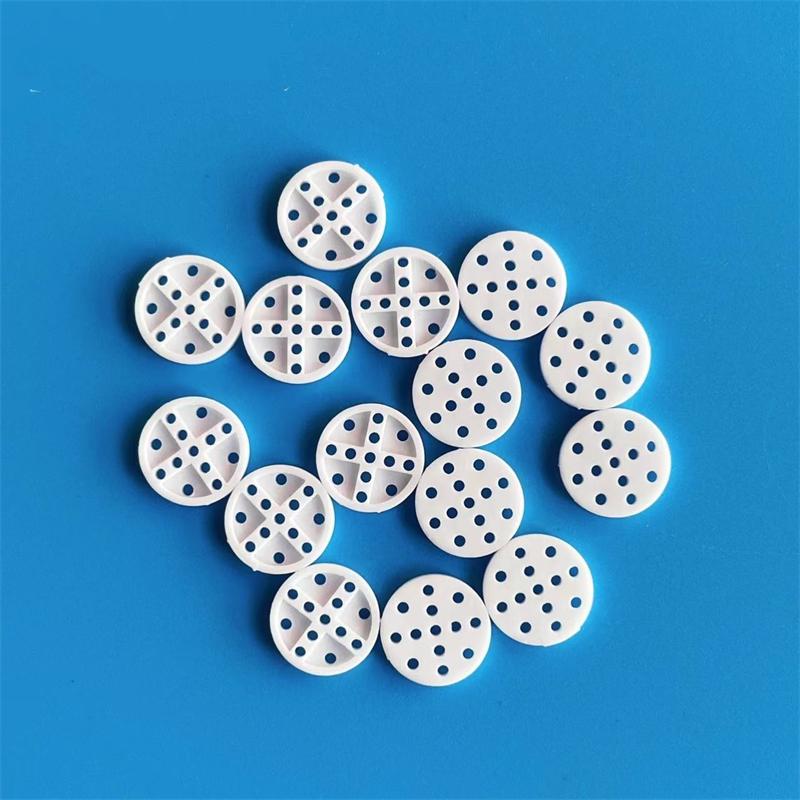
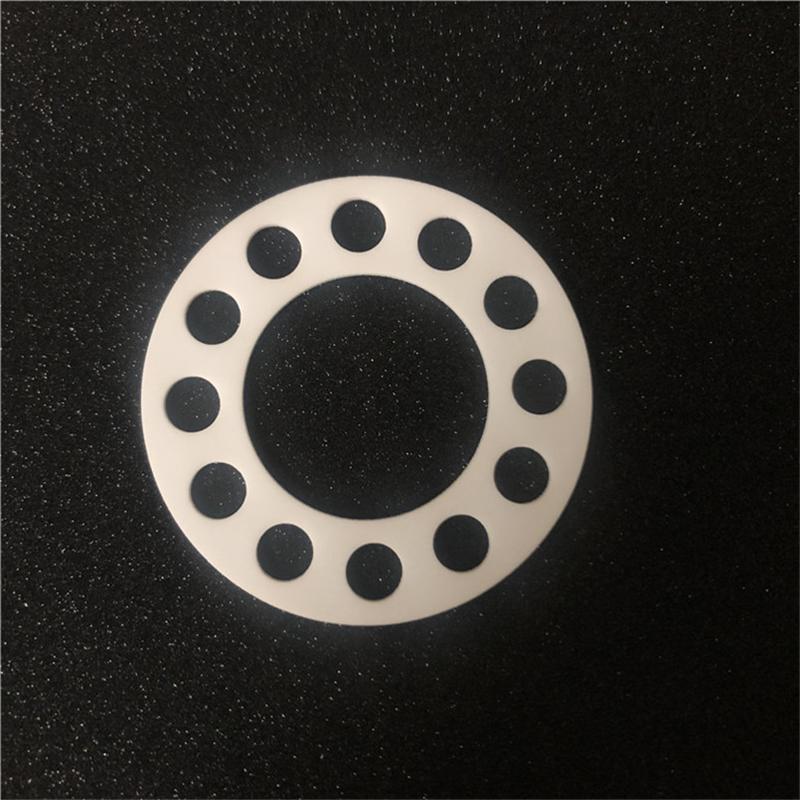
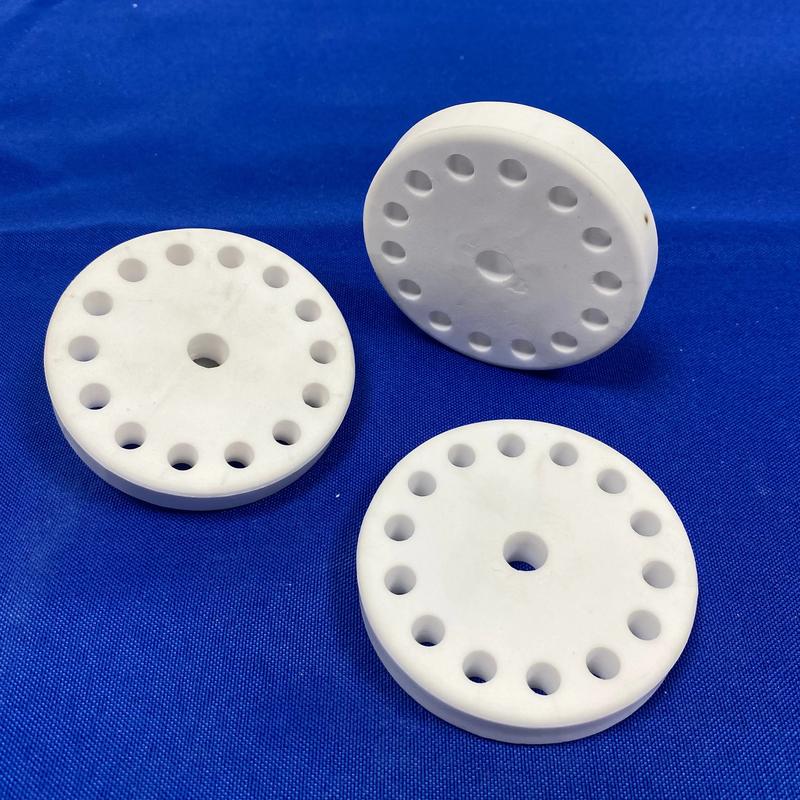
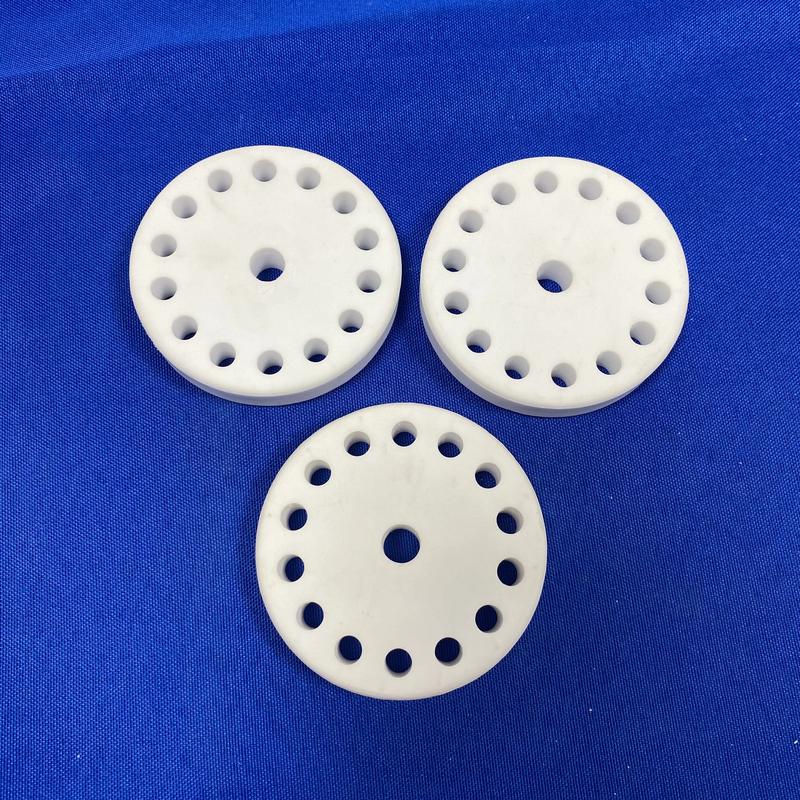
Alumina Ceramic Porous Disc
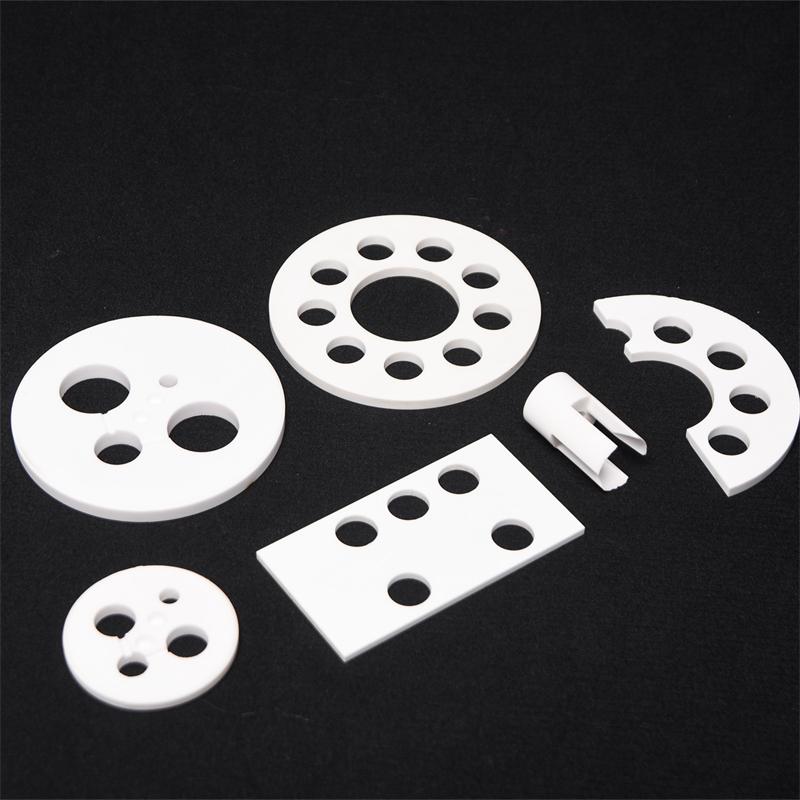
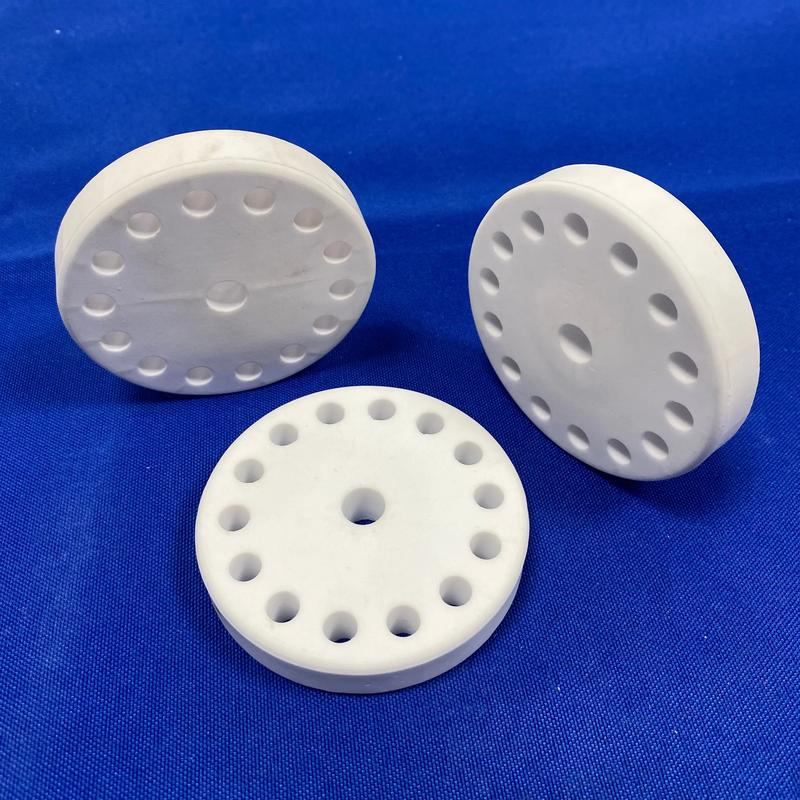
An alumina ceramic porous disc is a flat, disc-shaped component fabricated from aluminum oxide (Al₂O₃) that contains a controlled network of interconnected or isolated pores throughout its structure. These pores give the disc the ability to allow selective passage of gases or liquids while maintaining the mechanical rigidity, chemical inertness, and high-temperature stability characteristic of dense alumina ceramics. Porosity levels typically range from 20% to 60% by volume, with pore sizes that can be engineered from sub-micron to several hundred microns depending on the manufacturing route.
Unlike dense alumina ceramics, which are valued for their impermeability, porous alumina discs are designed for applications where controlled fluid transport, filtration, gas distribution, or thermal insulation is required.
Key Takeaways
Porous alumina discs combine the chemical and thermal stability of Al₂O₃ with a tunable open-pore structure.
They are widely used in filtration, gas diffusion, catalysis support, and high-temperature sensor housings.
Pore size, porosity, permeability, and mechanical strength are interdependent variables that must be balanced during material selection.
Manufacturing methods — including partial sintering, foaming, and sacrificial template techniques — directly determine the final pore architecture.
Proper selection requires understanding the operating environment: temperature, chemical exposure, pressure differential, and required flow rate.
What Is an Alumina Ceramic Porous Disc?
At its core, a porous alumina disc is a structural ceramic body where a deliberate fraction of the total volume consists of voids. These voids may be interconnected (open porosity), allowing fluids to pass through, or isolated (closed porosity), which primarily affects density and thermal conductivity.
In most industrial applications, open porosity is the desired characteristic. The disc functions as a semi-permeable barrier — it can filter particles from a fluid stream, distribute gas evenly across a surface, or serve as a scaffold for catalyst deposition.
The alumina matrix itself is typically composed of high-purity α-alumina (alpha-alumina), the most thermodynamically stable crystalline form of aluminum oxide. This phase provides excellent resistance to chemical attack, hardness, and the ability to withstand continuous service temperatures exceeding 1600°C in inert atmospheres.
How Are Porous Alumina Discs Manufactured?
The pore structure of an alumina disc is largely determined by the fabrication process. Several established methods are used in industry:
Partial Sintering
This is the most common approach. Alumina powder is compacted into a green body and then sintered at a temperature below full densification. Because the sintering temperature is intentionally kept lower than what would produce a fully dense ceramic, a controlled amount of porosity remains between the partially bonded grains. By adjusting the sintering temperature, hold time, and initial particle size distribution, engineers can tune the pore size and overall porosity.
Sacrificial Template (Pore-Forming Agent) Method
A pore-forming agent — such as starch, polymer microspheres, or carbon particles — is mixed uniformly into the alumina powder before forming. During sintering, the template material burns out or decomposes, leaving behind voids that replicate its size and shape. This method offers good control over pore size distribution but requires careful management of burnout kinetics to avoid cracking.
Foam Replication
A polymer foam scaffold is infiltrated with an alumina slurry, dried, and then sintered. The foam burns away, leaving a highly porous ceramic structure that replicates the foam’s open-cell geometry. This method tends to produce higher porosity levels (often above 70%) and is more commonly used for filters and insulation rather than precision disc components.
Freeze Casting
In this technique, an alumina slurry is directionally frozen. Ice crystals grow in a controlled pattern, pushing alumina particles into the spaces between them. After freeze-drying and sintering, the result is a ceramic with aligned, lamellar pore channels. This method is primarily used in research and specialized applications where directional permeability is needed.
Key Material Properties
The performance of a porous alumina disc depends on several interrelated properties. Understanding how these interact is essential for proper material selection.
Porosity and Pore Size
Porosity is typically expressed as a percentage of total volume. In porous alumina discs, open porosity values commonly fall between 20% and 50%. The mean pore diameter can range from approximately 0.1 μm to over 100 μm, depending on the manufacturing method and process parameters. Smaller pores provide finer filtration but reduce permeability and increase pressure drop.
Permeability
Gas or liquid permeability describes how easily a fluid can flow through the porous structure under a given pressure differential. It is influenced by pore size, porosity, tortuosity (the曲折 nature of the pore paths), and pore interconnectivity. Higher porosity and larger pores generally increase permeability, but at the expense of mechanical strength.
Mechanical Strength
Porous ceramics are inherently weaker than their dense counterparts. The flexural strength of porous alumina decreases significantly as porosity increases. Typical values for a disc with 30–40% porosity might fall in the range of 50–150 MPa, compared to 300–400 MPa for fully dense alumina. This trade-off must be carefully evaluated in structural applications.
Thermal Stability
Alumina retains its structural integrity at very high temperatures. Porous alumina discs can typically operate continuously at temperatures above 1500°C in air, making them suitable for high-temperature filtration, combustion systems, and thermal barrier applications.
Chemical Resistance
Alpha-alumina is highly resistant to acids, alkalis, and molten metals at elevated temperatures. This makes porous alumina discs suitable for aggressive chemical environments where metallic or polymeric filters would degrade.
Thermal Conductivity
The presence of pores significantly reduces thermal conductivity compared to dense alumina. While dense alumina has a thermal conductivity of roughly 25–30 W/m·K, a porous disc with 40% porosity may exhibit values around 5–10 W/m·K, depending on pore morphology. This makes porous alumina useful in applications requiring thermal insulation alongside structural function.
Advantages of Porous Alumina Discs
High-temperature capability: Suitable for continuous use in environments where metals and polymers would fail.
Chemical inertness: Resistant to most acids, alkalis, and corrosive gases.
Tunable pore structure: Porosity and pore size can be engineered to match specific application requirements.
Good wear resistance: Alumina’s inherent hardness provides resistance to abrasive particle erosion.
Dimensional stability: Maintains shape and structural integrity under thermal cycling.
Biocompatibility: Alumina is biologically inert, making it relevant in certain medical and laboratory applications.
Limitations and Design Constraints
No material is without trade-offs. Engineers should consider the following when specifying porous alumina discs:
Brittleness: Like all advanced ceramics, porous alumina has low fracture toughness. Mechanical shock or uneven thermal gradients can cause cracking.
Reduced strength with higher porosity: Designers must balance the need for permeability against the loss of mechanical integrity.
Machining difficulty: Post-sintering machining of porous alumina is possible but requires diamond tooling and careful process control.
Clogging risk: In filtration applications, fine particles can block pores over time, requiring periodic cleaning or back-flushing.
Limited thermal shock resistance: While alumina is stable at high temperatures, rapid temperature changes can induce thermal stress fractures, especially in components with complex pore geometries.
Typical Applications
Porous alumina discs serve critical roles across multiple industries:
Filtration and Separation
Used as filter elements in high-temperature gas filtration, molten metal filtration, and aggressive chemical liquid filtration. The ceramic’s chemical resistance allows it to operate in environments where stainless steel or polymer filters would corrode or degrade.
Gas Distribution and Diffusion
In combustion systems and chemical reactors, porous alumina discs provide uniform gas distribution across a reaction zone. The controlled pore structure ensures even flow without channeling.
Catalyst Support
The high surface area and thermal stability of porous alumina make it an effective substrate for catalyst coatings. The open-pore structure allows reactant gases to access the catalytic surface efficiently.
Sensor Protection
Porous alumina discs are used as protective caps or membranes on high-temperature sensors, such as oxygen sensors in automotive exhaust systems. The porosity allows target gases to reach the sensing element while blocking particulate contaminants.
Thermal Insulation
In applications where both structural support and thermal insulation are needed, porous alumina discs offer a dual-function solution.
Laboratory and Analytical Equipment
Used in chromatography supports, sample preparation platforms, and as substrates in various analytical techniques.
Material Selection Considerations
When specifying a porous alumina disc for a particular application, several factors should be evaluated:
Required porosity level: Higher porosity increases flow but reduces strength.
Mean pore size: Must be matched to the particle size being filtered or the flow characteristics needed.
Operating temperature: Confirm that the alumina grade and pore structure can withstand the maximum service temperature, including transient peaks.
Chemical environment: While alumina is broadly resistant, certain extreme conditions (e.g., hot concentrated hydrofluoric acid) can attack it.
Pressure differential: The disc must withstand the maximum expected pressure drop without fracture.
Disc dimensions and tolerances: Thickness, diameter, and flatness tolerances should be specified based on the mechanical mounting and sealing requirements of the assembly.
Surface finish requirements: Some applications may require ground or lapped surfaces for proper sealing.
Typical Grades and Available Forms
In the general advanced ceramics market, porous alumina discs are commonly associated with alumina purity levels of 96%, 99.5%, and 99.8% Al₂O₃. Higher purity grades offer better chemical resistance and higher maximum service temperatures but may have different sintering behavior that affects pore structure development.
Available shapes are not limited to discs — the same porous ceramic technology is applied to tubes, plates, cylinders, and custom geometries. However, the disc form is particularly common in filtration and gas distribution applications due to its compatibility with standard housing and sealing arrangements.
Common disc diameters in industrial use range from a few millimeters for sensor applications to over 200 mm for large-area filtration elements. Thickness typically ranges from 1 mm to 20 mm, depending on the required mechanical strength and pressure rating.
Frequently Asked Questions
What is the difference between open porosity and closed porosity in alumina ceramics?
Open porosity refers to pores that are interconnected and accessible from the surface, allowing fluids to flow through the material. Closed porosity consists of isolated voids trapped within the ceramic matrix that do not connect to the surface or to each other. For filtration, gas diffusion, and catalysis applications, open porosity is essential because it provides the pathways through which fluids travel. Closed porosity primarily affects density and thermal conductivity but does not contribute to permeability. Most porous alumina discs designed for industrial use are engineered to maximize open porosity.
Can porous alumina discs be used for liquid filtration?
Yes, porous alumina discs are used for liquid filtration, particularly in applications involving high temperatures, corrosive chemicals, or abrasive slurries where polymer or metallic filters would degrade. The selection of pore size must match the particle size to be retained. One practical consideration is that porous ceramic filters can experience gradual pore blockage, so system designs often incorporate back-flushing or periodic cleaning cycles to maintain flow rates.
How does porosity affect the mechanical strength of alumina discs?
Porosity and mechanical strength have an inverse relationship. As porosity increases, the load-bearing cross-section of the ceramic decreases, and stress concentrations around pore boundaries increase. Empirical models, such as the exponential relationship described by Ryskewitch and Duckworth, show that strength decreases exponentially with increasing porosity. In practical terms, a disc with 20% porosity will be significantly stronger than one with 50% porosity of the same alumina grade. Engineers must balance the required permeability against the mechanical loads the disc will experience.
What temperatures can porous alumina discs withstand?
Porous alumina discs made from high-purity alpha-alumina can typically withstand continuous service temperatures above 1500°C in air. In inert or reducing atmospheres, the maximum temperature may be even higher. However, the practical upper limit also depends on the specific application — for example, thermal cycling rates, mechanical loads at temperature, and the presence of corrosive species can all affect long-term performance. Rapid temperature changes should be avoided to prevent thermal shock cracking.
How are porous alumina discs cleaned or maintained?
Cleaning methods depend on the application and the nature of the fouling material. Common approaches include ultrasonic cleaning in appropriate solvents, back-flushing with compressed gas or liquid, and in some cases, thermal cleaning (burning off organic deposits at high temperature). Chemical cleaning with acids or bases may also be used, taking advantage of alumina’s broad chemical resistance. The cleaning method should be selected to avoid damaging the pore structure or introducing contaminants.
Can porous alumina discs be machined to tight tolerances?
Yes, but with limitations. Post-sintering machining of porous alumina requires diamond tooling due to the material’s hardness. The porous structure can make machining more challenging than dense alumina because the tool may interact unpredictably with pore boundaries, potentially causing micro-chipping. For critical dimensions, it is often better to achieve the required tolerances during the pressing and sintering stages rather than relying entirely on post-sintering machining.
Are porous alumina discs suitable for high-pressure applications?
They can be used under pressure, but the maximum allowable pressure differential depends on the disc’s porosity, thickness, pore size, and mechanical strength. Higher porosity discs with large pores are more susceptible to fracture under pressure. Engineers should consult the specific material’s flexural strength data and apply appropriate safety factors when designing for pressure-containing applications.
What industries commonly use porous alumina discs?
Key industries include chemical processing (catalyst supports, reactor internals), metallurgy (molten metal filtration), automotive (oxygen sensor protection), energy (gas turbine filtration, combustion systems), environmental engineering (high-temperature gas cleanup), electronics (substrates and insulators), and laboratory/scientific instrumentation. The common thread is the need for a chemically stable, thermally robust, permeable ceramic component.
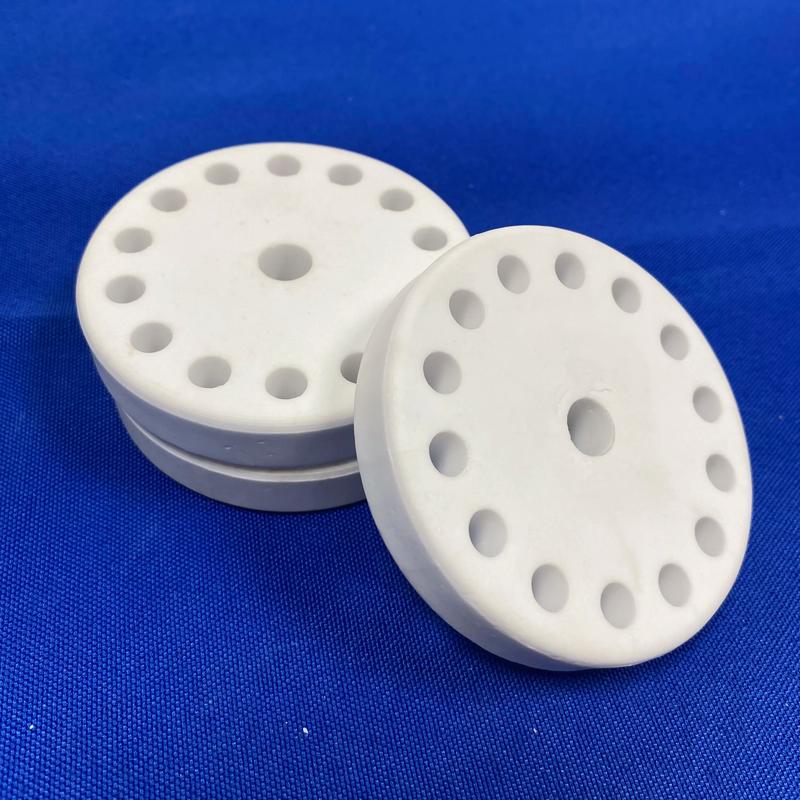
Alumina ceramic porous discs occupy a unique position in advanced ceramics — they deliver the chemical and thermal resilience of dense alumina while introducing controlled permeability through engineered pore networks. Their value lies not in any single property, but in the combination of high-temperature stability, chemical inertness, and tunable porosity that enables them to function in demanding filtration, gas distribution, catalysis, and sensor protection roles.
Successful application of porous alumina discs requires a clear understanding of the interplay between porosity, pore size, mechanical strength, and operating environment. By carefully matching these parameters to the specific demands of the application, engineers can leverage this material class to solve problems that conventional metals, polymers, and dense ceramics cannot address.