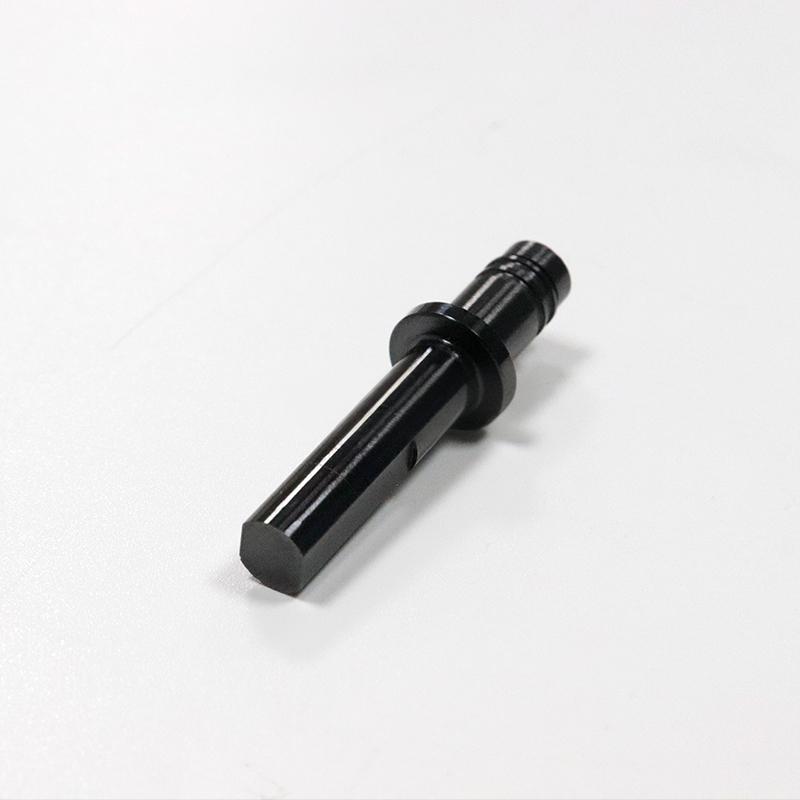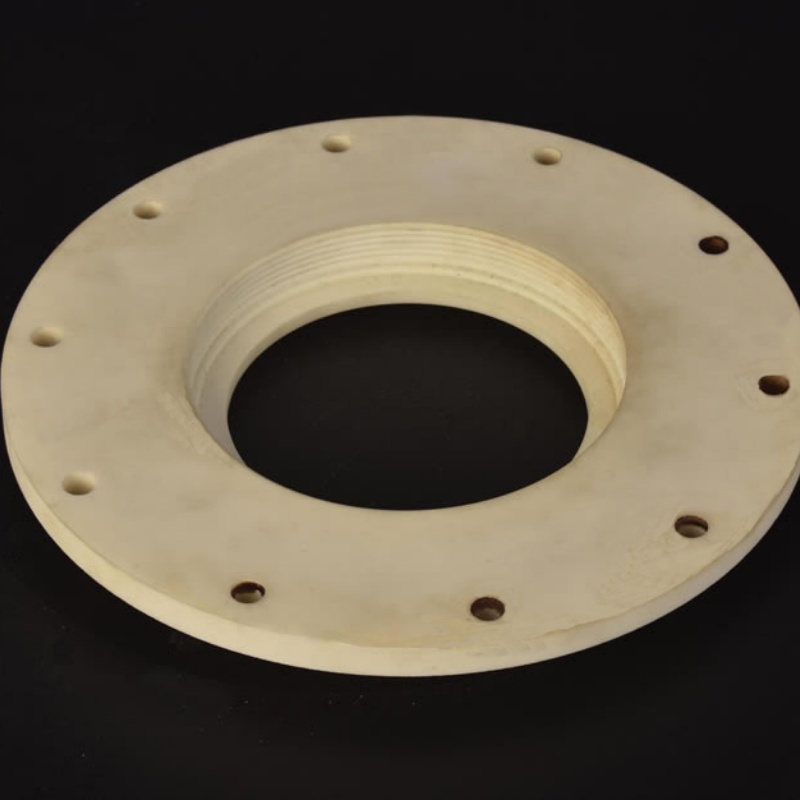
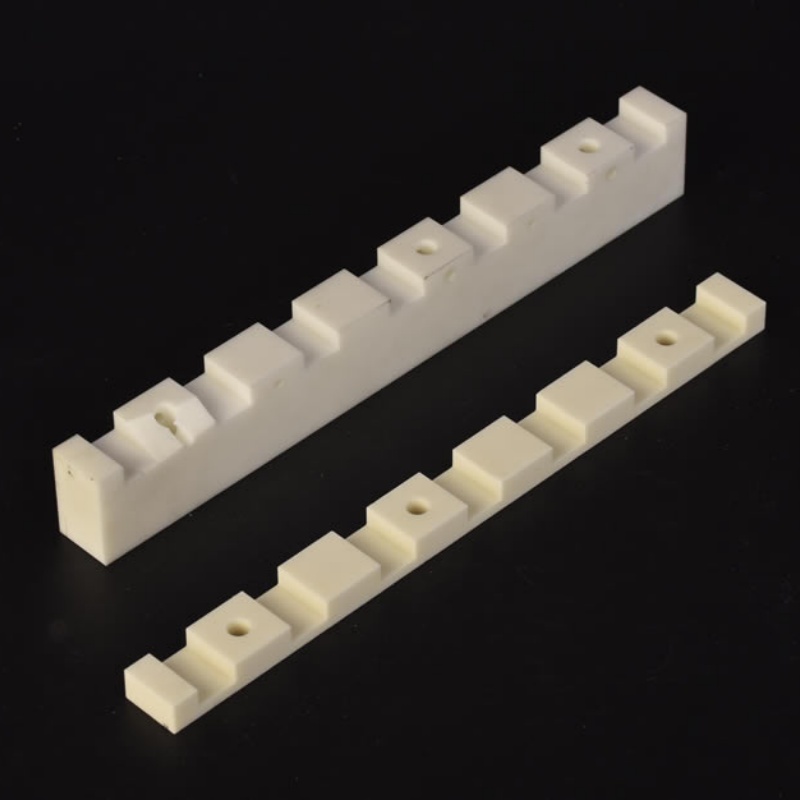
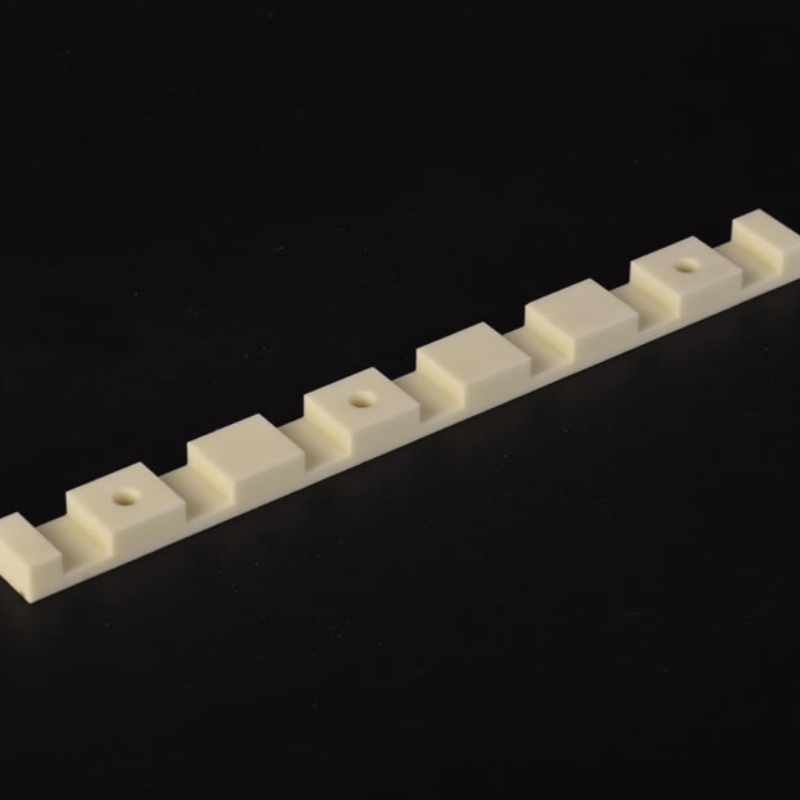
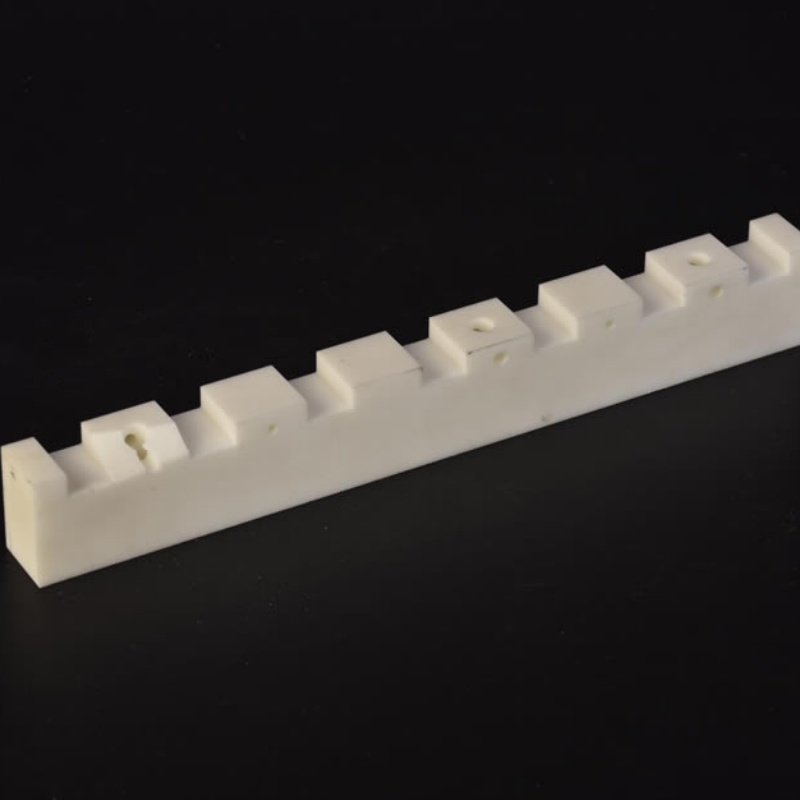
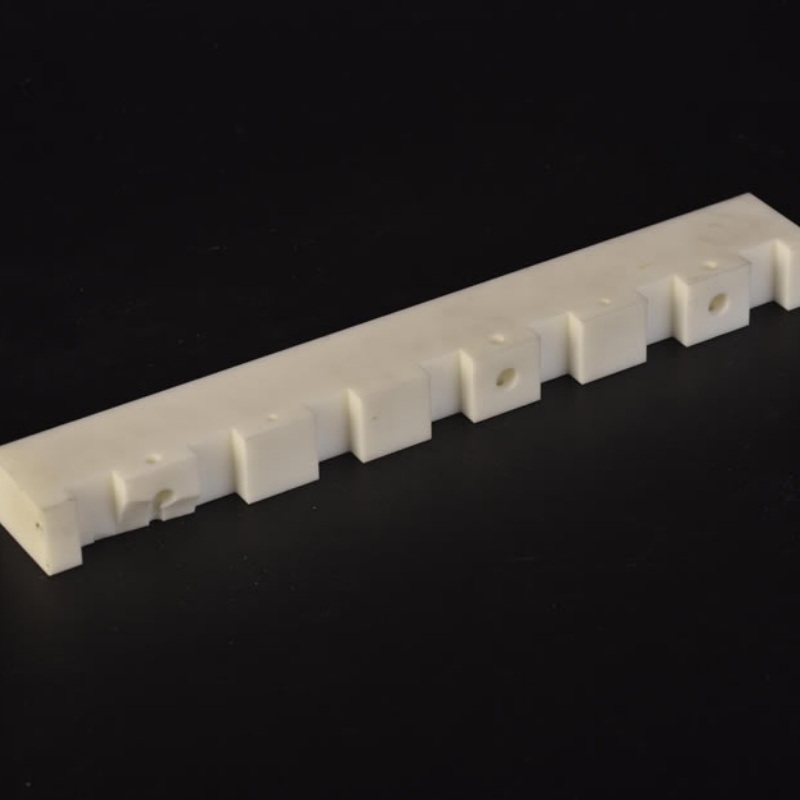
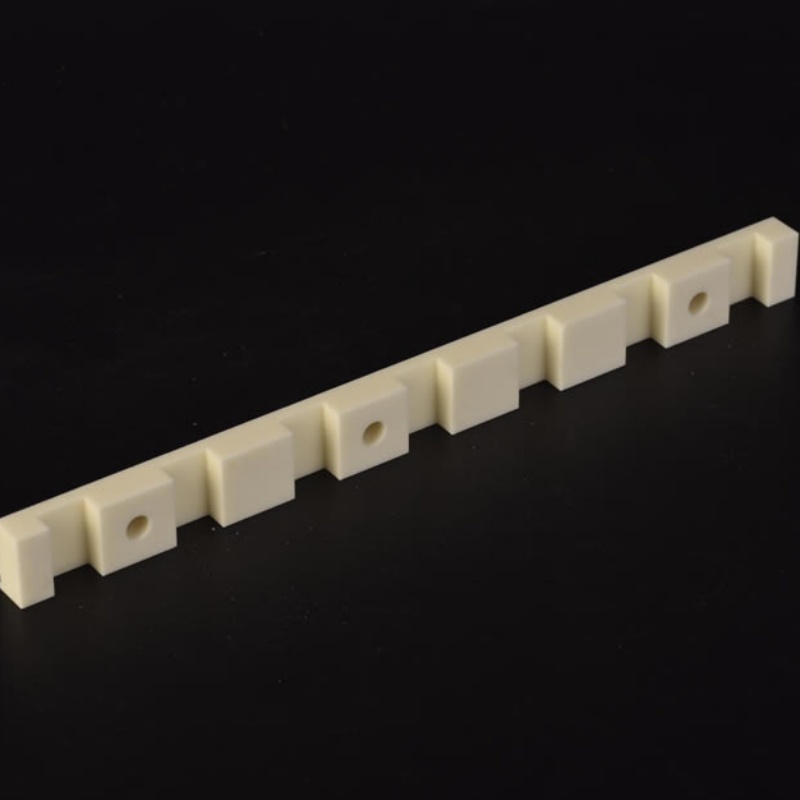
Alumina Ceramic Rack
Alumina ceramic racks are precision linear motion components designed to convert rotational motion into linear motion while operating in extreme environments where metallic components would fail. Unlike conventional steel or stainless-steel racks, alumina ceramic racks offer exceptional hardness, chemical inertness, electrical insulation, and high-temperature stability, making them suitable for specialized applications in semiconductor manufacturing, chemical processing, vacuum systems, and high-temperature industrial equipment.
What Is an Alumina Ceramic Rack?
Alumina ceramic rack is a toothed linear gear component manufactured from aluminum oxide (Al₂O₃) ceramic. It functions as the linear counterpart to a pinion gear in rack-and-pinion drive systems. The teeth are precisely machined or ground to achieve accurate pitch, pressure angle, and tooth profile, ensuring smooth engagement and reliable power transmission.
Alumina ceramic is one of the most widely used engineering ceramics due to its balanced combination of mechanical strength, wear resistance, and cost-effectiveness compared to other advanced ceramics. For rack applications, alumina provides a compelling alternative to metal when corrosion, contamination, or thermal conditions exceed the limits of conventional materials.
Key Material Properties
The performance of an alumina ceramic rack is directly determined by the inherent properties of aluminum oxide ceramic. The most relevant characteristics for rack-and-pinion applications include:
High hardness and wear resistance. Alumina ceramic typically exhibits a Vickers hardness of 1,500–1,800 HV, significantly higher than hardened steel. This makes alumina racks highly resistant to abrasive wear, surface degradation, and fretting damage during repeated meshing cycles.
Chemical inertness. Alumina is resistant to most acids, alkalis, and organic solvents at room and elevated temperatures. It does not corrode in aggressive chemical environments, which is critical for applications involving acids, cleaning agents, or reactive process gases.
Electrical insulation. With a dielectric strength of approximately 15–35 kV/mm, alumina provides excellent electrical isolation. This property is essential in applications where stray currents, electrostatic discharge, or electrical interference must be avoided.
High-temperature stability. Alumina retains its mechanical properties at temperatures up to 1,600–1,700°C in inert atmospheres, though practical service limits for loaded components are typically lower. This makes it suitable for furnace conveyors, heat treatment equipment, and vacuum systems.
Low thermal expansion. Alumina has a coefficient of thermal expansion of approximately 7–8 × 10⁻⁶/K, which is lower than most metals. This contributes to dimensional stability under thermal cycling but also requires careful design to manage differential expansion when paired with metallic pinions.
Typical Grades and Specifications
Alumina ceramic racks are available in several purity grades, with 95%, 96%, 99%, and 99.5% Al₂O₃ being the most common. Higher-purity grades generally offer better mechanical strength, wear resistance, and electrical properties, but at increased manufacturing cost.
95–96% alumina is often selected for general-purpose wear-resistant applications where cost efficiency is important.
99–99.5% alumina is preferred for high-performance applications requiring superior hardness, chemical resistance, or electrical insulation.
Common module sizes for alumina ceramic racks range from m0.5 to m3, depending on load requirements and manufacturing feasibility. Pressure angles are typically 20° or 14.5°, consistent with standard gear design practice. Tooth accuracy grades should be specified according to application requirements, as tighter tolerances increase machining complexity and cost.
Typical Applications
Alumina ceramic racks are selected when the operating environment imposes demands that metallic racks cannot reliably meet.
In semiconductor and vacuum equipment, alumina racks are used in wafer handling systems, load locks, and transfer modules where metal outgassing, particle generation, or electrical conductivity would compromise process integrity. The material’s low particle generation and chemical cleanliness are particularly valuable in cleanroom environments.
In chemical processing equipment, alumina racks can operate in corrosive atmospheres or in contact with aggressive media where stainless steel would suffer from pitting, stress corrosion cracking, or surface degradation.
In high-temperature furnaces and heat treatment systems, alumina racks serve as linear drive components for conveyor systems, pusher mechanisms, and indexing tables. Their ability to maintain dimensional stability and resist oxidation at elevated temperatures is a key advantage.
In medical and analytical instruments, alumina racks are sometimes used where non-magnetic behavior, biocompatibility, or resistance to repeated sterilization is required.

Advantages and Limitations
Alumina ceramic racks offer several clear advantages:
Excellent wear resistance and long service life in abrasive environments
Superior corrosion resistance compared to metals
Electrical insulation for electrically sensitive applications
Non-magnetic and non-conductive
Stable performance at elevated temperatures
Low contamination risk in clean environments
However, there are important limitations that engineers must consider:
Brittleness. Like all ceramics, alumina is brittle and lacks the ductility of metals. Impact loads, shock loading, or misalignment can cause catastrophic fracture rather than plastic deformation.
Lower fracture toughness. Alumina’s fracture toughness (approximately 3–4 MPa·m¹/²) is significantly lower than that of zirconia or silicon nitride, making it less suitable for high-impact applications.
Machining difficulty. Precision gear teeth in alumina require diamond grinding or specialized machining, which increases manufacturing cost and limits complex geometries.
Thermal shock sensitivity. Rapid temperature changes can induce cracking if thermal gradients exceed the material’s tolerance.
Cost. Alumina ceramic racks are generally more expensive than standard steel racks, though they may offer lower total cost of ownership in demanding environments.
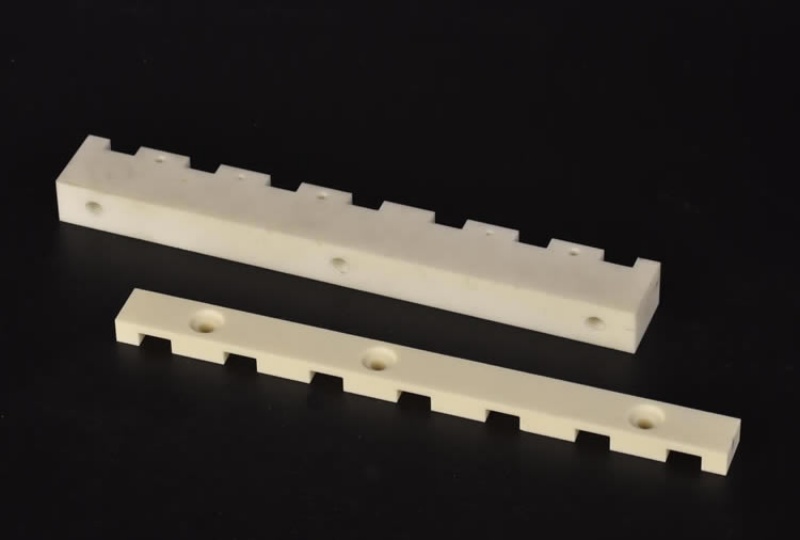
Material Selection Considerations
When evaluating alumina ceramic racks, engineers should consider the following:
Load conditions. Alumina is best suited for moderate loads with well-controlled alignment. High impact or shock loads may require zirconia or silicon nitride, which offer higher fracture toughness.
Temperature range. For continuous service above 1,000°C, alumina remains a strong candidate. For applications requiring both high temperature and high toughness, silicon nitride may be worth considering.
Chemical environment. Alumina is resistant to most chemicals but can be attacked by hydrofluoric acid and hot concentrated alkalis. In such cases, material compatibility should be verified.
Mating components. The pinion material should be selected carefully. Using a softer mating material can help accommodate minor misalignment and reduce the risk of tooth damage.
Mounting and support. Proper backing and support structures are essential to prevent point loading or bending stresses that could lead to fracture.
Comparison with Other Ceramic Racks
Alumina vs. zirconia. Zirconia offers significantly higher fracture toughness (5–10 MPa·m¹/²) and is more resistant to impact and shock loading. However, zirconia is more expensive and may undergo low-temperature degradation in certain humid environments. Alumina is generally preferred when cost, hardness, and chemical stability are the primary concerns.
Alumina vs. silicon nitride. Silicon nitride provides superior fracture toughness, thermal shock resistance, and self-lubricating wear behavior, making it ideal for high-speed or high-impact applications. However, it is considerably more expensive and more difficult to manufacture in complex gear forms. Alumina remains the more cost-effective choice for moderate-duty applications.
Engineering Precautions
Avoid impact loading and ensure smooth engagement between rack and pinion.
Provide adequate support along the full length of the rack to prevent bending stresses.
Account for differential thermal expansion when pairing alumina racks with metallic components.
Use appropriate tolerances and alignment to minimize edge loading on gear teeth.
Handle with care during installation, as ceramic components are vulnerable to chipping and cracking from mechanical shock.
FAQ
What is an alumina ceramic rack used for?
Alumina ceramic racks are used in rack-and-pinion drive systems operating in corrosive, high-temperature, vacuum, or electrically sensitive environments where metallic racks would fail due to corrosion, wear, contamination, or electrical conductivity.
What are the main advantages of alumina ceramic racks?
Key advantages include high hardness and wear resistance, excellent chemical inertness, electrical insulation, non-magnetic behavior, high-temperature stability, and low particle generation in clean environments.
What are the main limitations?
Alumina is brittle and has relatively low fracture toughness compared to zirconia or silicon nitride. It is susceptible to fracture under impact or shock loading, sensitive to thermal shock, and more difficult and costly to machine than metals.
Is alumina ceramic suitable for high-temperature applications?
Yes. Alumina retains its mechanical properties at temperatures well above 1,000°C in inert atmospheres, making it suitable for furnace systems, heat treatment equipment, and other high-temperature applications. However, thermal shock and differential expansion must be carefully managed.
Is alumina ceramic electrically insulating?
Yes. Alumina is an excellent electrical insulator with a dielectric strength of approximately 15–35 kV/mm, making it suitable for applications requiring electrical isolation.
How does alumina compare with zirconia for rack applications?
Alumina offers higher hardness and better cost efficiency, while zirconia provides significantly higher fracture toughness and impact resistance. Alumina is preferred for moderate-load, chemically aggressive, or high-temperature applications; zirconia is better suited for applications involving higher mechanical shock or impact.