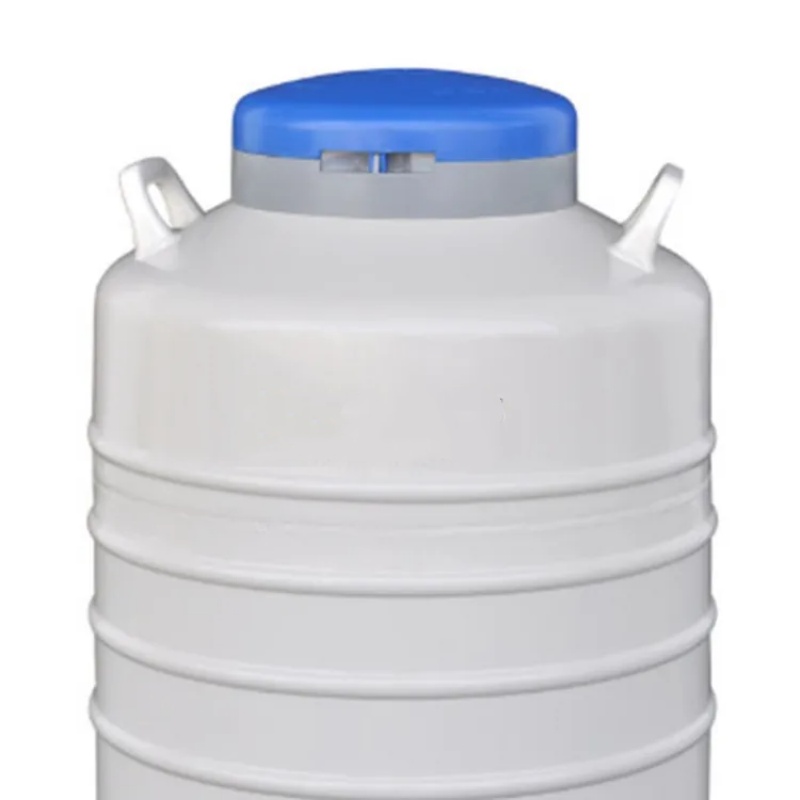
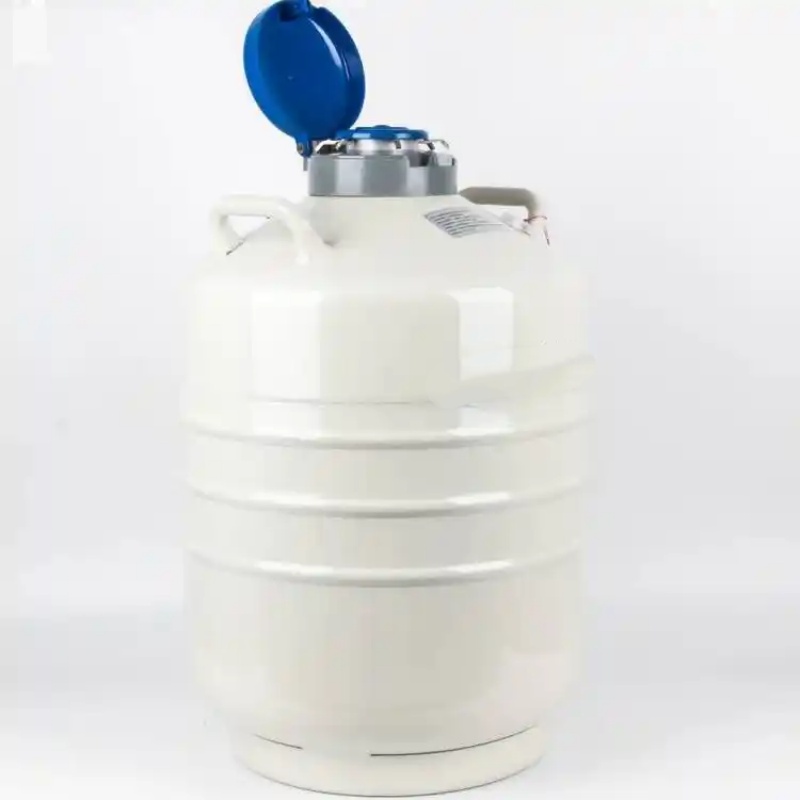
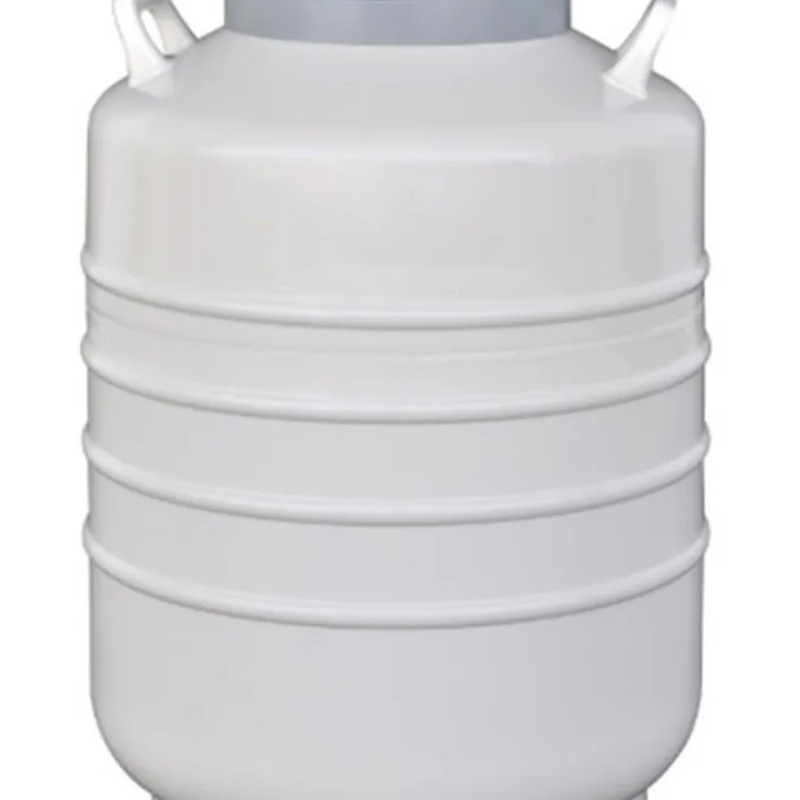
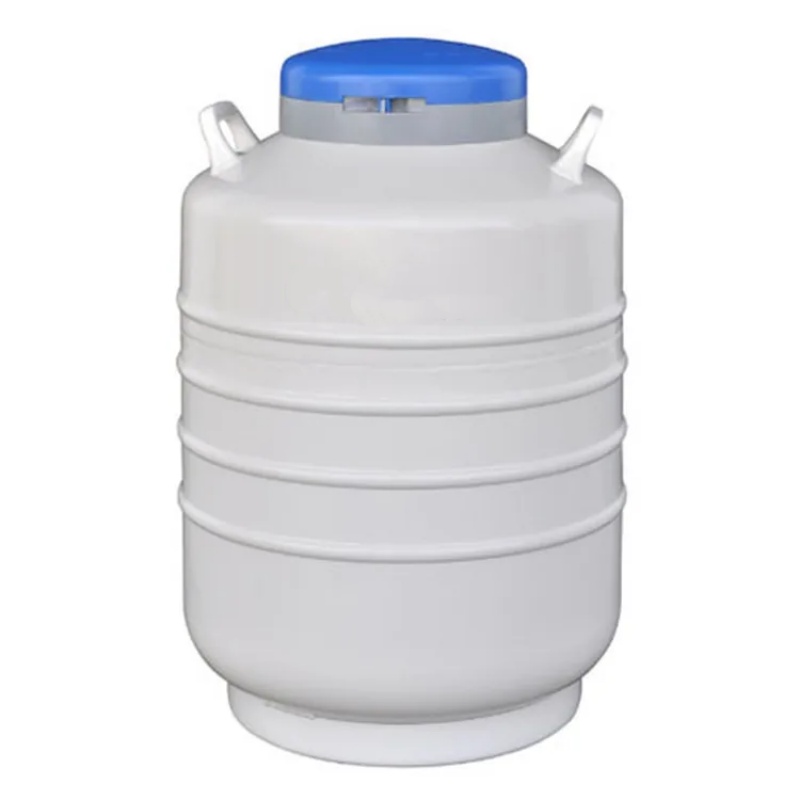
Storage-Type Liquid Nitrogen Biocontainers
In biomedical research, cell therapy, and the development of clinical sample banks, storage-type liquid nitrogen biocontainers (liquid nitrogen tanks) are essential equipment for ensuring the long-term safety of bioactive materials. For engineers and procurement professionals, a thorough understanding of their technical characteristics, material differences, and application scenarios is key to ensuring sample safety and optimizing procurement costs.
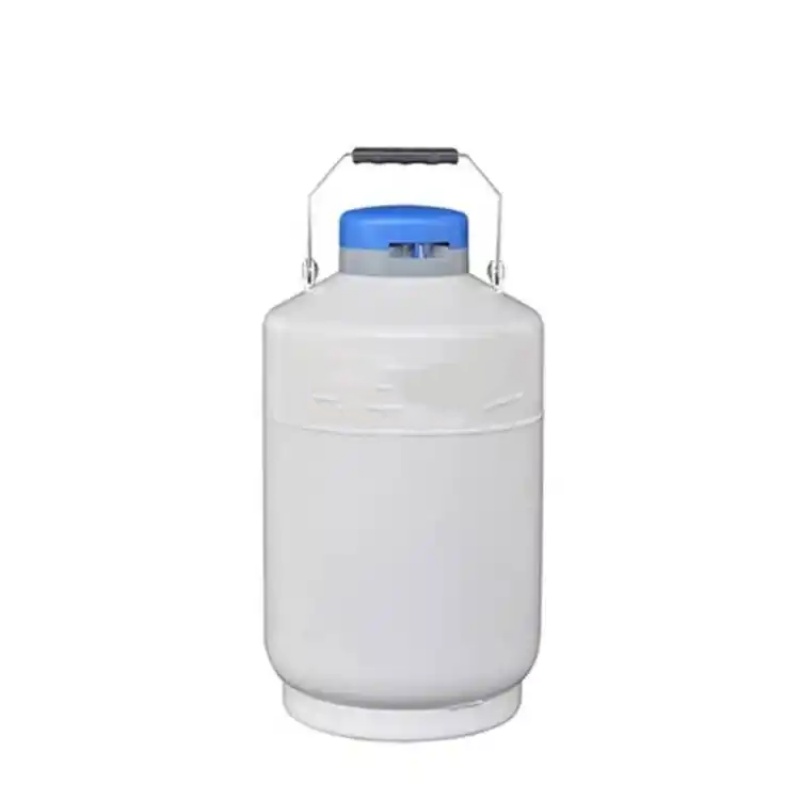
Features and Technical Advantages
Storage-type liquid nitrogen tanks are specifically designed for indoor, stationary, long-term storage of bioactive materials. Their core technology lies in a high-vacuum, multi-layer insulation structure, which minimizes liquid nitrogen evaporation loss and significantly reduces consumable costs during long-term operation. Modern storage-type liquid nitrogen tanks demonstrate exceptional temperature stability, with the tank mouth temperature maintained at approximately -190°C, ensuring samples remain in a deep-freeze state.
In terms of operation and safety, advanced storage-type liquid nitrogen tanks are equipped with numerous user-friendly features. For example, some models support automatic liquid replenishment, which intelligently refills the tank based on internal temperature and liquid level while automatically venting superheated nitrogen during the process to minimize temperature fluctuations. Additionally, features such as automatic defogging, two-tiered shelving, and rotating tray compartment designs greatly simplify the process of locating and accessing samples. For high-value samples, the equipment also integrates temperature and humidity control systems that record historical data and provide liquid level and temperature monitoring along with multiple alarm functions, thereby minimizing operational risks.
Material Selection: A Simple Comparison of Aluminum Alloy and Stainless Steel
In procurement decisions, the tank material is a key indicator for assessing equipment lifespan and sample safety. Currently, the mainstream materials on the market are high-strength aluminum alloy and food-grade 304 stainless steel.
Aluminum alloy offers the advantages of light weight and relatively low cost, making it the mainstream choice for early-generation and standard laboratory liquid nitrogen tanks. However, in long-term liquid nitrogen environments and with frequent exposure to chemical disinfectants, aluminum alloy poses a certain risk of oxidation and corrosion. For high-value samples—such as umbilical cord blood hematopoietic stem cells and human genetic material—which have “zero tolerance” for cross-contamination, this potential risk requires careful evaluation.
In contrast, food-grade 304 stainless steel, with its outstanding corrosion and oxidation resistance, has become the safe choice for third-generation liquid nitrogen tanks in biological sample repositories. Stainless steel poses virtually no risk of migration contamination to the substances it contacts and provides a more reliable physical barrier for precious biological samples. Although its initial procurement cost may be slightly higher, it offers greater long-term value from the perspectives of the full life cycle and sample safety.
Application Scenarios
Storage-type liquid nitrogen biological containers have a wide range of applications, primarily covering the following areas:
Active preservation of biological samples: This is their core application. In the biomedical and clinical fields, they are used for the long-term preservation of vaccines, microbial strains, cell lines, stem cells, human and animal organs, tissue blocks, and blood products.
Preservation of Animal Genetic Resources: In livestock farming and endangered species conservation, these containers are used for the long-term preservation of semen and embryos from high-quality breeding bulls, rams, and other rare animals, supporting static storage prior to long-distance transport and the establishment of genetic resource banks.
Industrial Cryogenic Treatment: In the fields of materials science and precision manufacturing, liquid nitrogen’s ultra-low temperature properties are utilized to perform cryogenic treatment on metallic materials, altering their microstructure to significantly enhance hardness, strength, and wear resistance. It is also used for the cryogenic assembly of precision components to improve the overall performance of equipment.
Recommendations for Selection and Procurement
When selecting a model, engineers and procurement personnel should look beyond the simple “volume” parameter and focus on the following dimensions:
Sample Type and Safety: If storing high-value, irreplaceable, and precious samples (such as stem cells or CAR-T cells), it is strongly recommended to choose vapor-phase storage tanks or liquid nitrogen tanks made of 304 stainless steel to eliminate the risk of cross-contamination. For routine cell lines or research tissue samples, liquid-phase storage tanks made of aluminum alloy offer better value for money.
Storage Capacity and Specifications: Do not focus solely on volume (L); instead, calculate the actual number of standard cryovials (e.g., 2 mL) that can be accommodated. Additionally, ensure the container’s mouth diameter is larger than the diameter of the specimens being frozen. For large quantities of cryovials, select models with large mouth diameters and high volumes to accommodate drawer-style stainless steel cryovial racks.
Smart System Requirements: For large-scale biobanks, it is recommended to prioritize smart liquid nitrogen storage systems equipped with IoT monitoring, automatic liquid replenishment, and data traceability functions to enable unattended operation and full lifecycle management.