
Why Are Nickel-Based Superalloys So Heat-Resistant
In cutting-edge industrial sectors such as aerospace, power generation, and petrochemicals, equipment often must operate for extended periods under extreme high-temperature, high-pressure, and highly corrosive conditions. Under these harsh operating conditions, nickel-based superalloys have become indispensable key materials due to their exceptional high-temperature strength, creep resistance, and resistance to oxidation and corrosion. For engineers and procurement professionals, a deep understanding of the high-temperature resistance mechanisms, classification systems, and selection criteria for nickel-based superalloys is essential to ensuring the safe operation of equipment and controlling lifecycle costs.
Core Mechanism: Why Can Nickel-Based Superalloys Withstand Extreme High Temperatures?
The ability of nickel-based superalloys to maintain excellent performance at temperatures exceeding 0.7 times their absolute melting point is primarily attributed to their sophisticated microstructural design and the synergistic interaction of multiple strengthening mechanisms.
First is the precipitation hardening mechanism. Nickel-based superalloys typically contain added elements such as aluminum, titanium, and niobium. These elements react with the nickel matrix to uniformly precipitate co-conformal, ordered intermetallic compounds—the γ’ phase (such as Ni₃Al or Ni₃Ti). The γ’ phase acts like reinforcing bars in concrete, effectively pinning dislocation motion at high temperatures and significantly hindering the material’s plastic deformation; this is the fundamental reason for its extremely high high-temperature strength and creep resistance.
Second is solid solution strengthening and grain boundary strengthening. Elements such as chromium, molybdenum, tungsten, and cobalt added to the alloy dissolve in the matrix, causing lattice distortion that further enhances the matrix’s high-temperature strength. At the same time, trace amounts of elements such as boron, zirconium, and carbon form carbides or segregate at grain boundaries, reinforcing them like “rivets,” suppressing grain boundary slip at high temperatures, and preventing fracture along the grain boundaries.
Furthermore, excellent resistance to oxidation and corrosion is also a key factor in their high-temperature performance. A high chromium content forms a dense, strongly adherent protective layer of chromium oxide on the alloy’s surface, effectively blocking further penetration by oxygen and corrosive gases, ensuring stability even in harsh gas environments exceeding 1000°C.
Family Tree: Major Classifications of Nickel-Based Superalloys
Based on differences in strengthening mechanisms and manufacturing processes, nickel-based superalloys can be broadly classified into the following categories to meet the demands of various applications:
By strengthening mechanism, they are primarily classified into solution-strengthened, precipitation-strengthened, and oxide dispersion-strengthened (ODS) types. Solution-strengthened alloys rely primarily on the solid solution strengthening provided by elements such as tungsten, molybdenum, and cobalt. They offer good formability and weldability and are commonly used in components such as combustion chambers; Precipitation-strengthened alloys rely on the precipitation of the γ’ phase for strengthening; they offer the highest high-temperature strength and are the preferred choice for turbine blades and turbine discs; ODS alloys introduce nanoscale oxide particles (such as Y₂O₃) through mechanical alloying, exhibiting excellent creep resistance and microstructural stability at ultra-high temperatures.
Classified by fabrication process, they can be divided into wrought high-temperature alloys, cast high-temperature alloys, and powder metallurgy high-temperature alloys. Worked alloys can be formed through processes such as forging and rolling, offering good overall mechanical properties; cast alloys are suitable for manufacturing components with complex shapes that are difficult to form through working processes, such as hollow turbine blades; powder metallurgy alloys are produced through powder preparation and hot isostatic pressing, resulting in a uniform microstructure free of segregation, and are commonly used to manufacture turbine discs subjected to extremely high stresses.
Core Applications:
From 10,000-meter Altitudes to Deep-Sea Energy
The applications of nickel-based superalloys span virtually all fields of high-end equipment manufacturing.
In the aerospace sector, nickel-based superalloys account for 50% to 60% of the weight of modern jet engines. They are widely used in the manufacture of hot-end components such as high-pressure turbine blades, guide vanes, combustion chamber liners, and turbine discs, which directly determine the engine’s thrust-to-weight ratio and thermal efficiency.
In the energy and industrial sectors, as gas turbines evolve toward higher temperatures and greater efficiency (such as H/J-class gas turbines with inlet temperatures approaching 1,600°C), nickel-based superalloys have become the core materials for manufacturing blades, rotors, and high-temperature piping.
In the petrochemical and offshore engineering sectors, faced with extreme corrosive environments characterized by strong acids, high salinity, and high pressure, nickel-based superalloys are used to manufacture reactors, heat exchangers, desalination equipment, and deep-sea probe housings, ensuring the long-term safe operation of these facilities.
Frequently Asked Questions (FAQ)
Q1: Why can’t the temperature resistance limit be increased simply by adding alloying elements?
A: Although adding alloying elements can increase strength, it leads to a decrease in material ductility and makes processing more difficult. Furthermore, it can cause the precipitation of harmful topological close-packed phases (TCP phases, such as the σ phase) at high temperatures, resulting in material embrittlement. Therefore, high-temperature design requires a precise balance of composition, microstructure, and manufacturing processes.
Q2: Are nickel-based superalloys prone to cracking during welding?
A: Yes, the weld metal of nickel-based superalloys has an austenitic microstructure and is relatively sensitive to hot cracking. In particular, low-melting-point impurities such as sulfur and phosphorus form liquid films at grain boundaries, which can easily trigger high-temperature cracking. Therefore, impurity content must be strictly controlled during welding, and techniques such as low heat input and low interpass temperatures must be employed, followed by post-weld heat treatment.
Q3: Why do material properties degrade after long-term service at high temperatures?
A: Under prolonged exposure to high temperatures and stress, the γ’ strengthening phase within the alloy coarsens or even dissolves, while carbides at the grain boundaries undergo morphological changes; simultaneously, harmful phases may precipitate. This microstructural degradation leads to a decline in the material’s high-temperature strength and creep life.
Recommendations for Avoiding Pitfalls in Procurement and Material Selection
For procurement personnel, material selection is not a matter of “the more expensive, the better” or “the higher the grade, the better,” but rather requires precise matching to the operating conditions.
First, prioritize matching the material to the specific requirements.
It is essential to clearly define the actual operating temperature, stress levels, composition of the corrosive medium, and expected service life. For example, using a high-grade Hastelloy for ordinary, room-temperature, weak-acid applications results in significant performance redundancy and wasted costs; conversely, for hot-end components operating above 800°C, precipitation-hardened alloys must be selected.
Second, be wary of low-price traps and falsified chemical compositions.
To cut costs, some substandard suppliers may use recycled materials or reduce the content of precious elements (such as cobalt, rhenium, and niobium), resulting in poor batch-to-batch consistency and failure to meet long-term service life requirements. When purchasing, request that suppliers provide original manufacturer’s certificates of quality and authoritative third-party test reports (such as SGS or BV), and verify whether they hold industry certifications such as AS9100 or NACE.
Third, prioritize technical support and processing capabilities.
The processing and heat treatment of nickel-based superalloys are extremely challenging. When selecting a product, confirm that the supplier can provide end-to-end technical guidance—from welding procedures and heat treatment curves to installation and maintenance—to prevent material failure caused by improper processing.
Precautions for Engineering Applications and Maintenance
During processing and manufacturing, heat treatment processes must be strictly controlled. The temperature and cooling rate of solution treatment directly determine the precipitation state of the strengthening phases; slow cooling within sensitive temperature ranges is strictly prohibited to prevent the precipitation of harmful phases. Intermediate annealing is required when cold working deformation is excessive to prevent cracking. For cutting, it is recommended to use a band saw or waterjet to avoid surface carburization or scratching caused by ordinary grinding wheels.
During installation and service, contact between dissimilar metals should be avoided as much as possible to prevent electrochemical corrosion at high temperatures. Sealing gaskets should be made of halogen-free (chlorine, fluorine) materials; the use of gaskets containing asbestos or polytetrafluoroethylene (PTFE) is strictly prohibited to prevent the release of corrosive gases at high temperatures. During routine maintenance, the surface should be cleaned periodically with a neutral detergent; the use of chlorine-containing solvents is strictly prohibited. If damage to the surface passivation film or pitting is detected, the surface should be sanded promptly and undergo acid washing and passivation treatment again.
The high-temperature resistance of nickel-based superalloys represents the pinnacle of materials science. Only by maintaining a rigorous scientific approach throughout the entire lifecycle—from design and procurement to processing and maintenance—can their ultimate performance be fully realized, thereby ensuring the safe operation of major national infrastructure.
 What Is Polyimide (PI)
What Is Polyphenylene Sulfide (PPS)
What Is Polyimide (PI)
What Is Polyphenylene Sulfide (PPS)
 What is PEEK-for Engineers and Buyers
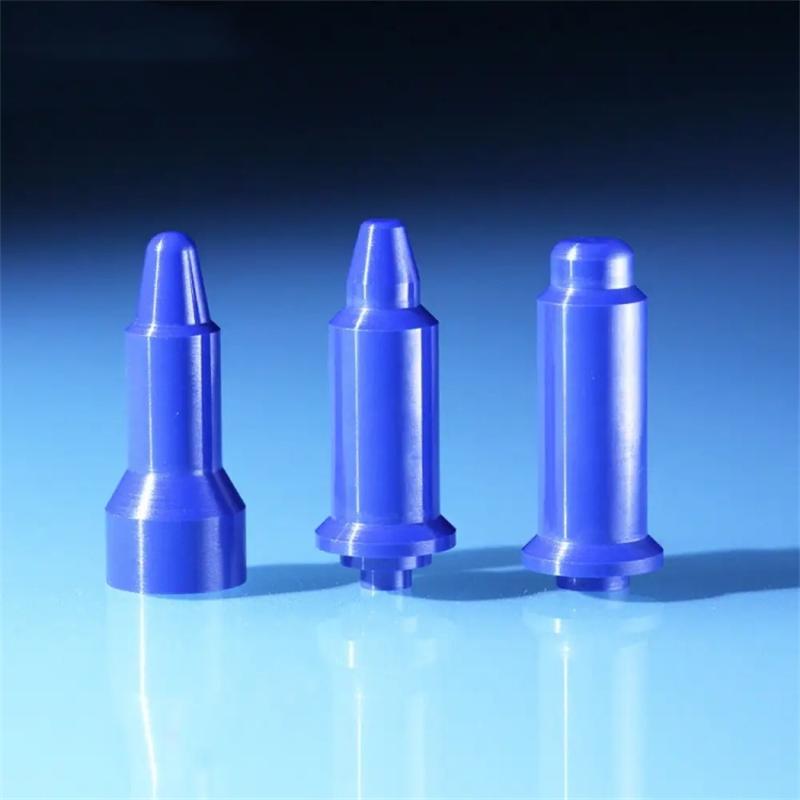 Application Scope of Zirconia Ceramic Structural Components