
The Guide to Selecting Palladium-Based Catalysts
As a core member of the precious metal catalyst family, palladium (Pd) efficiently activates hydrogen and oxygen molecules at room temperature thanks to its unique electronic structure. Whether in selective hydrogenation for fine chemicals, deep purification of electronic-grade gases, or industrial VOC (volatile organic compound) exhaust treatment, palladium catalysts play an irreplaceable role. However, palladium is a scarce and expensive resource; selecting the wrong catalyst can not only reduce reaction efficiency but may even necessitate a complete overhaul of the entire process system. This article will systematically outline the logic behind selecting palladium catalysts, helping you avoid pitfalls during procurement and application.
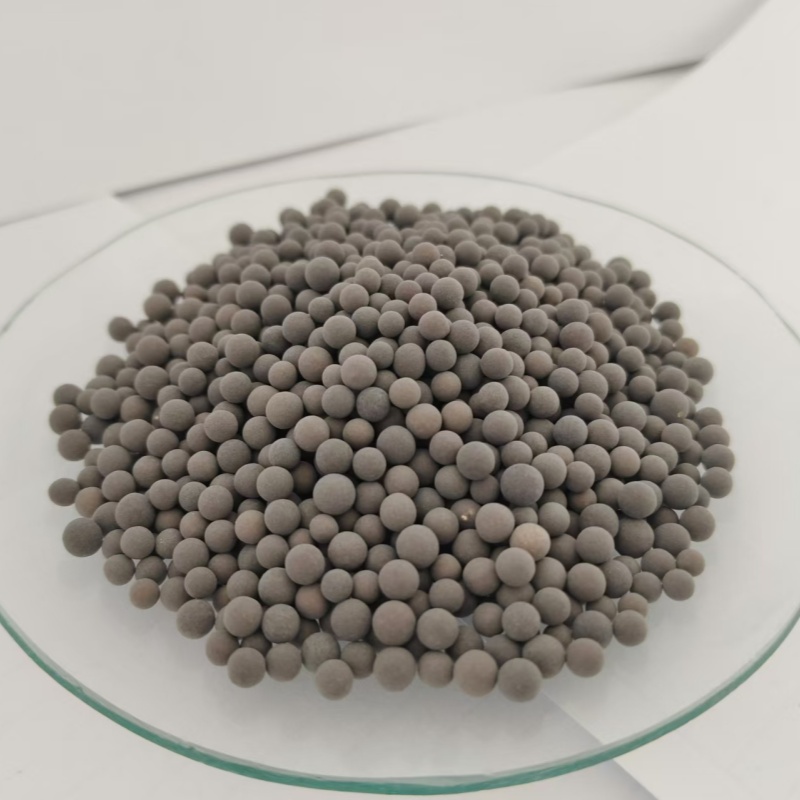
Chemical Composition and Support Selection Logic
When evaluating palladium catalysts, the most common pitfall—and one that is easily overlooked—is the “precious metal content-only” approach. Although palladium itself accounts for 60% to 80% of the material cost, it is often the type of support and the degree of palladium dispersion that truly determine catalytic efficiency, lifespan, and performance under actual operating conditions. The support is by no means merely a “container”; it directly participates in electron transfer and influences the utilization rate of active sites.
Alumina supports possess extremely high mechanical strength and resistance to sintering, making them highly suitable for high-temperature hydrogenation reactions in fixed-bed reactors (such as hydrogen peroxide production). The hydroxyl groups on their surface effectively stabilize palladium ions; however, caution is required regarding the risk of support dissolution in strongly alkaline environments. Silica gel carriers, on the other hand, feature a more uniform pore size distribution and hydrophobicity. They perform exceptionally well in the treatment of chlorinated organics or low-temperature deoxygenation scenarios, effectively reducing side reactions; however, their compressive strength is relatively low, so caution is required when using them in fluidized beds. Carbon carriers (such as palladium on carbon, Pd/C) are a classic choice for liquid-phase reduction reactions and are easy to recover and regenerate, but they are prone to coking in oxidizing atmospheres. Furthermore, for advanced gas purification and VOC treatment, zeolite and honeycomb-structured carriers have become the preferred choices for enhancing selectivity and reducing pressure drop due to their shape-selective effects and low airflow resistance.
Pitfalls to Avoid and Practical Recommendations
Scientific selection requires a comprehensive consideration of technology, cost, and reliability.
First, the reaction type and substrate characteristics must be clearly defined. For coupling reactions (such as the Suzuki and Heck reactions), homogeneous zero-valent palladium (e.g., Pd(PPh₃)₄) or divalent palladium (e.g., Pd(OAc)₂) is typically the preferred choice for small-scale laboratory applications, paired with appropriate phosphine or NHC ligands to regulate the electronic environment; however, at the industrial-scale production stage, considerations regarding recovery rates and metal residue necessitate a decisive shift to supported catalysts (such as Pd/C or Pd/Al₂O₃).
Second, one must be wary of price confusion and false advertising. Taking VOC treatment as an example, legitimate precious metal catalysts are extremely costly due to the high prices of platinum and palladium raw materials, processing fees, and high-quality cordierite supports. Products on the market priced significantly below the industry cost benchmark often have significantly lower actual precious metal content and quality. At the same time, remain cautious about products claiming to catalyze the degradation of common VOCs at “room temperature.” Catalytic combustion of the vast majority of VOCs still requires an ignition temperature of 200°C to 400°C; so-called “low-temperature” claims are often merely marketing hype.
Finally, be sure to request authoritative test reports from suppliers, paying close attention to data on palladium content, specific surface area, and pore size distribution. Before proceeding with formal bulk purchases, it is recommended to conduct a small-scale trial to verify the decay curve under actual operating conditions; never make decisions based solely on data from small-scale laboratory tests.
Frequently Asked Questions (FAQ)
Q: How can one determine and address a decline in the activity or failure of a palladium catalyst?
A: A decline in activity is typically caused by poisoning or sintering. This can be determined by observing whether the reaction rate has decreased significantly, whether product selectivity has deteriorated, or whether the temperature rise before and after the catalyst bed has decreased. If poisoning is caused by contaminants such as sulfur, phosphorus, or silicone oil, you can attempt regeneration by washing with dilute acid or an oxidizing agent; however, if high temperatures have caused palladium particles to agglomerate and sinter, recovery is extremely difficult, and replacement is usually necessary.
Q: How can the service life of a palladium catalyst be effectively extended?
A: Service life management hinges on attention to detail. Before loading new catalyst, it is recommended to purge the bed with nitrogen to remove fine powder. For sulfur-containing exhaust gases, a desulfurization tower must be installed upstream of the reactor, as palladium is extremely sensitive to sulfur poisoning. Additionally, ensuring uniform gas flow distribution within the catalyst bed, eliminating short-circuiting or gas leaks, and maintaining a stable temperature profile are fundamental to maximizing its performance.
Q: Small businesses have limited budgets. How can they balance cost and effectiveness?
A: Consider purchasing professionally regenerated palladium catalysts, which typically cost 30% to 50% less than new ones. When treating exhaust gases with complex compositions, adopt a bed design combining non-precious metal and precious metal catalysts: first, use non-precious metals to treat easily degradable oxygenated hydrocarbons, followed by precious metals to treat aromatic hydrocarbons. This significantly reduces overall investment while ensuring total purification efficiency.
Key Precautions and Safety Regulations
Safety and compliance are absolute priorities during the actual use and post-treatment of palladium catalysts. In laboratory operations, when using catalysts such as Pd/C for hydrogenation reactions, strict precautions must be taken to prevent hydrogen leaks. Additionally, spent palladium-carbon is highly prone to spontaneous combustion when dry; it must always be kept moist with solvent and stored properly.
In industrial applications, special precautions must be taken against “catalyst killers.” Substances such as dust, fluorine, sulfur, chlorine, phosphorus, arsenic, and organosilicon compounds can cause permanent catalyst poisoning or rapid deactivation and must be rigorously screened for and intercepted at the front end of the process. At the same time, in fields such as pharmaceutical synthesis where requirements for heavy metal residues are extremely stringent, strict post-processing filtration and testing mechanisms must be established to avoid severe losses resulting from product batch recalls due to excessive palladium residues. When a catalyst reaches the end of its service life, it must not be discarded carelessly but should be handed over to a qualified professional organization for recycling and refining. This not only meets environmental protection requirements but also allows companies to recover some costs through the recycling of secondary resources.
 What Is Polyimide (PI)
What Is Polyphenylene Sulfide (PPS)
What Is Polyimide (PI)
What Is Polyphenylene Sulfide (PPS)
 What is PEEK-for Engineers and Buyers
 Application Scope of Zirconia Ceramic Structural Components