
Ceramic Components in the Oil & Gas Industry
In oil and gas operations, equipment rarely fails uniformly. It tends to fail at specific points: sliding surfaces exposed to abrasive slurries, sealing faces in corrosive media, insulators inside downhole tools, and flow-control components subjected to high-velocity erosion. In these localized but critical positions, advanced ceramics have become an established engineering solution—not as a wholesale replacement for metals, but as targeted components that extend service life, reduce maintenance frequency, and improve system reliability.
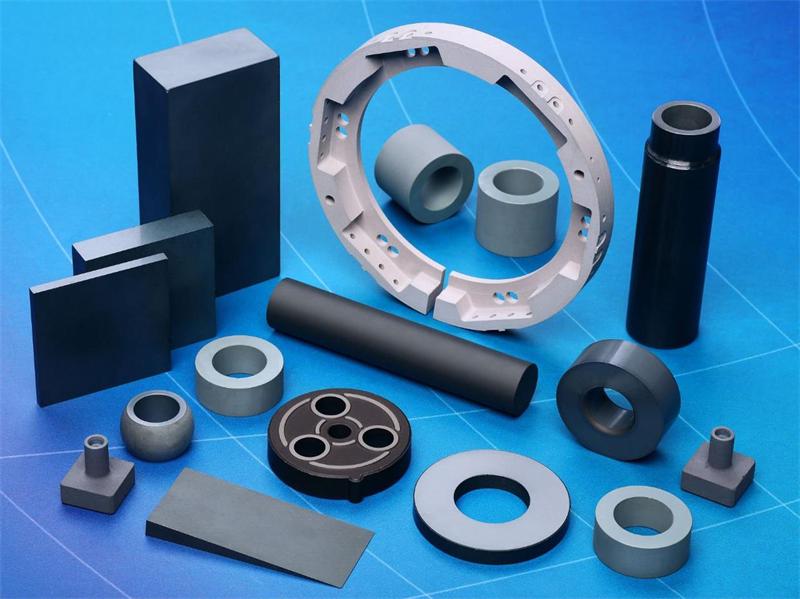
Why Ceramics Are Specified in Oil & Gas Equipment
Oil and gas equipment is routinely exposed to combinations of abrasion, corrosion, high pressure, temperature cycling, and chemically aggressive fluids. Metals perform well across many of these conditions, but they can degrade when several failure mechanisms occur simultaneously.
Advanced ceramics are selected primarily for four properties:
High hardness and wear resistance, especially against sand, proppant, scale, and solid particles in produced fluids.
Chemical inertness, which helps resist attack from chlorides, H₂S, CO₂, acids, and other corrosive media.
Dimensional stability, including low thermal expansion and stable geometry under repeated thermal or mechanical loading.
Electrical insulation, which is important for sensors, downhole instruments, and certain electrical assemblies.
These properties do not make ceramics universally superior. Ceramics are typically chosen where wear, corrosion, sealing reliability, or electrical isolation are the dominant failure risks, and where component geometry allows the material to perform within its mechanical limits.
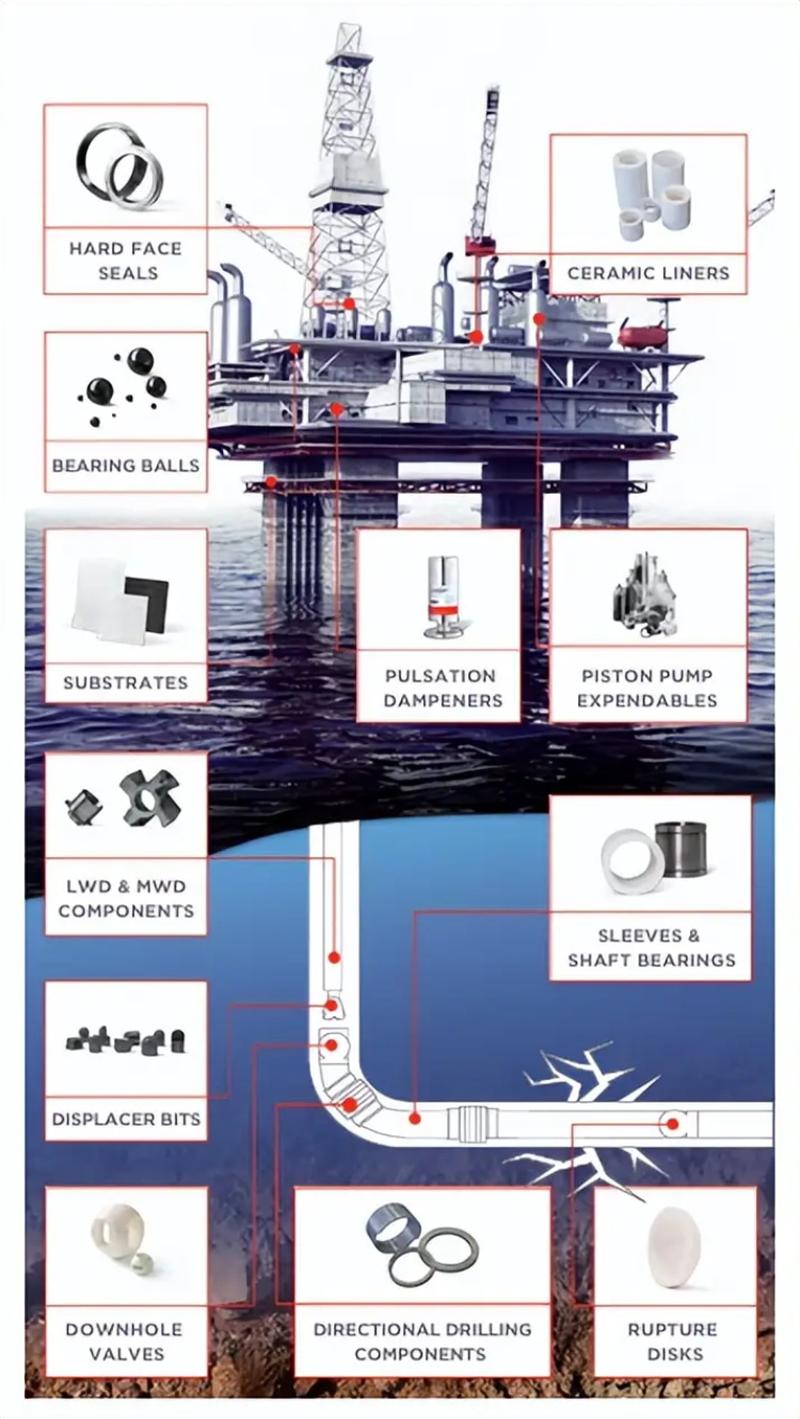
Drilling and Fracturing: Components Under High Abrasion
Drilling and hydraulic fracturing systems are among the most demanding environments for oilfield components. Mud pumps, fracturing pumps, drill bits, and flow-control parts must handle high-pressure fluids that often contain sand, proppant, drill cuttings, and other abrasive solids.
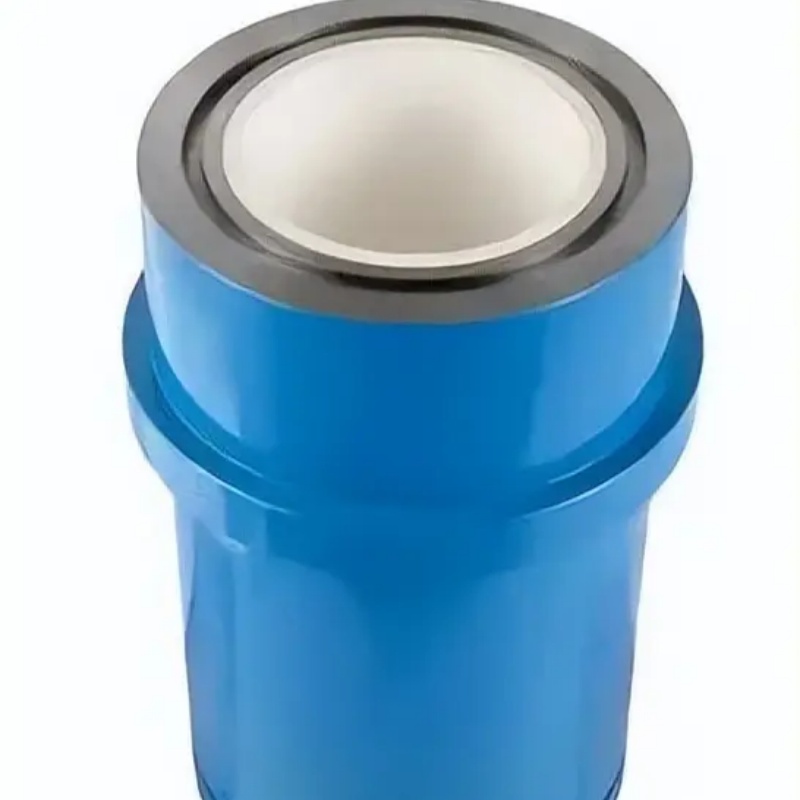
Ceramic Plungers and Cylinder Liners
Mud pump plungers and cylinder liners are common wear points. In conventional metallic designs, the interaction between the plunger, liner, and sealing elements can lead to scoring, leakage, and progressive loss of pump efficiency—especially when the fluid contains abrasive particles.
Ceramic plungers and ceramic-lined cylinder sleeves are used to address this. Materials such as alumina and zirconia-based ceramics are selected because their high surface hardness reduces abrasive wear, while their smooth surface finish helps protect sealing interfaces. In practice, ceramic plunger and liner combinations are often used as wear-resistant upgrades rather than complete system redesigns.
For procurement and engineering teams, the value of these components is usually evaluated in terms of:
service life under abrasive slurry conditions
reduction in unplanned pump maintenance
protection of adjacent metallic components
consistency of sealing performance over time
Ceramic Inserts in Drill Bits and Downhole Wear Parts
Ceramic materials are also used in certain drill-bit wear components and downhole wear parts. In abrasive formations, ceramic inserts can help maintain cutting or wear-resistant performance longer than some conventional metallic alternatives. However, because ceramics generally have lower impact toughness than hard metals, they are typically applied where impact loading is controlled or where the geometry limits tensile stress concentration.
This makes material selection and application review especially important. A ceramic insert that performs well in one drilling section may not be suitable for another section with significantly different shock, vibration, or formation conditions.
Corrosion-Resistant Seals, Valves, and Flow-Control Parts
After drilling, produced fluids often contain chlorides, dissolved gases, formation brine, and other chemically aggressive components. Sealing surfaces, valve seats, and flow-control components are particularly vulnerable because even small amounts of surface damage can compromise sealing integrity.
Ceramic Valve Seats, Balls, and Nozzles
Ceramic valve seats, balls, chokes, and nozzles are used where fluids cause both corrosion and erosion. In metallic valves, the combination of particle impingement and chemical attack can accelerate failure at the seat and ball interface. Ceramic materials such as alumina, zirconia, and silicon carbide are commonly used because they resist chemical attack and maintain hardness in abrasive service.
These components are especially relevant in:
production valves
choke assemblies
sand-control systems
high-pressure flow lines
produced-water handling systems
chemical injection and metering systems
The key engineering consideration is not only material hardness, but also surface finish, roundness, seat geometry, and compatibility with the sealing pair. A ceramic valve component must be matched to its operating pressure, temperature range, fluid composition, and expected particle loading.
Ceramic Liners and Inserts for Erosion-Resistant Flow Paths
In high-pressure flow assemblies, ceramic liners and inserts can protect metallic bodies from erosion at flow restrictions, transitions, and pressure-reduction points. These components are often designed as replaceable inserts inside a metallic housing, allowing the structural strength of metal to be combined with the erosion resistance of ceramic.
This hybrid approach is common in oil and gas equipment design. The metallic body carries mechanical load and provides connection integrity, while the ceramic insert protects the internal flow surface from abrasion and corrosion.
Downhole Sensors and Electrical Insulation
Downhole measurement systems operate under high temperature, high pressure, and chemically aggressive conditions. Sensors used for pressure, temperature, flow, and acoustic logging must remain electrically stable and mechanically intact over long deployment periods.
Ceramic components are widely used in these systems as:
sensor insulators
probe protection housings
electrical isolation sleeves
coil bobbins and support structures
pressure-transmission isolators
high-temperature sensor encapsulation materials
Alumina and other advanced ceramics are often selected because they provide strong electrical insulation, stable dimensional behavior, and resistance to downhole fluids. In measurement-while-drilling and logging applications, even small changes in insulation performance or mechanical fit can affect signal quality and tool reliability.
For engineers specifying ceramic sensor components, the critical parameters typically include dielectric strength, thermal stability, pressure rating, fluid compatibility, CTE matching with adjacent materials, and manufacturability of tight-tolerance features.
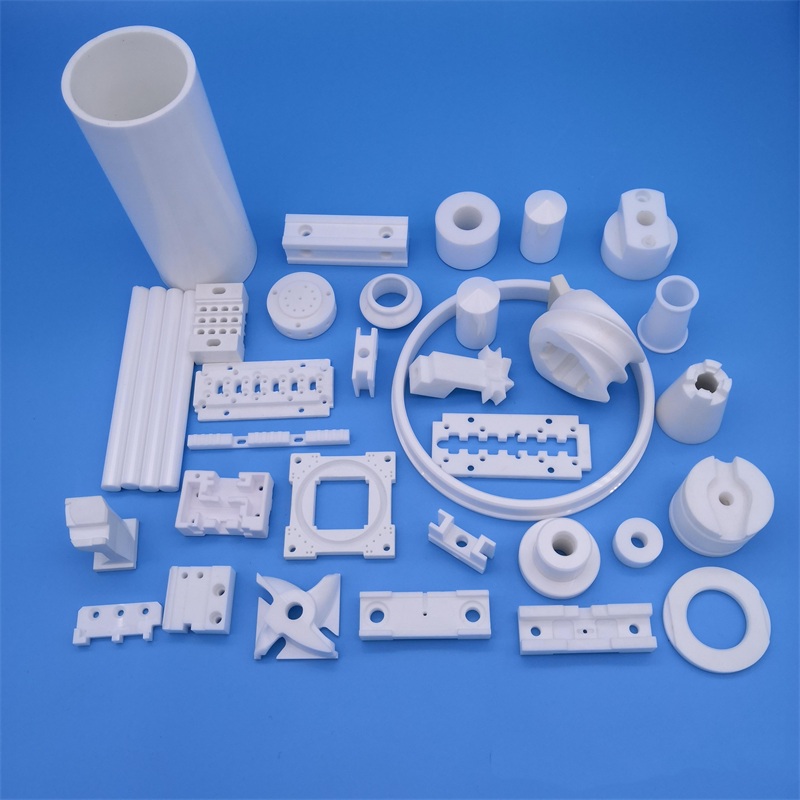
Pipelines, Produced-Water Systems, and Surface Facilities
Ceramic components are also used in surface production and transportation systems, particularly where corrosion, scaling, or erosion is a recurring problem.
Ceramic-Lined Pipes and Fittings
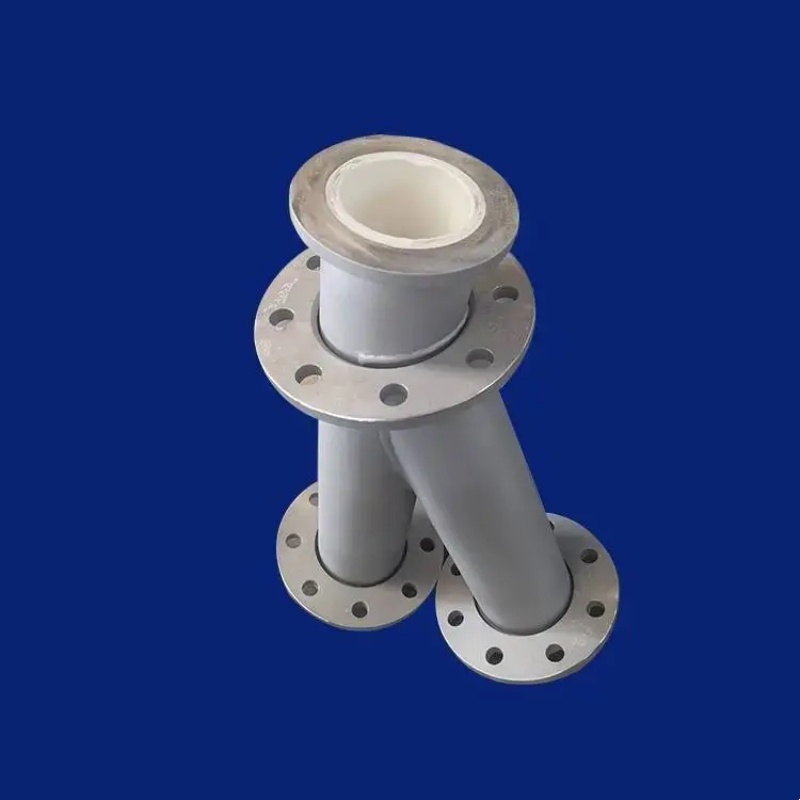
Ceramic-lined pipes, elbows, tees, and wear plates are used to protect steel pipelines and process equipment from abrasive and corrosive fluids. These components are commonly applied in produced-water lines, slurry transport sections, high-erosion bends, and process piping where internal degradation is a major maintenance driver.
Ceramic linings can be especially effective when the failure mode is internal wear rather than external mechanical damage. In such cases, the ceramic layer acts as a sacrificial or protective barrier, while the steel pipe provides structural strength and pressure containment.
Separation, Filtration, and Process Components
Porous ceramic membranes, filter elements, and inert ceramic packing are used in oil and gas processing for fluid filtration, solids separation, catalyst support, and process protection. These components must resist chemical attack while maintaining stable pore structure, mechanical strength, and cleanability over repeated service cycles.
Typical applications include:
produced-water filtration
solids removal from process streams
catalyst support beds in refining and petrochemical units
protection of downstream equipment from fine particulates
corrosion-resistant packing and distribution media
Common Ceramic Materials in Oil & Gas Applications
Material selection should always be based on the actual service environment. The same ceramic family can perform very differently depending on purity, microstructure, manufacturing method, geometry, and operating conditions.
Alumina is one of the most widely used advanced ceramics in oil and gas applications. It offers high hardness, strong chemical stability, and excellent electrical insulation. It is commonly used for plungers, liners, valve parts, sensor insulators, and process packing. Alumina is generally a good choice when electrical insulation and corrosion resistance are required alongside moderate to high wear resistance.
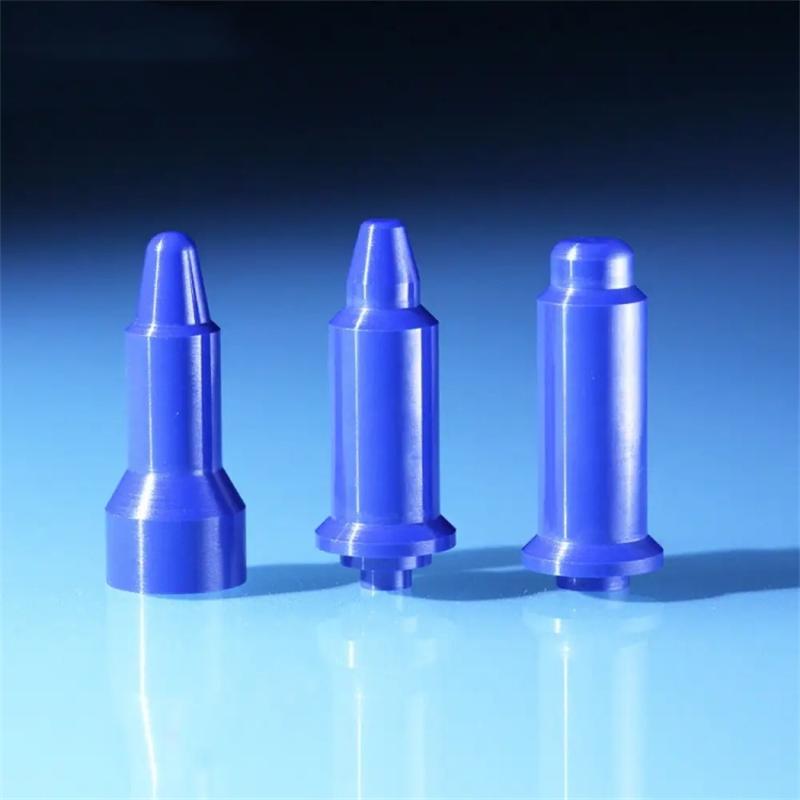
Zirconia is often selected when higher fracture toughness is needed. Compared with alumina, zirconia-based ceramics can better resist crack propagation under mechanical loading, making them suitable for plungers, valve components, wear parts, and sealing surfaces. However, zirconia’s long-term stability must be evaluated for the specific temperature and fluid environment, as phase stability can affect performance in certain downhole or high-temperature conditions.
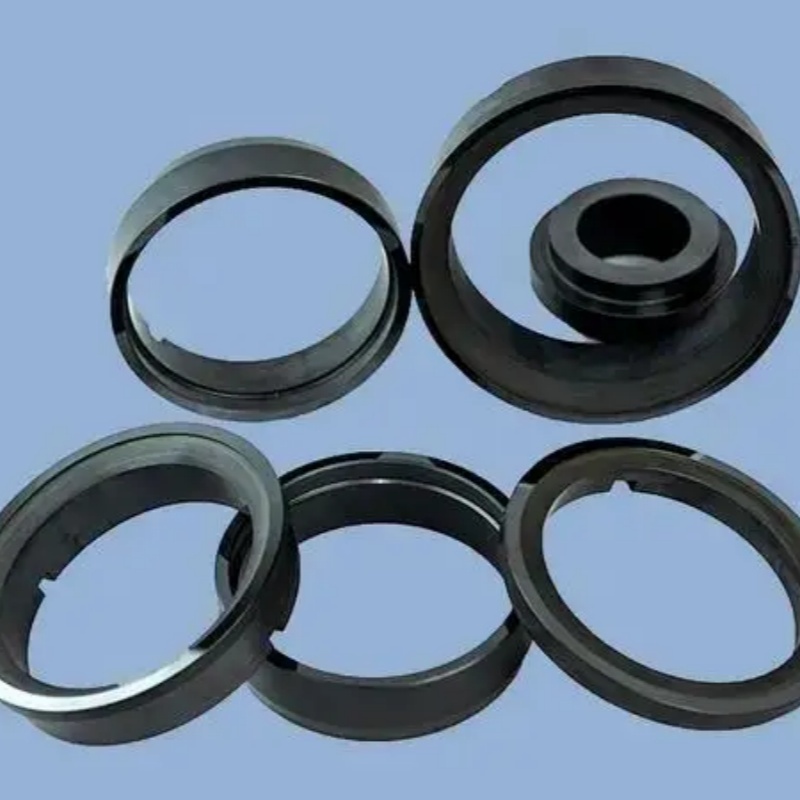
Silicon carbide provides high hardness, strong thermal stability, and excellent corrosion resistance. It is frequently used in seals, bearings, nozzles, and high-temperature components. Silicon carbide is particularly useful where both thermal performance and chemical resistance are important, such as in aggressive process fluids or high-speed sealing applications.
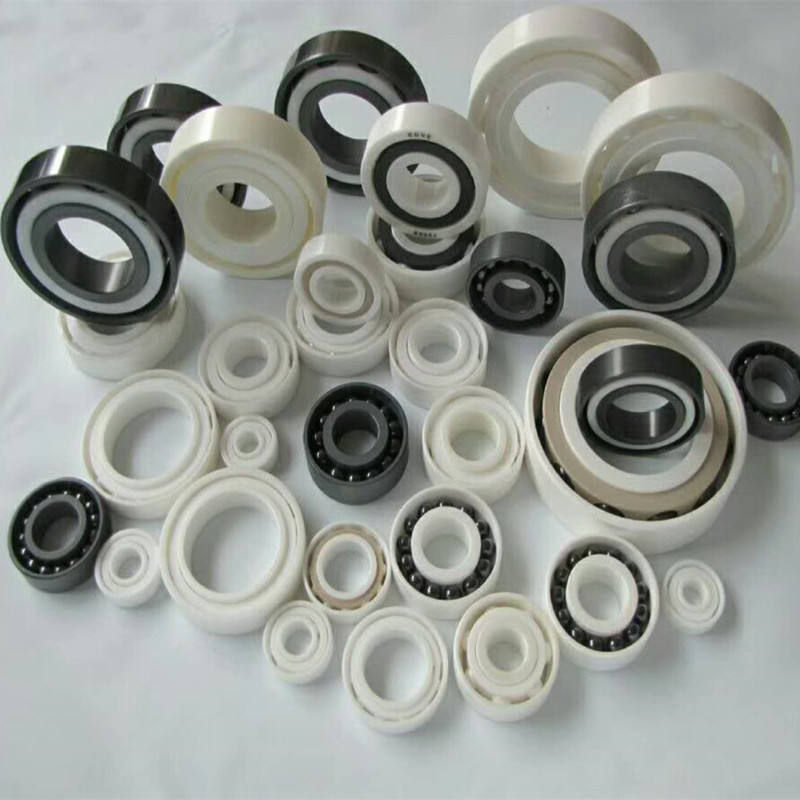
Silicon nitride is known for high mechanical strength, good thermal shock resistance, and relatively low density. It is often considered for bearings, measurement components, and high-stress wear parts. Silicon nitride can be a strong option when components must withstand repeated thermal cycling or dynamic mechanical loading.
These materials are not interchangeable. For example, a component that requires high electrical insulation may favor alumina, while a sliding wear component exposed to thermal cycling may benefit from silicon nitride or silicon carbide. Zirconia is often considered where higher fracture toughness is needed, but its long-term stability must be evaluated for the specific temperature and fluid environment.
Engineering Considerations Before Specifying Ceramic Parts
Ceramic components can significantly improve performance, but they must be applied correctly. The most common specification issues are not caused by the ceramic material itself, but by mismatches between material selection, component geometry, and operating conditions.
Before selecting a ceramic component, engineering and procurement teams should review:
Operating Media
The fluid composition matters. Abrasive content, pH, chloride concentration, H₂S/CO₂ presence, temperature, and pressure all influence material performance. A ceramic that performs well in clean water may behave differently in produced water, acidized fluids, or sand-laden slurries.
Wear Mechanism
Not all wear is the same. Slurry erosion, dry abrasion, particle impingement, sliding wear, and cavitation require different design responses. Ceramic components are often most effective when the dominant failure mechanism is abrasion or corrosion-assisted wear.
Mechanical Loading
Ceramics generally perform better under compressive loading than under tensile or impact loading. Components with sharp corners, thin unsupported sections, or high shock exposure require careful design review. Geometry, edge treatment, and support structure are as important as material selection.
Surface Finish and Tolerances
For sealing and sliding applications, surface finish, roundness, flatness, and dimensional consistency directly affect performance. A high-performance ceramic material cannot compensate for poor mating surface design or incorrect clearance.
Assembly and Installation
Ceramic parts must be assembled with appropriate fit, preload, and protection. Metallic housings, elastomeric seals, adhesives, and mechanical retention methods all influence reliability. In many oil and gas applications, ceramic components are integrated into metallic assemblies rather than used as standalone parts.
Where Ceramic Components Add the Most Value
Ceramic components are not a universal solution, but they are highly effective in well-defined applications. They tend to deliver the strongest return when:
metallic components fail prematurely due to abrasion
sealing surfaces degrade in corrosive or erosive service
maintenance frequency drives operational cost
downhole or subsea components are difficult to access
electrical insulation must be maintained in harsh environments
flow-control components suffer from erosion at chokes, nozzles, or restrictions
In these cases, ceramics are best viewed as precision engineering materials. Their value comes from extending component life, protecting adjacent systems, reducing unplanned downtime, and improving the reliability of critical fluid-handling and measurement systems.
Advanced ceramics play a targeted but important role in the oil and gas industry. They are used in drilling and fracturing equipment, corrosion-resistant valves and seals, downhole sensors, pipeline protection systems, and process filtration components. Their main advantages are high wear resistance, chemical stability, thermal performance, and electrical insulation.
For engineers and procurement professionals, the key question is not whether ceramics are “better” than metals in general, but whether a ceramic component is suitable for a specific failure mode, operating environment, and mechanical design. When applied correctly, ceramic parts can reduce maintenance intervals, improve sealing reliability, and extend the service life of critical oil and gas equipment.
 What Is Polyimide (PI)
What Is Polyphenylene Sulfide (PPS)
What Is Polyimide (PI)
What Is Polyphenylene Sulfide (PPS)
 What is PEEK-for Engineers and Buyers
 Application Scope of Zirconia Ceramic Structural Components