
Aluminum Nitride Ceramics in Semiconductor Manufacturing Equipment
Aluminum Nitride (AlN) ceramics have emerged as an essential material in advanced semiconductor manufacturing, addressing the critical challenge of thermal management in front-end processes. As design rules continue to shrink and wafer diameters expand to 300 mm and beyond, the selection of equipment components becomes increasingly crucial for process stability and yield . AlN offers a unique combination of high thermal conductivity, electrical insulation, and a coefficient of thermal expansion closely matched to silicon, making it the preferred material for critical components such as electrostatic chucks, susceptors, and heater plates in etching and CVD equipment.
For engineers and procurement specialists seeking reliable Manufacturer and Supplier partnerships, understanding the technical properties, application requirements, and customization capabilities of AlN ceramics is essential for making informed sourcing decisions. This guide provides a comprehensive overview of AlN ceramics in semiconductor applications, offering actionable insights for specifying Precision Components and evaluating Custom Parts from Factory sources.
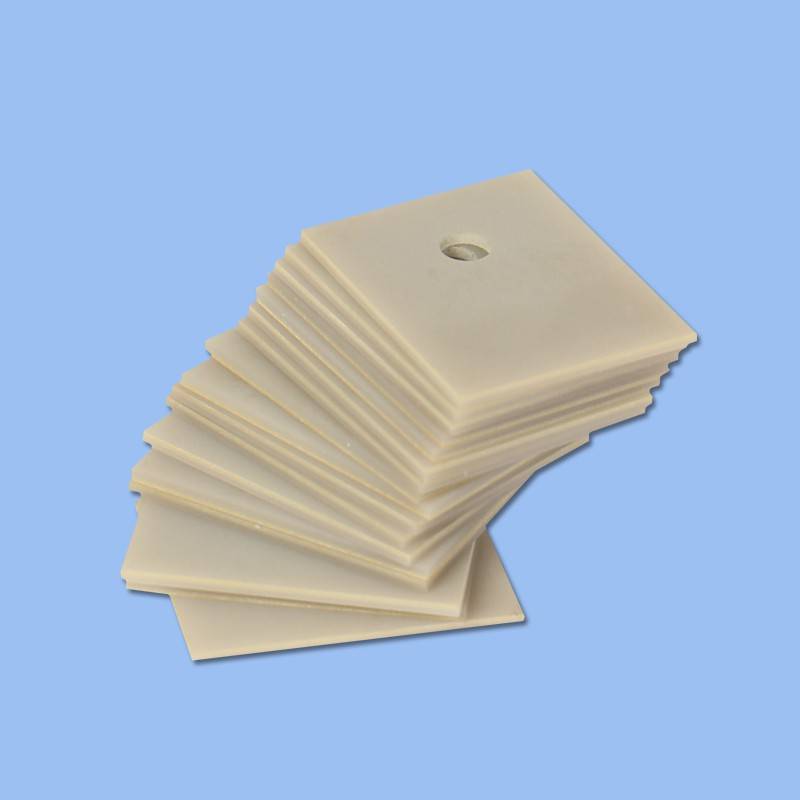
What Is Aluminum Nitride Ceramic?
Aluminum nitride is a technical ceramic material synthesized through the sintering of aluminum nitride powder at high temperatures, typically exceeding 1800°C, often with sintering aids such as yttrium oxide or calcium compounds to achieve full densification . The resulting material exhibits a gray to black color and a crystalline structure that provides exceptional thermal and electrical properties.
As a high-performance engineering ceramic, AlN is distinguished by its thermal conductivity—ranging from 170 to 230 W/m·K in commercial grades—which is five to eight times higher than that of alumina (Al₂O₃) . This property, combined with its thermal expansion coefficient of approximately 4.5 × 10⁻⁶/K (closely matching that of silicon at 4.2 × 10⁻⁶/K), makes AlN ideal for applications where thermal stress on silicon wafers must be minimized .
In semiconductor manufacturing equipment, AlN ceramics serve as dielectric layers in electrostatic chucks (ESCs), heating components, and plasma-resistant parts. The material’s ability to maintain structural and functional integrity under harsh vacuum, plasma, and chemical environments has established it as a cornerstone of modern semiconductor processing.
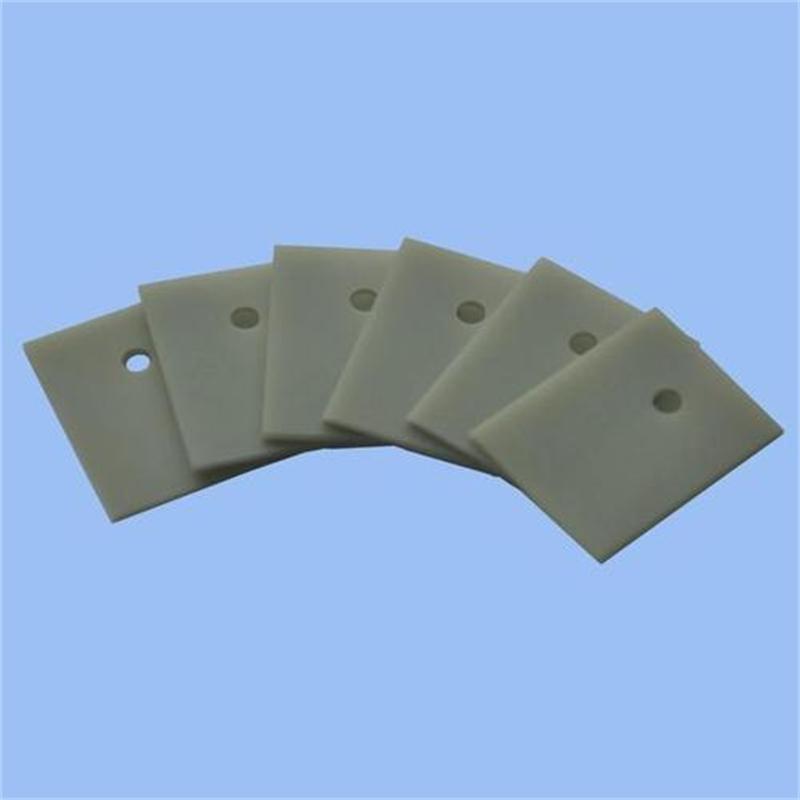
Key Properties of Aluminum Nitride Ceramics
Thermal Conductivity
AlN ceramics exhibit thermal conductivity values ranging from 90 W/m·K to over 230 W/m·K depending on purity and processing conditions . High-purity grades, such as those with yttrium oxide sintering aids, achieve 170–230 W/m·K, enabling rapid heat dissipation from power devices and ensuring temperature uniformity across wafer surfaces . Theoretical values approach 320 W/m·K, indicating potential for further performance enhancement .
Mechanical Properties
Flexural strength typically ranges from 300 to 450 MPa, with density values of 3.2–3.3 g/cm³ . The material exhibits good Wear Resistance and mechanical stability under thermal cycling conditions. Fracture toughness is approximately 3 MPa·√m, which is lower than silicon nitride (Si₃N₄) but sufficient for semiconductor applications where thermal management, rather than mechanical impact resistance, is the primary concern .
Electrical Properties
AlN provides excellent Electrical Insulation with room-temperature volume resistivity exceeding 10¹³ Ω·cm . For Johnsen-Rahbek type electrostatic chucks, precise resistivity control in the 10⁹–10¹¹ Ω·cm range at operating temperatures (400–550°C) is achievable through controlled doping, enabling stable wafer clamping force without charge accumulation . Dielectric strength is rated at approximately 15 kV/mm, with a dielectric constant of 8.8 at 1 MHz .
Corrosion and Plasma Resistance
Corrosion Resistance is a critical attribute for semiconductor applications. AlN demonstrates excellent resistance to halogen-based plasmas, including fluorine and chlorine gases commonly used in etching and cleaning processes . Its resistance to plasma attack ensures long component lifetime and minimal particle generation in critical process environments.
Thermal Properties
With a thermal expansion coefficient of 4.5 × 10⁻⁶/K (RT to 400°C), AlN matches silicon closely, reducing thermal stress at interfaces . Thermal shock resistance values of approximately 400°C (water drop method) enable rapid temperature cycling without fracture . Thermal emissivity at 100°C is 0.93, enhancing radiative heat transfer in vacuum environments .
Purity and Impurity Control
High-purity AlN ceramics contain total metal impurities other than aluminum below 100 ppm . This purity level is essential for preventing contamination in semiconductor processing, where metallic impurities can degrade device performance and yield.
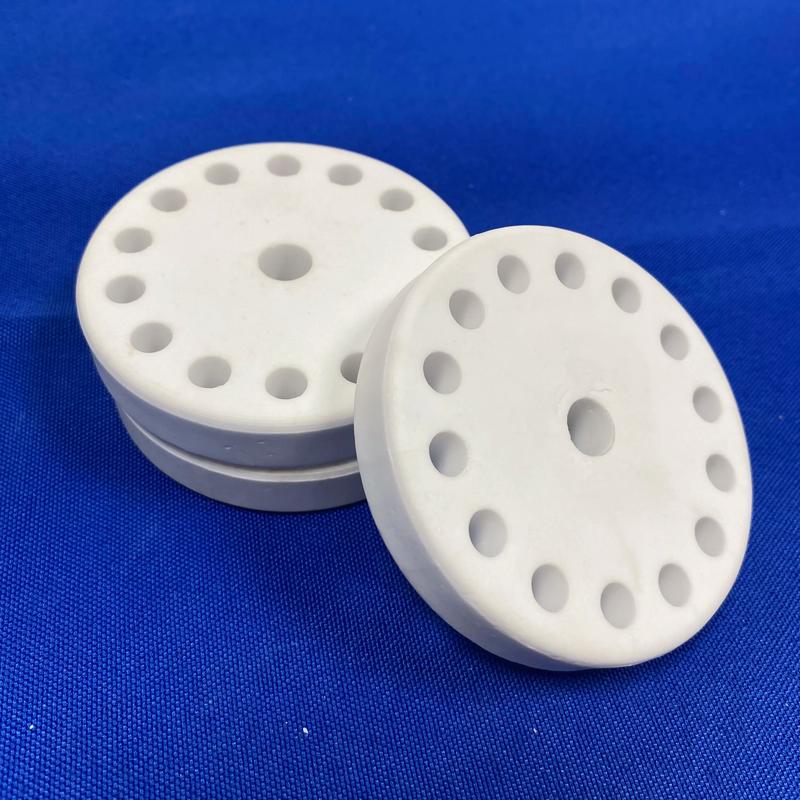
Typical Applications in Semiconductor Manufacturing
Electrostatic Chucks (ESCs)
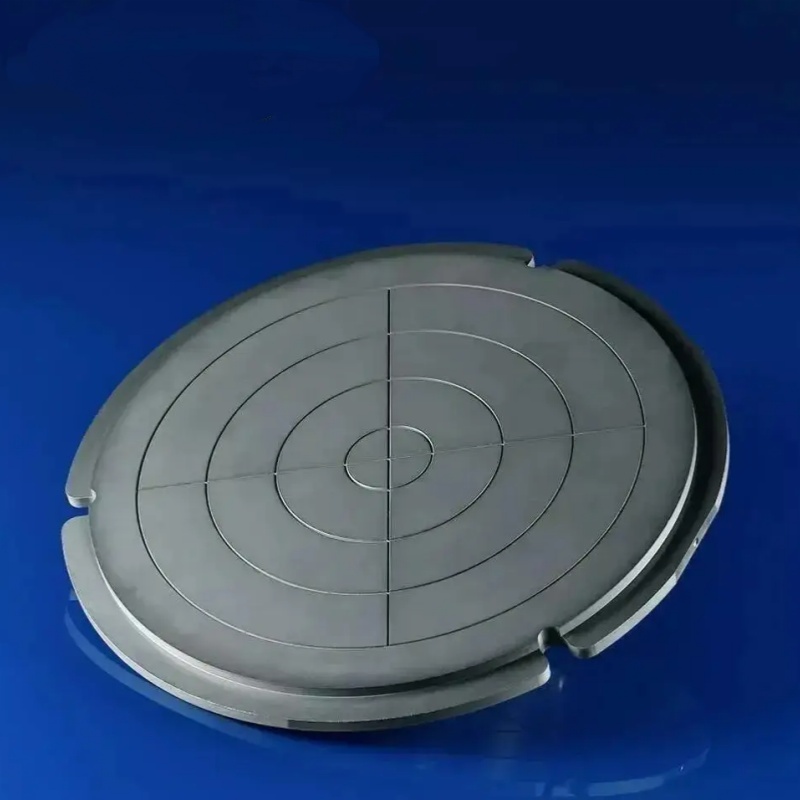
AlN is the preferred material for dielectric layers in Johnsen-Rahbek type electrostatic chucks, where precise control of volume resistivity (10⁹–10¹¹ Ω·cm) is required . The material’s high thermal conductivity ensures efficient heat transfer from the wafer, while its CTE match to silicon minimizes wafer distortion during processing . Advanced research demonstrates the feasibility of monolithic AlN/Al₂O₃ functionally graded ceramics for ESC fabrication, integrating dielectric functionality with structural support .
Susceptors and Heater Plates
In CVD and etching equipment, AlN susceptors provide uniform heating across wafer surfaces. The material’s High Temperature Resistance (operating up to 550°C and beyond) and rapid thermal response enable precise process control . Recent developments in 12-inch wafer processing have driven demand for high-uniformity AlN ceramic heater plates capable of supporting 7–14 nm node manufacturing .
Thermal Management Components
AlN substrates and heat spreaders are used in power modules, LED packages, and high-frequency devices where efficient heat dissipation is critical . The material’s combination of high thermal conductivity and electrical insulation makes it an ideal solution for IGBT and MOSFET module substrates.
Dummy Wafers and Process Components
AlN dummy wafers provide thermal and mechanical properties similar to silicon, enabling accurate process simulation and temperature calibration in production environments .
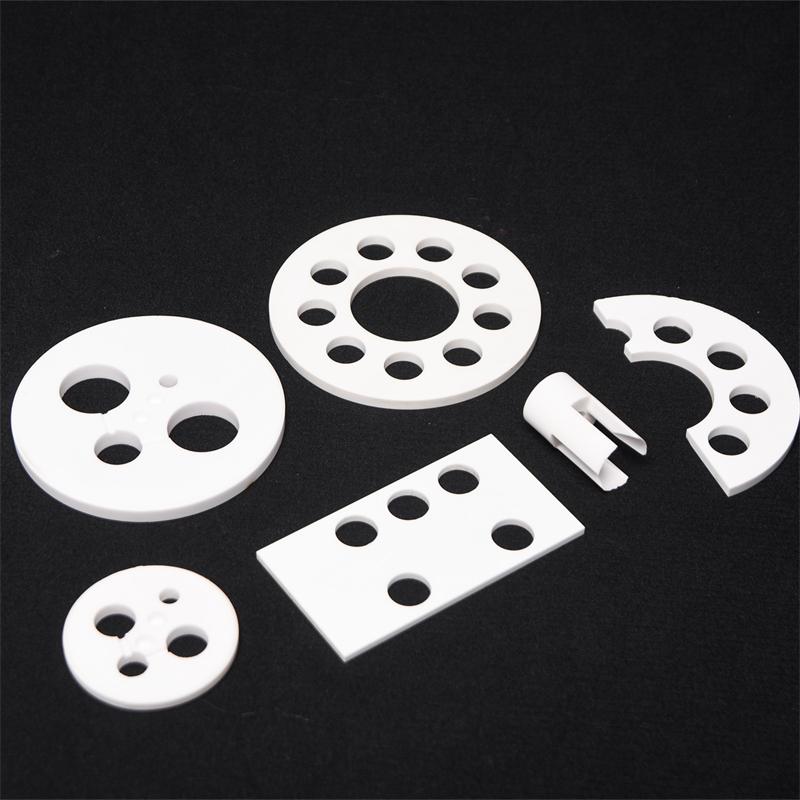
Advantages Compared With Other Ceramic Materials
Versus Alumina (Al₂O₃): AlN offers significantly higher thermal conductivity (170–230 W/m·K compared to 24–25 W/m·K for Al₂O₃) . While alumina is more cost-effective and widely available, AlN is preferred in high-power density applications where thermal management is a limiting factor. AlN also provides a better CTE match to silicon, reducing thermal stress at wafer interfaces.
Versus Silicon Nitride (Si₃N₄): Si₃N₄ excels in mechanical robustness with flexural strength of 700–800 MPa and fracture toughness ≥6.5 MPa·√m . However, AlN provides superior thermal conductivity (170–230 W/m·K versus 85–90 W/m·K for Si₃N₄), making it the preferred choice for thermal-critical applications . The selection between these materials involves a trade-off between mechanical reliability and thermal performance.
Versus Beryllium Oxide (BeO): While BeO offers exceptional thermal conductivity, its toxicity limits its use in modern manufacturing. AlN provides comparable thermal performance with a safer handling profile.
Processing Considerations: AlN typically requires sintering temperatures above 1800°C, compared to 1300–1500°C for alumina, resulting in higher manufacturing costs . However, recent advances in sintering aids have enabled lower-temperature processing, reducing production costs and expanding the material’s availability .
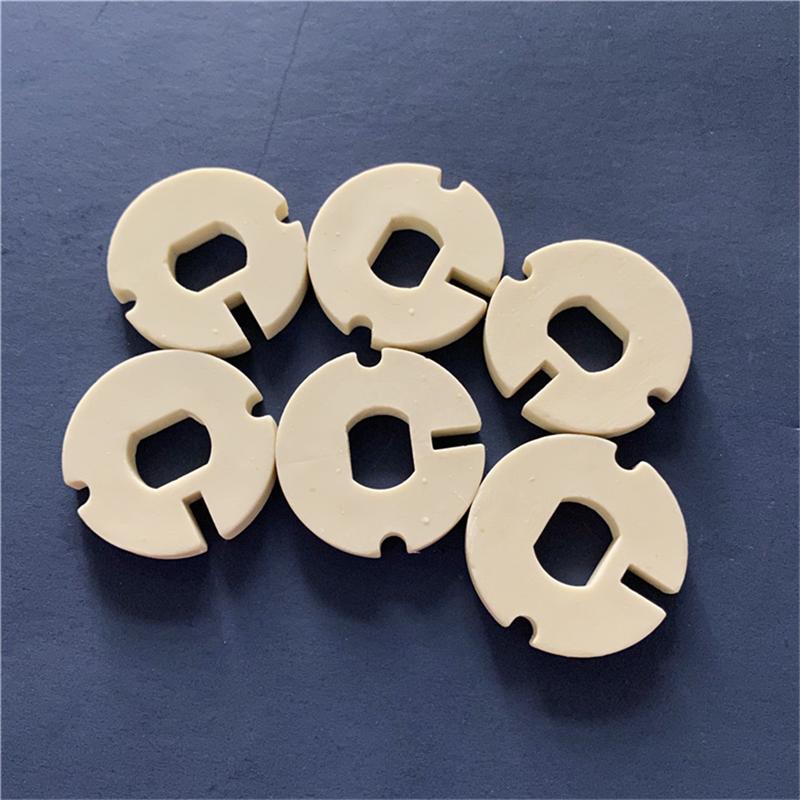
Custom Manufacturing Options
OEM and Custom Parts Capabilities
Qualified OEM manufacturers offer comprehensive customization services for AlN ceramic components, including:
– Dimensional capabilities: Maximum sizes up to 400 mm outer diameter and 500 mm × 400 mm rectangular dimensions, with typical thicknesses from 0.3 mm to 10 mm .
– Tolerances: Precision machining achieves outer diameter tolerances of ±0.01 mm and thickness tolerances of ±0.005 mm .
– Surface finishes: Options include natural (as-sintered), lapped, diamond-polished, and metallized surfaces .
– Material grades: Different grades are available, including high-purity (thermal conductivity 170–200 W/m·K), high thermal conductivity (200–230 W/m·K), and general-purpose formulations .
Processing Capabilities
Established Factory facilities provide integrated manufacturing from raw material processing to high-precision machining:
– Forming methods: CNC machining, isostatic pressing, hot pressing, and precision sintering ensure dense microstructure and dimensional stability .
– Metallization: Mo-Mn, Ag-Pd, and Cu metallization with Ni/Au finishing is available for components requiring soldering or brazing .
– Quality control: Rigorous inspection processes include IQC, IPQC, QA, and OQC, with material purity testing and dimensional verification .
Customization Considerations
When specifying Precision Components for semiconductor applications, consider the following:
Material grade selection: Higher thermal conductivity grades (200–230 W/m·K) are recommended for high-power applications, while high-purity grades (oxygen content <1%) minimize contamination risks .
Tolerance requirements: Define critical dimensions and specify tighter tolerances for mating surfaces and sealing interfaces.
Surface finish: Polished surfaces (Ra < 0.3 μm) are recommended for wafer-contact applications to minimize particle generation .
Metallization requirements: Specify metallization type, thickness, and pattern for brazing or soldering applications.
How to Choose the Right Supplier
Evaluation Criteria for AlN Ceramic Suppliers
Technical capability: Assess the supplier’s ability to produce consistent, high-quality AlN components. Look for demonstrated experience with semiconductor applications and in-house R&D capabilities . Suppliers with over 10 years of experience in technical ceramics are preferable.
Quality systems: Verify certifications including ISO 9001, and evaluate the supplier’s quality control processes from raw material inspection to final shipping. In-house testing capabilities for thermal conductivity, resistivity, and dimensional accuracy are essential .
Customization flexibility: Ensure the supplier supports custom designs, prototyping, and small-batch production. Rapid prototyping capabilities (3–7 weeks for custom orders) are valuable for new product development .
Production capacity: Evaluate the supplier’s capacity to scale from prototyping to mass production. For semiconductor applications, suppliers with dedicated semiconductor-grade production lines are preferred.
Supply chain reliability: Assess the supplier’s track record for on-time delivery, material traceability, and responsiveness to technical inquiries. Supplier audits and reference checks provide additional assurance.
Pricing and value: While AlN components are more expensive than alumina, evaluate total cost of ownership including component lifetime, yield impact, and maintenance requirements. Avoid suppliers offering prices significantly below market rates, as quality may be compromised.
Red Flags to Avoid
– Inability to provide detailed material characterization data
– Lack of experience with semiconductor equipment applications
– Limited customization capabilities or long lead times
– Absence of quality certifications or inconsistent quality records
Aluminum nitride ceramics represent a critical material solution for thermal management in semiconductor manufacturing equipment, delivering an unmatched combination of high thermal conductivity, electrical insulation, plasma resistance, and CTE match to silicon. For engineers and procurement specialists, understanding the material’s key properties—thermal conductivity up to 230 W/m·K, flexural strength of 300–450 MPa, and volume resistivity exceeding 10¹³ Ω·cm—enables informed specification of Precision Components for applications including electrostatic chucks, susceptors, and heater plates .
As semiconductor process nodes advance toward 7 nm and beyond, the demand for high-uniformity AlN components continues to grow, driven by the need for precise temperature control in etching and CVD equipment . The emergence of monolithic functionally graded ceramics combining AlN dielectric layers with Al₂O₃ structural support signals further integration and performance enhancement opportunities .
Selection of a reliable Manufacturer or Supplier requires evaluation of technical capability, quality systems, customization flexibility, and production capacity. Suppliers with in-house R&D, comprehensive quality control, and semiconductor-specific experience provide the highest probability of successful component performance and process integration.
By leveraging the thermal and electrical properties of AlN ceramics through precision-engineered Custom Parts from qualified sources, semiconductor manufacturers can achieve higher yields, improved process stability, and extended equipment lifetime.
FAQ
What is the difference between AlN and Al₂O₃ ceramics for semiconductor applications?
AlN offers significantly higher thermal conductivity (170–230 W/m·K versus 24–25 W/m·K for Al₂O₃) and a better CTE match to silicon . While Al₂O₃ is more cost-effective, AlN is essential for high-power density applications where thermal management is critical. AlN is also preferred for electrostatic chuck dielectric layers due to its tunable resistivity properties .
What temperature range can Aluminum Nitride withstand?
AlN ceramics maintain structural integrity up to 550°C and beyond in semiconductor processing environments . For electrostatic chuck applications, high-temperature resistivity control in the 400–550°C range has been demonstrated . Thermal shock resistance is approximately 400°C (water drop method), enabling rapid temperature cycling without fracture .
Why is Aluminum Nitride used in semiconductor equipment rather than metals?
AlN provides electrical insulation and plasma resistance that metals cannot offer. Its thermal expansion coefficient matches silicon closely, preventing wafer distortion during processing . Additionally, AlN does not introduce metallic contamination and maintains dimensional stability under vacuum and plasma environments .
How do I choose the right AlN grade for my application?
Select grades based on thermal conductivity requirements: standard grades (90–170 W/m·K) for moderate heat dissipation, high-conductivity grades (170–200 W/m·K) for high-power applications, and premium grades (200–230 W/m·K) for the most demanding thermal management needs . High-purity grades (oxygen content <1%) are recommended when contamination risk is a concern .
How do I evaluate a potential AlN ceramic component supplier?
Key evaluation criteria include: technical capability (R&D, precision machining), quality certifications (ISO 9001), customization flexibility (OEM support, prototyping), production capacity (scalability from prototype to mass production), and supply chain reliability (traceability, on-time delivery). Request references from semiconductor equipment manufacturers and review quality control documentation .
 What Is Polyimide (PI)
What Is Polyphenylene Sulfide (PPS)
What Is Polyimide (PI)
What Is Polyphenylene Sulfide (PPS)
 What is PEEK-for Engineers and Buyers
 Application Scope of Zirconia Ceramic Structural Components