
Alloys, Ceramics, and Composites in Aero-Engines
Modern aircraft engines represent one of the most demanding engineering environments on the planet. Turbine inlet temperatures routinely exceed 1,500°C, rotating components experience centrifugal stresses measured in tens of megapascals, and every kilogram of weight reduction translates directly into improved fuel efficiency and payload capacity. No single material class can meet all these requirements simultaneously. The solution lies not in finding one perfect material, but in strategically deploying three distinct material families—superalloys, ceramics, and composites—where each performs optimally.
The Operating Environment: Why Material Selection Matters
The fundamental challenge in aero-engine design is the inverse relationship between thermal efficiency and material capability. Higher turbine inlet temperatures increase thermodynamic efficiency and thrust, but every 100°C gain pushes materials closer to their limits. The key property requirements for engine materials include maximum service temperature, high-temperature specific strength, oxidation resistance, toughness, thermal conductivity, and processability .
Traditional superalloys have served as the backbone of jet engine construction for decades. However, they are approaching their intrinsic melting-point limits. As one senior researcher noted, boosting engine efficiency and thrust-to-weight ratio while lowering fuel consumption will inevitably drive up turbine inlet temperature, and blades lacking sufficient heat resistance will become the performance bottleneck .
This is where the strategic collaboration between alloys, ceramics, and composites becomes critical. Each material class occupies a specific position in the engine’s temperature-stress spectrum.
Superalloys: The Structural Backbone
Composition and Structure
Superalloys, primarily nickel-based and cobalt-based, are the workhorse materials of aero-engines. Nickel-based superalloys have been at the forefront of jet engine manufacture due to their remarkable high-temperature properties. Their microstructure typically consists of a gamma (γ) matrix strengthened by coherent gamma-prime (γ′) precipitates that maintain their effectiveness at temperatures up to approximately 750°C .
Cobalt-based superalloys offer excellent corrosion and oxidation resistance, though historically they have exhibited lower high-temperature strength than their nickel-based counterparts. Recent developments in high-entropy superalloys (HESA) have demonstrated that combining cobalt and nickel in carefully designed compositions can yield superior ductility and high-temperature strength simultaneously .
Single-crystal superalloys represent the current state of the art for high-pressure turbine blades. By eliminating grain boundaries that serve as weak points at elevated temperatures, these materials achieve exceptional creep resistance. Engineers at AECC are working on more advanced single-crystal technologies with better temperature resistance, corrosion resistance variants for marine environments, and low-density versions for miniature drones .
Key Properties
The defining characteristics of advanced superalloys include high-temperature strength retention, creep resistance, fatigue resistance, oxidation and corrosion resistance, and castability. The performance of modern superalloys is impressive: TMW-4M3 achieves a 0.2% yield strength of 1008 MPa and elongation of 9.5% at 750°C . However, the inherent development timelines remain prolonged, and significant costs associated with iterative experimentation impede further compositional optimization .
Ceramics: Pushing the Temperature Frontier
Ceramic Matrix Composites (CMCs)
While monolithic ceramics offer exceptional temperature capability, their inherent brittleness has historically limited their use in structural applications. Ceramic Matrix Composites (CMCs) address this limitation by incorporating reinforcing fibers, creating materials with damage tolerance more akin to metals than traditional ceramics.
Continuous fiber-reinforced silicon carbide ceramic matrix composites (CMC-SiC) represent the most mature and widely pursued CMC system for aero-engine applications. These materials offer thermal stability exceeding 1,200°C, density approximately one-third that of superalloys, and fracture behavior that is non-catastrophic—they do not fail in a brittle manner typical of monolithic ceramics .
The transformation toughening mechanism in certain ceramic systems, such as ceria-stabilized tetragonal zirconia polycrystal (Ce-TZP), provides additional damage tolerance. The phase transformation from tetragonal to monoclinic structure during crack propagation generates compressive stresses around crack tips that effectively arrest crack growth .
Material Limitations
CMCs face several significant challenges. Oxidation resistance at intermediate temperatures (600-900°C) can be problematic without protective coatings. The joining of CMCs to metals remains a critical manufacturing challenge due to coefficient of thermal expansion (CTE) mismatches and residual stress development . Additionally, fabrication costs remain substantially higher than conventional superalloy processing.
Strategic Deployment
CMCs are being deployed in a phased approach in the industry. Short-term applications include exhaust nozzles, flame stabilizers, and turbine shrouds. Medium-term applications target low-pressure turbine blades, combustor liners, and inner cones. The long-term vision encompasses high-pressure turbine blades, high-pressure compressors, and vanes .
Polymer Matrix Composites: Lightweighting the Cold Section
Carbon Fiber Composites in Fan Blades
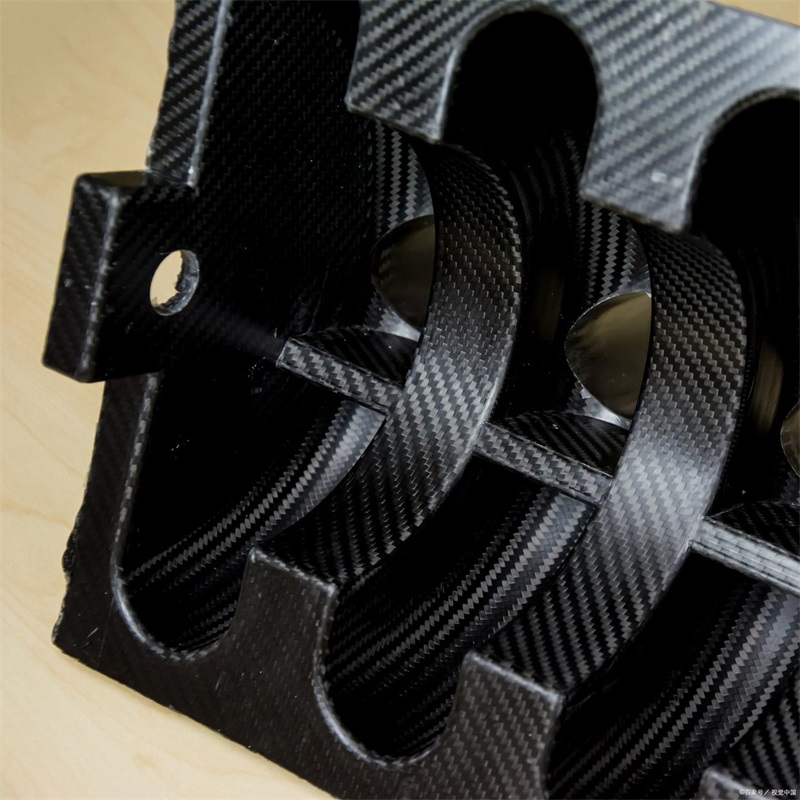
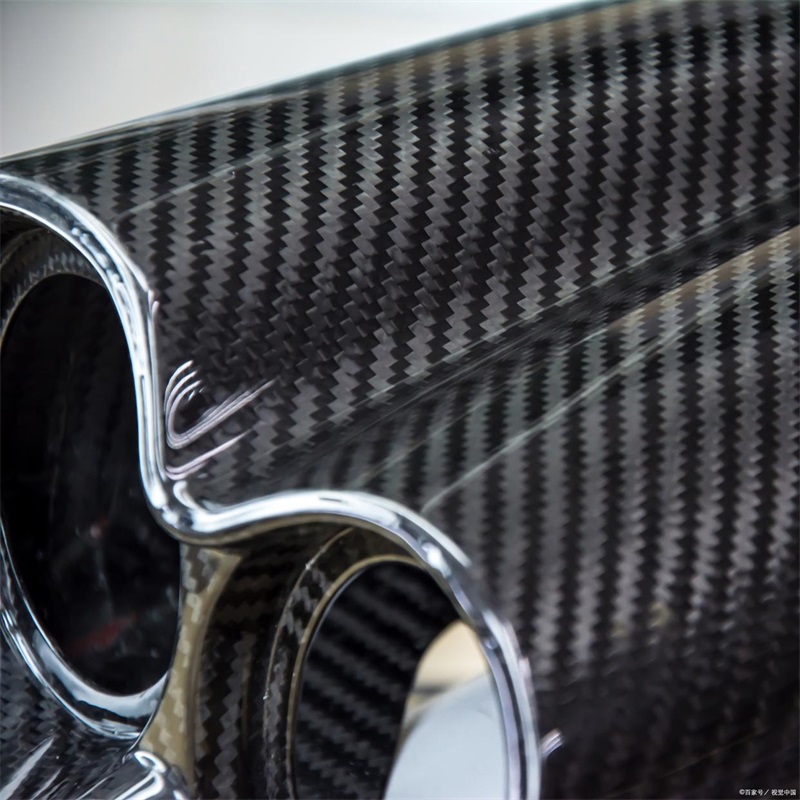
While CMCs address the hot section, polymer matrix composites (PMCs)—particularly carbon fiber-reinforced polymers (CFRP)—have revolutionized the cold section of modern turbofans. The density of CFRP is approximately one-fifth that of steel and one-half that of aluminum, while offering superior specific strength and modulus .
The application of CFRP in fan blades represents a particularly significant achievement. Modern large turbofan engines incorporate composite fan blades that are larger than the fuselage diameter of many regional jets. Automated Fiber Placement (AFP) has become the enabling manufacturing technology for these complex, large-scale components .
Research has demonstrated that tailored morphing composite fan blades can achieve higher angular changes at lower mass compared to titanium alloy equivalents . The anisotropic properties of CFRP can be exploited to increase achievable morphing deformations, improving engine efficiency across off-design conditions.
Metal Matrix Composites (MMCs): Bridging the Gap
Metal matrix composites combine metallic toughness with ceramic reinforcement to achieve properties unattainable by either constituent alone. Aluminum matrix composites reinforced with ceramic particles, such as AA7075 with Ce-TZP and SiC reinforcement, demonstrate significantly enhanced wear resistance and thermal stability while maintaining a density substantially below steel .
Hot press sintering, a pressure-assisted solid-state processing method, has proven effective for fabricating these materials. The process applies both thermal energy to promote atomic diffusion and mechanical pressure to enhance particle rearrangement and reduce porosity, yielding high-density, fine-grained materials with superior mechanical properties .
Intermetallic Compounds: A Bridge Between Worlds
Intermetallic compounds such as TiAl and NiAl occupy a unique position between superalloys and ceramics. Their mixed metallic-covalent bonding enables them to potentially combine the toughness of metals with the high-temperature capability of ceramics .
TiAl alloys, with density less than half that of nickel-based superalloys, offer use temperatures approaching 900°C. Their elastic modulus (176 GPa at room temperature) compares favorably with superalloys while maintaining good oxidation resistance. NiAl, meanwhile, exhibits the lowest ductile-to-brittle transition temperature among intermetallics (approximately 400°C) and superior thermal conductivity relative to superalloys .
The practical advantages of intermetallics are considerable. They can be produced using conventional metallurgical methods, providing a cost advantage over ceramics, and their thermal conductivity reduces thermal stresses in cooled components .
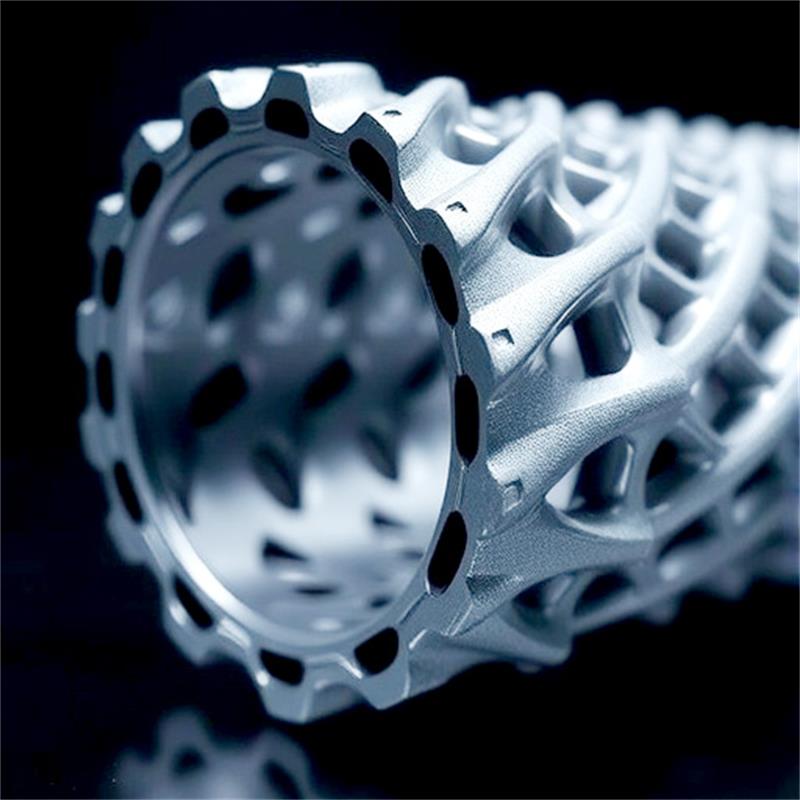
Synergistic Integration Across the Engine
Temperature-Stress Distribution
The modern turbofan engine operates as a materials hierarchy based on temperature and stress conditions:
1. Fan and Low-Pressure Compressor: CFRP composites dominate where temperatures remain below approximately 200°C and stresses are moderate. The combination of low density, high specific stiffness, and fatigue resistance makes them ideal for large-diameter rotating structures.
2. High-Pressure Compressor: Titanium alloys and selected intermetallics serve in this intermediate temperature regime (200-600°C), where the combination of mechanical properties and moderate temperature capability is essential.
3. Combustor and High-Pressure Turbine: CMCs and advanced superalloys share this highest-temperature zone. CMCs increasingly serve in lower-stress static components such as liners and shrouds. Single-crystal superalloys remain the primary material for high-stress rotating blades, with research focused on increasing their maximum use temperature through advanced single-crystal technologies .
4. Turbine Discharge and Exhaust: CMCs and C/C composites, where extreme temperatures (approaching 2,000°C) make even superalloys inadequate .
Joining and Interface Engineering
The interfaces between different material classes present unique challenges. Bonding CMCs to metals requires careful management of thermal expansion mismatch. Brazing, the most widely used joining technique, faces an insurmountable bottleneck for AgCuTi filler at temperatures below approximately 1,000°C, limiting its application to moderate-temperature components .
Joining research addresses residual stress control through the development of high-temperature filler materials and the suppression of SiC-Ni interfacial reactions. The formation of brittle Ni-Si compounds on CMCs side must be minimized, requiring careful filler design and process optimization .
Manufacturing Integration
The concept of structure-material-manufacturing integration has emerged as a critical paradigm. Traditional serial development—structure design, material selection, then process development—is being replaced by integrated parallel approaches where design, material, and process are optimized simultaneously .
Additive manufacturing techniques, including Laser Powder Bed Fusion (LPBF), have demonstrated significant potential for producing components with fewer defects and more homogeneous microstructures. Research on novel CoNi-based high-entropy superalloys has shown that these materials can be specifically designed for LPBF processing, enabling crack-resistant, high-density component production .
Industry Standards and Specifications
Engine materials must comply with rigorous standards. Key considerations include:
– AMS (Aerospace Material Specifications) for superalloy compositions and processing
– ASTM standards for composite testing and characterization
– OEM-specific specifications for fan blade and CMC component qualification
– Nadcap requirements for specialized processes such as AFP and brazing
Performance targets are established through the building block verification method, where material characterization at coupon and element level precedes component-level validation .
Frequently Asked Questions
What is the maximum service temperature for superalloys, CMCs, and composites?
Single-crystal nickel-based superalloys are generally limited to approximately 1,050-1,100°C for long-term service, approaching the melting point limitation . CMC-SiC can operate at temperatures exceeding 1,200°C without active cooling, representing a 400-500°C improvement over superalloys . Polymer matrix composites are limited to temperatures below approximately 200°C.
Why can’t we use only CMCs for the entire engine?
While CMCs offer exceptional temperature capability, they lack the damage tolerance, fatigue resistance, and cost-effectiveness of superalloys for highly stressed rotating components. CMCs also face joining challenges, oxidation issues in certain temperature ranges, and substantially higher manufacturing costs .
How much weight reduction can CMCs provide compared to superalloys?
CMC components achieve weight reductions of approximately 50-70% compared to superalloy equivalents . For firewall applications, Al₂O₃f/Al₂O₃-SiC composites have demonstrated weight reductions exceeding 40% compared to conventional titanium alloy materials .
What are the key challenges in joining CMCs to metals?
Residual stress management due to CTE mismatch (CMCs have significantly lower thermal expansion than metals), development of braze fillers with adequate high-temperature capability (current AgCuTi fillers are limited to approximately 1,000°C), and suppression of Ni-SiC interfacial reactions that form brittle phases .
Can superalloys be designed for additive manufacturing?
Yes. Recent research on high-entropy superalloys has demonstrated that thermodynamic predictions can substantially improve material properties. The design must consider factors such as crack susceptibility, processing temperature windows, and powder characteristics. LPBF has shown particular promise with careful control of laser power and scan speed to minimize defects .
What is the current status of CFRP fan blade manufacturing?
CFRP fan blades are mature for large commercial turbofans, with OEMs employing various manufacturing strategies including automated fiber placement. Research continues on optimizing AFP processing for reduced cost, improved performance, and development of morphing blade geometries for off-design efficiency improvement .
What are intermetallic compounds and where are they used?
Intermetallics such as TiAl and NiAl possess mixed metallic-covalent bonding, offering a compromise between metallic toughness and ceramic high-temperature capability. TiAl offers use temperatures near 900°C at densities less than half nickel-based superalloys. While promising, they face challenges in forming and have not achieved the widespread adoption once anticipated .
How do we test and validate materials for aerospace applications?
Validation follows the building block approach: coupon-level testing for fundamental properties, element-level testing (e.g., blade sections), subcomponent testing, and finally full-scale engine validation. The approach is critical given the high material, tooling, and processing costs; empirical iteration alone is economically prohibitive .
What is the future direction for aero-engine materials?
A critical focus is developing single-crystal superalloys with higher temperature capability for high-pressure turbine blades, extending CMC applications to high-stress rotating components, and integrating structural, material, and manufacturing design from the outset rather than sequentially. High-entropy alloys, AI-assisted compositional design, and additive manufacturing are accelerating development .
The modern aero-engine represents not a competition between alloys, ceramics, and composites, but a sophisticated integration of all three. Superalloys provide the reliable, damage-tolerant structural backbone for the most demanding rotating components. Ceramic matrix composites enable engine temperatures beyond the fundamental limits of metallic materials, while polymer composites revolutionize the cold section through dramatic weight reduction.
The trend toward higher bypass ratios, higher operating temperatures, and greater fuel efficiency will only accelerate this materials integration. The concept of structure-material-manufacturing integration is becoming the dominant paradigm, replacing the traditional serial approach with a concurrent engineering methodology. As researchers continue to push the temperature limits of single-crystal superalloys, expand CMC applications to high-stress rotating components, and develop novel manufacturing approaches such as additive manufacturing, the future of aero-engine materials lies in optimizing the interfaces and interactions between these complementary material classes.
Understanding the strengths and limitations of each material family and their synergistic potential is essential for engineers, designers, and procurement professionals engaged in developing the next generation of more capable, efficient, and sustainable aircraft engines.
Metals vs. Ceramics vs. Composites: Engineer’s Guide to Material Selection
Material Selection Guide for Corrosive Environments
 Alloys vs. Ceramics vs. Polymers for High-Temperature Applications
 Comparative Analysis of Automotive Lightweighting Materials