
Medical-Grade Specialty Materials
Material selection in medical device design is not a matter of choosing a “medical-grade” label, but a complex engineering decision that balances mechanical performance, biological response, regulatory compliance, sterilization compatibility, and long-term clinical outcomes . The term “medical grade” itself is not a regulatory classification, nor does it guarantee suitability for any specific application—it merely suggests a history of use in healthcare contexts .

Titanium Alloys in Medical Applications
What Is Medical-Grade Titanium?
Titanium and its alloys are among the most widely used metallic biomaterials for implantable devices. Commercially pure titanium (CP-Ti) and the Ti6Al4V alloy family have been the clinical standard for decades due to their exceptional biocompatibility, corrosion resistance, and favorable strength-to-weight ratio .
Ti6Al4V ELI (Extra Low Interstitials) is a variant with reduced oxygen, nitrogen, carbon, and iron content, which enhances fracture toughness and ductility while maintaining osseointegration capabilities . For applications where aluminum and vanadium toxicity are concerns—both elements have documented cytotoxic potential—Ti6Al7Nb alloy offers a non-toxic alternative with comparable or superior mechanical properties .
Key Properties of Titanium Alloys
Biocompatibility and Corrosion Resistance: Titanium forms a stable, passive oxide layer (primarily TiO₂) on its surface, which provides exceptional corrosion resistance in physiological environments. This oxide layer is responsible for the material’s biological inertness and its ability to osseointegrate—bone tissue can bond directly to the implant surface without an intervening fibrous layer .
Mechanical Performance: Ti6Al4V and related alloys offer a yield strength of approximately 795-860 MPa, with an elastic modulus of 110-114 GPa . While this modulus significantly exceeds that of cortical bone (15-20 GPa), it is substantially lower than that of cobalt-chrome alloys (210 GPa), reducing stress-shielding effects. Stress shielding occurs when a rigid implant carries the majority of mechanical loads, causing adjacent bone to resorb and weaken over time .
Advantages:
– Proven long-term clinical track record across multiple implant categories
– Excellent osseointegration, particularly with porous 3D-printed surfaces
– High strength-to-weight ratio
– Excellent corrosion resistance in physiological environments
– MRI compatibility
Limitations:
– Higher elastic modulus compared to bone, contributing to stress shielding
– Poor tribological (wear) performance—titanium alloys are susceptible to galling and adhesive wear
– Ti6Al4V contains potentially cytotoxic aluminum and vanadium
Applications of Titanium Alloys
Titanium alloys are used extensively in:
– Orthopedic implants: hip and knee replacement stems, bone plates, screws, and intramedullary nails
– Spinal implants: pedicle screws, rods, and interbody cages
– Dental implants and abutments
– Surgical instruments and tooling
– Cardiovascular devices: pacemaker housings and heart valve components
Modern Titanium Implant Design
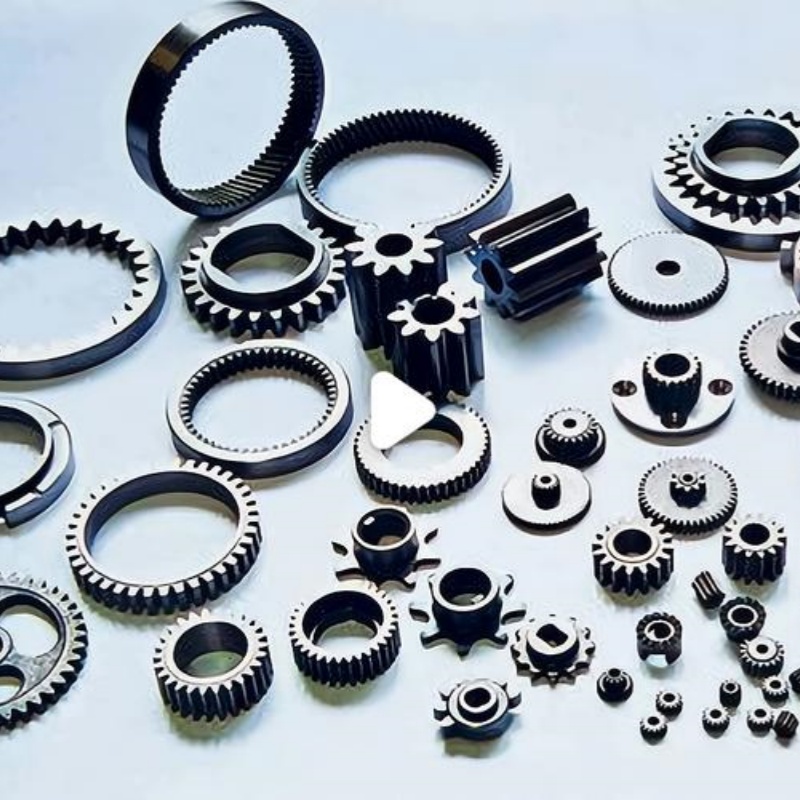
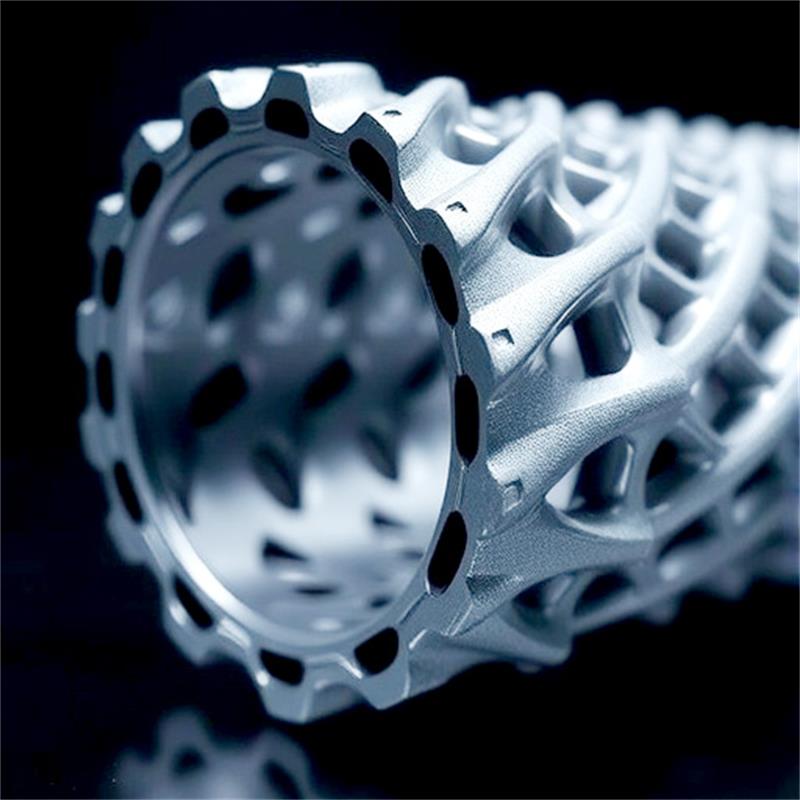
Additive manufacturing (3D printing) has significantly expanded titanium’s capabilities. Porous lattice structures can now be engineered to reduce effective stiffness while maintaining strength, allowing designers to tailor mechanical properties closer to bone while preserving the osseointegration advantages of titanium surfaces .
PEEK (Polyetheretherketone) in Medical Applications
What Is Medical-Grade PEEK?
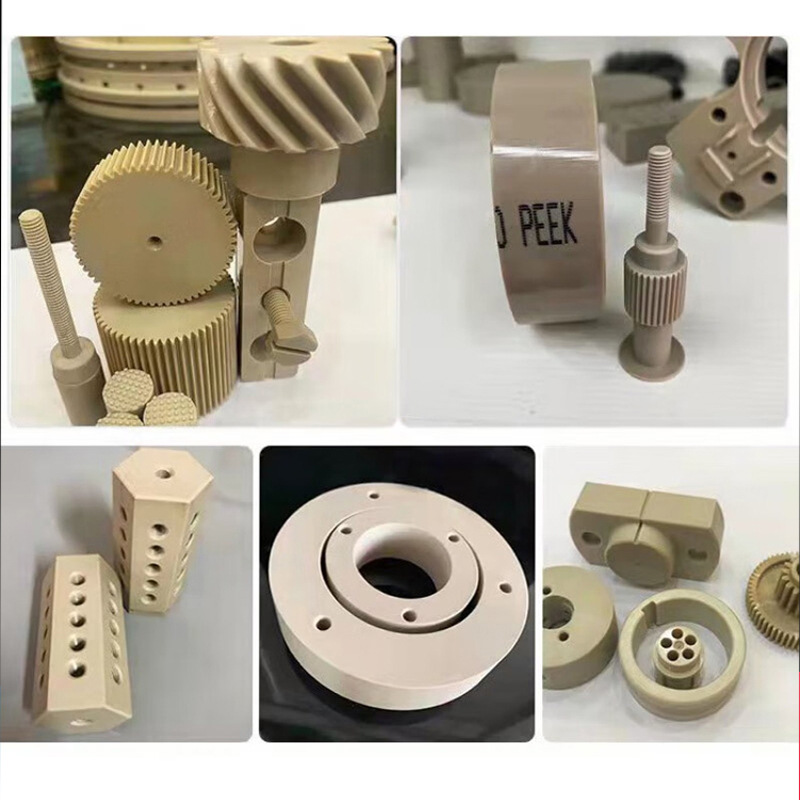
PEEK is a semi-crystalline, high-performance engineering thermoplastic that has gained substantial clinical acceptance since the 1990s. It belongs to the polyaryletherketone (PAEK) family and is distinguished by its excellent thermal stability, chemical resistance, and mechanical properties . Medical-grade PEEK is available in several formulations, including unfilled grades and composites reinforced with carbon fiber (CFR-PEEK) or other fillers.
Key Properties of PEEK
Biocompatibility and Chemical Stability: PEEK is chemically inert and does not release toxic degradation products. It has a long history of use in implantable devices with no evidence of carcinogenicity or mutagenicity . However, PEEK is biologically inert—it does not naturally promote bone attachment or osseointegration without surface modification .
Mechanical Performance: The elastic modulus of PEEK (approximately 3-4 GPa) is significantly closer to cortical bone than titanium, making it attractive for load-sharing applications . However, its compressive strength and overall mechanical strength are substantially lower than titanium, which limits its use in high-load applications .
Radiolucency: PEEK is radiolucent, meaning it does not obscure X-ray or CT imaging. This is a significant clinical advantage for postoperative assessment of bone healing and fusion, as the implant does not interfere with radiographic evaluation .
Sterilization Compatibility: PEEK withstands all common sterilization methods, including steam autoclave, ethylene oxide (EtO), and gamma radiation .
Advantages:
– Modulus of elasticity closely matches cortical bone
– Excellent chemical resistance and stability
– Radiolucent—permits clear radiographic imaging
– Compatible with all sterilization methods
– Low wear rate in articulation applications
Limitations:
– Biologically inert—requires surface treatments for osseointegration
– Lower strength compared to metal implants
– Creep and deformation under sustained loading
– Higher susceptibility to fatigue failure under high cyclic loads
– More expensive than many other engineering polymers
Applications of PEEK
– Spinal interbody fusion cages
– Dental abutments and implant components
– Orthopedic fixation devices (plates and screws)
– Surgical instrument components
– Chest wall reconstruction implants
– Craniofacial implants
PEEK vs. Titanium in Spinal Applications
The clinical comparison between titanium and PEEK in spinal fusion illustrates the material selection tradeoffs :
– Osseointegration: Titanium supports bone ongrowth and ingrowth, particularly with porous surface structures. PEEK does not promote bone attachment without surface coatings or treatments.
– Biomechanical Load Sharing: PEEK’s bone-like modulus reduces stress shielding potential. Titanium’s higher stiffness, particularly in solid designs, can alter load distribution.
– Imaging: PEEK permits clear radiographic assessment of fusion. Titanium can produce imaging artifacts, though modern 3D-printed designs and imaging protocols have mitigated this issue.
– Fusion Outcomes: Titanium demonstrates faster fusion progression in clinical studies, while PEEK may require longer fusion timelines .
PEEK Coatings and Composites
PEEK is frequently applied as a coating on titanium substrates to improve tribological (wear) performance while preserving the bulk mechanical properties of the metal. Studies on PEEK-Al₂O₃ composite coatings for titanium alloy have demonstrated superior wear resistance compared to uncoated titanium, attributed to the hard ceramic nanoparticles distributed within the polymer matrix . These coatings reduce the deformation and plowing effect characteristic of bare titanium alloy under friction .
Alumina (Al₂O₃) Ceramic in Medical Applications
What Is Medical-Grade Alumina Ceramic?
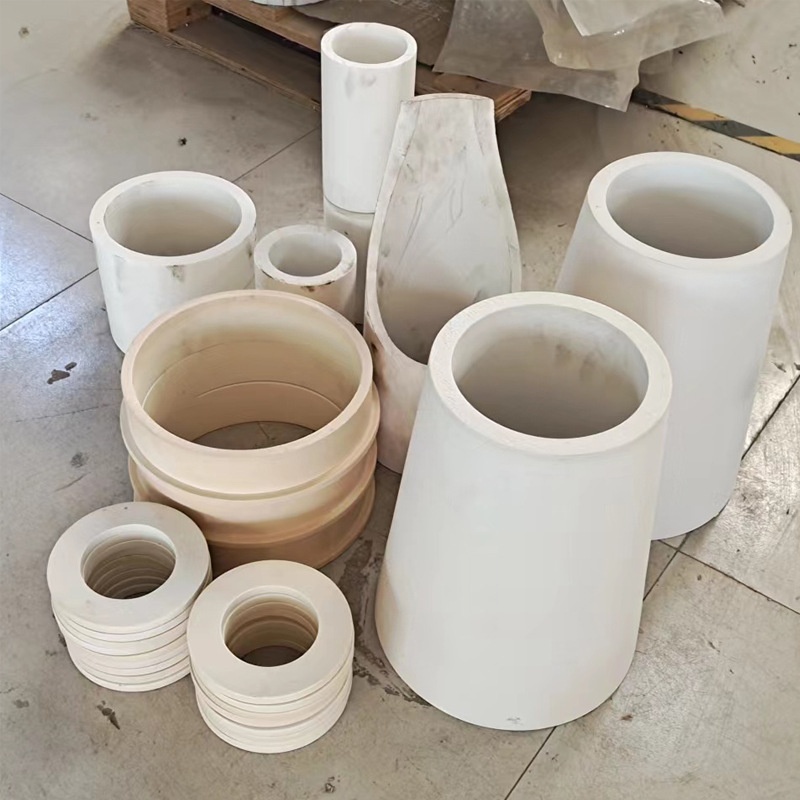
Alumina (aluminum oxide, Al₂O₃) is a bioinert ceramic material that has been used in orthopedic implants since the 1970s. Advanced manufacturing techniques, including hot isostatic pressing (HIP) and zirconia toughening, have substantially improved its mechanical reliability. High-purity, high-density alumina is the standard for ceramic bearing surfaces in hip and knee arthroplasty .
Key Properties of Alumina Ceramic
Wear Resistance: Alumina’s exceptional hardness (approximately 2000 HV) and low friction coefficient make it the material of choice for articulating surfaces. Alumina-on-alumina bearings achieve wear rates as low as 0.01 mm³ per million cycles, significantly outperforming metal-on-polyethylene bearing couples . Low wear debris generation is clinically critical, as particulate wear debris is a primary cause of osteolysis and aseptic loosening.
Biocompatibility and Bioinertness: Alumina is chemically stable and releases no toxic ions. Its hydrophilic surface reduces bacterial adhesion, lowering the risk of postoperative infections . Histological analyses confirm minimal foreign body reaction, with fibrous capsule formation limited to a thin, well-organized layer .
Mechanical Strength: Advanced alumina ceramics achieve flexural strengths exceeding 500 MPa and fracture toughness values of 4-6 MPa·m^1/2 . The material’s high elastic modulus (approximately 380 GPa) closely matches cortical bone, reducing stress shielding effects in load-bearing applications .
Radioopacity: Unlike PEEK, alumina is radioopaque and visible on radiographic imaging.
Advantages:
– Exceptional wear resistance—prolongs implant lifespan
– Low coefficient of friction
– Biologically inert—no toxic ion release
– Excellent corrosion resistance
– High compressive strength
– Reduced bacterial adhesion
Limitations:
– Brittle—susceptible to fracture under impact or high tensile loads
– Limited to specific geometries due to manufacturing constraints
– Requires precision manufacturing to control grain structure and porosity
– Higher manufacturing costs than metal or polymer alternatives
Applications of Alumina Ceramic
– Hip arthroplasty: femoral heads and acetabular liners
– Knee arthroplasty: femoral components
– Dental prosthetics: crowns and abutments
– Spinal fusion cages
– Tissue engineering scaffolds (porous structures)
Alumina in Tissue Engineering
Recent research has explored porous alumina scaffolds for bone tissue regeneration. Using ceramic stereolithography (SLA), alumina scaffolds with triply periodic minimal surface (TPMS) geometries such as Gyroid and Schwartz P structures have been fabricated with mechanical properties comparable to human trabecular bone (compressive strength of approximately 0.4 MPa) . These scaffolds demonstrate chemical stability in physiological environments and show potential for antimicrobial surface functionalization . Combination techniques, including reactive plasma sintering and sacrificial carbon templates, have also been investigated for producing porous alumina with controlled porosity and mechanical properties suitable for bone ingrowth .
Alumina in Hip Arthroplasty
Finite element analysis comparing titanium alloy stems with alumina ceramic femoral heads and PEEK coatings confirms that modern ceramic-on-polymer bearing combinations are viable for total hip arthroplasty . Ti6Al7Nb alloy stems with alumina heads and PEEK coatings demonstrated the lowest equivalent von-Mises stresses (265.12 MPa) and the highest factor of safety (2.29) among the combinations studied, with all combinations capable of surviving at least 10 million cycles . The PEEK coating further reduced stress-shielding effects compared to bare metal implants.
Material Comparison: Titanium, PEEK, and Alumina Ceramic
Mechanical Properties
– Elastic Modulus: Titanium 110 GPa; PEEK 3-4 GPa; Alumina 380 GPa
– Tensile Strength: Titanium high (795-860 MPa yield); PEEK moderate (90-100 MPa); Alumina high (500+ MPa flexural)
– Fracture Toughness: Titanium high; PEEK moderate-high; Alumina low-moderate (4-6 MPa·m^1/2)
– Wear Resistance: Titanium poor; PEEK good; Alumina excellent
– Fatigue Behavior: Titanium excellent; PEEK moderate; Alumina moderate (impact sensitive)
Biological Response
– Bone Integration: Titanium excellent (osseointegration); PEEK poor (biologically inert); Alumina good (bioinert)
– Biocompatibility: Titanium excellent; PEEK excellent; Alumina excellent
– Metal Ion Release: Titanium none (stable oxide layer); PEEK none; Alumina none
Clinical Considerations
– Imaging Compatibility: Titanium moderate (artifact possible); PEEK excellent (radiolucent); Alumina good (visible but no artifact)
– Sterilization Compatibility: Titanium excellent; PEEK excellent; Alumina excellent
– Manufacturing Flexibility: Titanium high (casting, machining, 3D printing); PEEK high (injection molding, machining, 3D printing); Alumina limited (sintering, specialized techniques)
Cost
– Titanium moderate-high; PEEK high; Alumina high
Industry Standards and Regulatory Considerations
Materials for implantable medical devices are subject to rigorous regulatory scrutiny. Key standards and frameworks include:
– ISO 10993 Series: Biological evaluation of medical devices. This risk-based framework evaluates biological safety based on intended use, contact type, and exposure duration rather than relying on generic material classifications .
– USP <87> and <88>: Biological reactivity tests for plastics. Recent updates have shifted away from the traditional Class I-VI classification system toward risk-based, application-specific evaluation .
– Sterilization Validation: Materials must be validated for compatibility with intended sterilization methods (EtO, gamma, steam). Compatibility data is essential for regulatory submission .
– Good Manufacturing Practices (GMP) and ISO 13485: Quality systems certification is increasingly expected for component suppliers, with manufacturing traceability and process validation requirements .
Design Considerations for Medical-Grade Materials
Material Selection Framework
– Define application requirements: load-bearing vs. non-load-bearing, articulating vs. static, implantable vs. external, intended contact duration
– Assess biomechanical demands: anticipated loads, number of cycles, and failure modes
– Evaluate biological requirements: osseointegration needed vs. bioinertness sufficient
– Consider sterilization method compatibility early in design
– Review regulatory documentation requirements
– Assess manufacturing compatibility: injection molding, machining, or additive manufacturing constraints
Surface Modification Strategies
– Titanium: Porous 3D-printed surfaces enhance osseointegration; coatings (e.g., PEEK) improve tribological performance
– PEEK: Surface treatments (titanium spray, roughening) or coatings to promote bone attachment
– Alumina: Surface texturing for enhanced osseointegration; hydroxyapatite or antimicrobial coatings for biological activity
Selection Guide
Selecting between titanium, PEEK, and alumina ceramic depends on the specific application requirements:
Choose Titanium Alloys When:
– High mechanical strength and fatigue resistance are required
– Osseointegration is desired (bone ingrowth/ongrowth)
– The application involves high cyclic loads
– MRI compatibility is required
– Complex geometries are needed (3D printing advantageous)
Choose PEEK When:
– Bone-like modulus is desired to minimize stress shielding
– Radiographic visualization of bone healing is critical
– The load is moderate to low
– The application is non-load-bearing or load-sharing only
– The implant is intended for temporary use
Choose Alumina Ceramic When:
– Exceptional wear resistance is required (articulating surfaces)
– The application involves compressive loading
– Low friction coefficient is critical
– Minimal wear debris generation is essential
– The geometry is compatible with ceramic manufacturing processes
Frequently Asked Questions
What does “medical grade” actually mean for these materials?
“Medical grade” is not a regulatory classification, but generally indicates that a material has documented biocompatibility testing (typically ISO 10993) and a history of use in medical devices . It does not guarantee suitability for any specific application—validation against the intended use and contact conditions is always required.
Which material has the best wear resistance for joint replacement applications?
Alumina ceramic demonstrates the best wear resistance among these three materials, with wear rates as low as 0.01 mm³ per million cycles for ceramic-on-ceramic bearings . Titanium has poor wear resistance and is generally not used for articulating surfaces without coatings.
How does PEEK’s modulus compare to bone and titanium?
PEEK’s elastic modulus (3-4 GPa) closely approximates cortical bone (15-20 GPa), while titanium’s modulus (110 GPa) significantly exceeds bone. This makes PEEK more favorable for load-sharing applications to reduce stress shielding .
Why is osseointegration important, and which materials support it?
Osseointegration is the direct structural and functional connection between living bone and the implant surface, critical for long-term implant stability. Titanium supports natural bone ongrowth and ingrowth, particularly with porous surfaces . PEEK is biologically inert and does not osseointegrate without surface modification, though surface treatments can improve performance . Alumina provides good bone integration due to its bioinert nature, though not as actively as porous titanium surfaces .
Can PEEK be used for load-bearing spinal implants?
Yes, PEEK is widely used for spinal interbody cages where load-sharing is the primary design consideration. However, for high-load applications or patients with compromised bone quality, titanium may be preferred due to its greater strength .
What are the failure modes for each material?
Titanium alloys are susceptible to wear and galling in articulating applications but have excellent fatigue resistance. PEEK can fail by creep, fatigue, or deformation under sustained high loads . Alumina ceramic can fail catastrophically by brittle fracture under impact or tensile overload, though modern processing has significantly reduced this risk .
Are there toxicity concerns with titanium alloys?
Ti6Al4V contains aluminum and vanadium, both of which have documented cytotoxic potential. While clinical experience confirms their safety in most applications, Ti6Al7Nb alloy offers a non-toxic alternative with comparable mechanical properties .
How do sterilization methods affect these materials?
All three materials are compatible with standard sterilization methods including steam autoclave, EtO, and gamma radiation. PEEK’s resistance to gamma radiation may require validation for high-dose applications .
What is the role of additive manufacturing for these materials?
Additive manufacturing (3D printing) enables production of porous titanium structures that promote osseointegration while reducing stiffness . PEEK is also 3D-printable for patient-specific implants . Alumina can be 3D-printed using ceramic stereolithography for tissue engineering scaffolds and custom implants .
How should I select between these materials for a new device?
The selection process should evaluate mechanical requirements, biological response needs, regulatory constraints, sterilization compatibility, manufacturing capabilities, and cost. No single material is universally superior—optimal selection depends on the specific clinical application and design requirements .
What testing is required to validate a material for medical use?
Materials must be validated against ISO 10993 for biological safety (cytotoxicity, sensitization, irritation, acute systemic toxicity, subchronic toxicity, genotoxicity, implantation, and hemocompatibility as applicable) . Mechanical testing, sterilization compatibility, and manufacturing process validation are also required. USP Class VI testing is less relied upon than in the past, with the regulatory trend moving toward risk-based, application-specific evaluation .
Is PEEK more expensive than titanium?
While material costs vary by grade and form, PEEK is generally less expensive than titanium on a per-unit basis for injection-molded or machined components. However, when considering total device cost, manufacturing, finishing, and sterilization method compatibility must be considered .

Titanium alloys, PEEK, and alumina ceramic represent three distinct material paradigms in medical device engineering—each with unique mechanical, biological, and clinical characteristics. Titanium remains the standard for load-bearing applications requiring osseointegration and long-term fatigue resistance. PEEK provides a bone-like modulus for load-sharing applications, particularly where radiographic visibility is critical. Alumina ceramic offers unparalleled wear resistance for articulating surfaces, such as hip and knee replacements, at the cost of inherent brittleness.
The selection process should be grounded in application-specific performance requirements, validated biocompatibility data, and regulatory strategy rather than generic “medical grade” claims. As manufacturing technologies advance—particularly additive manufacturing for titanium and PEEK and ceramic stereolithography for alumina—the design possibilities for each material continue to expand, enabling new device concepts and improved clinical outcomes.
Metals vs. Ceramics vs. Composites: Engineer’s Guide to Material Selection
Material Selection Guide for Corrosive Environments
Alloys vs. Ceramics vs. Polymers for High-Temperature Applications
 Comparative Analysis of Automotive Lightweighting Materials