
PEEK vs PI vs PPS vs LCP: Guide for Automotive Applications
The automotive industry’s relentless pursuit of lightweighting, fuel efficiency, and electrification has propelled high-performance engineering plastics into the spotlight. Materials like PEEK, PI, PPS, and LCP are no longer just alternatives to metal; they are enablers of next-generation powertrains, battery systems, and electronic architectures. This PEEK vs PI vs PPS vs LCP guide provides a comprehensive comparison to help engineers and procurement specialists navigate the complex landscape of these advanced polymers.
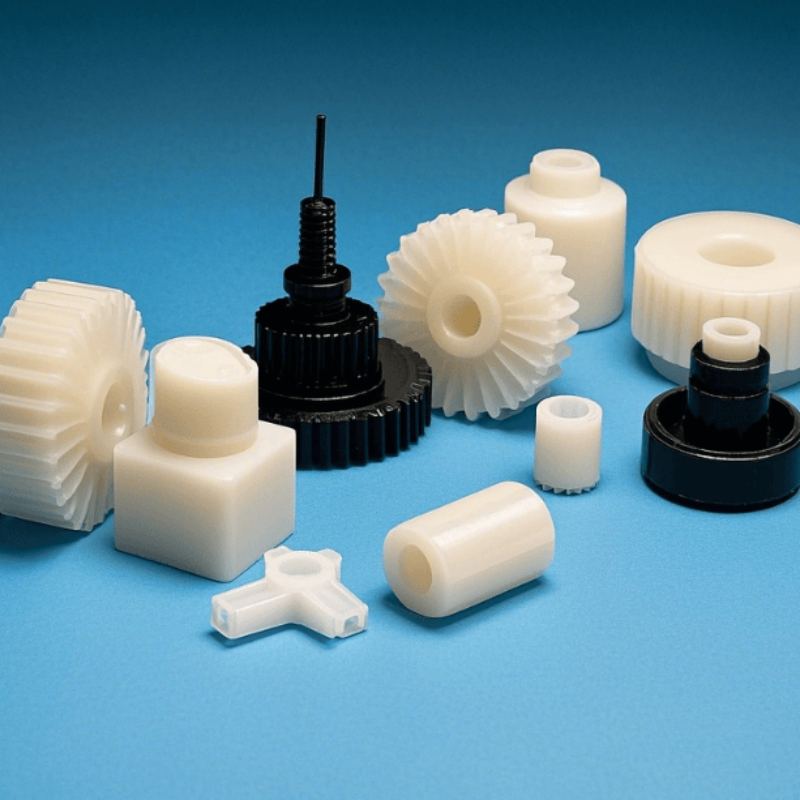
What are PEEK, PI, PPS, and LCP?
These four materials belong to the elite class of high-performance polymers, each with a distinct molecular structure that dictates its properties. PEEK (Polyether Ether Ketone) is a semi-crystalline thermoplastic known for its exceptional balance of mechanical strength, chemical resistance, and thermal stability, with a continuous service temperature up to 260°C. PI (Polyimide) , often thermosetting, is renowned for its unparalleled thermal stability, capable of withstanding temperatures exceeding 500°C in some grades, making it the material of choice for extreme heat. PPS (Polyphenylene Sulfide) is a high-performance crystalline polymer celebrated for its excellent dimensional stability and inherent flame retardancy, often serving as a cost-effective alternative to PEEK. LCP (Liquid Crystal Polymer) is a unique class of polymers whose rigid, rod-like molecules form highly ordered structures in the melt and solid state, offering exceptional flow characteristics and precise dimensional stability, ideal for miniaturized electronics.
Key Properties Comparison
When comparing PEEK vs PI vs PPS vs LCP, key performance metrics define their application boundaries.
Mechanical Properties: PEEK offers excellent tensile strength and fatigue resistance, making it suitable for structural components. PI generally provides the highest tensile strength and modulus among the four, but it can be brittle. PPS offers good strength and stiffness, especially when glass-filled, while LCP provides very high strength and modulus in the flow direction, though its properties are highly anisotropic.
Thermal Properties: In the PEEK vs PI vs PPS vs LCP debate, thermal performance is critical. PI leads with a glass transition temperature (Tg) as high as 374°C and decomposition temperatures above 500°C. PEEK has a Tg of 143°C and melts at 343°C, with a continuous use temperature of 260°C. PPS offers a heat deflection temperature (HDT) of around 220°C, while LCP can have an HDT of 230-240°C, making them suitable for high-temperature electronic applications.
Chemical Resistance: All four materials exhibit outstanding resistance to a wide range of chemicals, including automotive fluids, fuels, and solvents. PEEK and PPS are particularly noted for their broad chemical inertness, with PPS being essentially impervious to attack below 200°C. PI offers good chemical resistance, though it can be susceptible to hydrolysis at high temperatures.
Wear Resistance: PEEK’s inherent low coefficient of friction and excellent wear resistance make it a prime choice for bearings and seals. PPS also offers good wear resistance, often enhanced with fillers like PTFE or graphite.
Dimensional Stability: PPS and LCP are the leaders in dimensional stability. PPS has low molding shrinkage and a low coefficient of thermal expansion (CTE). LCP boasts an extremely low CTE (around 10×10⁻⁶/°C), which is comparable to metals like copper, making it ideal for high-precision, temperature-cycling applications.
Applications in Automotive
– PEEK: In electric vehicles, PEEK is used for drive system components such as bearing cages and gears. Its high strength-to-weight ratio and resistance to wear and high temperatures make it a top choice for lightweighting in critical applications.
– PI: PI’s exceptional heat resistance is utilized in high-temperature sensors, thermal insulators for battery packs, and flexible circuits. Thermoset PI is also found in high-performance motor components and transmission systems.
– PPS: PPS is the workhorse for many automotive electronic and mechanical systems, including motor insulation parts, fuel system components, sensor housings, and connectors. It offers an excellent balance of performance and cost, often being selected for EV battery components.
– LCP: LCP is the go-to material for miniaturized, high-density connectors, antenna frames, and 5G communication components. Its precise molding capabilities and high-frequency performance are invaluable in modern ADAS and infotainment systems.
Advantages
– PEEK: Exceptional combined performance, high-temperature operation, excellent wear and fatigue resistance, biocompatibility.
– PI: Highest thermal stability, outstanding creep resistance at high loads, excellent radiation resistance.
– PPS: Outstanding dimensional stability, inherent flame retardancy (UL94 V-0), superior chemical resistance.
– LCP: High-flow capability for thin-wall molding, very low moisture absorption, outstanding dimensional stability, excellent high-frequency electrical properties.
Limitations
– PEEK: High cost compared to other engineering plastics, processing temperature over 380°C requires specialized equipment, relatively poor UV resistance.
– PI: Generally high cost, can be brittle, processing can be complex, especially for thermosetting types, moisture absorption can be a concern for some grades.
– PPS: Can be brittle in unfilled grades, not suitable for use above 220°C, poor UV resistance.
– LCP: Highly anisotropic properties (strength and CTE vary with flow direction), can be brittle, high material cost limits use to niche components, weld line strength can be a design issue.
PEEK vs PPS vs LCP: A Detailed Comparison
Comparing PEEK vs PPS vs LCP often leads to the question of balancing performance and cost. PEEK is the undisputed king of performance, often chosen for safety-critical or mission-critical components where the cost of failure is high. For designers evaluating PEEK vs PPS for a specific application, the choice often depends on the temperature requirement. If the continuous operating temperature is below 200°C and chemical resistance is paramount, PPS is a highly cost-effective workhorse. However, if the application demands continuous service near 260°C, such as in turbocharger components, PEEK is the only suitable choice.
Similarly, when considering PPS vs LCP, designers must prioritize either dimensional precision or chemical/thermal resistance. LCP’s superior flow and low CTE make it the undisputed champion for thin-wall, high-precision connectors and high-frequency 5G components. Conversely, PPS offers a better balance of chemical resistance, thermal stability, and cost for applications like battery housings and motor insulation, where part geometry is less critical. PI, while offering the highest thermal ceiling, is typically reserved for the most extreme environments where other materials fail.
Selection Guide for Automotive Engineers
Choosing between PEEK, PI, PPS, and LCP requires a systematic evaluation of application requirements:
– Operating Temperature: For continuous use above 260°C, PI is the only viable option. For up to 260°C, PEEK is the primary choice. For temperatures below 220°C, both PPS and LCP are suitable.
– Chemical Environment: All four provide excellent resistance to automotive fluids. PPS and PEEK are preferred for the harshest chemical exposure. PI can be susceptible to hydrolysis in hot water/steam.
– Mechanical Load: PEEK and PI offer the highest strength and creep resistance for structural and high-load applications.
– Part Geometry: For thin-wall, complex, miniature parts, LCP’s high fluidity is unmatched. PPS and PEEK are suitable for more conventional injection-molded components.
– Dimensional Precision: LCP and PPS are ideal for parts requiring high dimensional stability and tight tolerances.
– Electrical Insulation: All four are excellent electrical insulators. LCP offers the best high-frequency dielectric properties (low Dk/Df) for 5G and ADAS components.
– Regulatory Compliance: For medical components, PEEK is often preferred for its biocompatibility (USP Class VI). For general automotive electronics, RoHS and REACH compliance is standard for all. UL94 V-0 flame retardancy is inherent to PPS, and all can be formulated to meet this requirement.
Frequently Asked Questions
What is the main difference between PEEK and PPS?
The main difference is their thermal capability. PEEK can be used continuously at 260°C, while PPS is generally limited to about 200°C. PEEK also offers higher mechanical strength and toughness, but this comes at a significantly higher cost (10-20 times more than standard plastics), whereas PPS provides an excellent balance of properties at a more moderate price point.
What is the difference between PPS and LCP?
PPS and LCP differ in their molecular structure and resulting behavior. LCP’s rigid molecules provide exceptionally high flow for molding thin walls and a very low coefficient of thermal expansion. PPS, while highly stable, does not flow as well and its properties are less anisotropic. LCP is preferred for miniature, high-precision electronic components, while PPS is better for larger, more structural parts requiring chemical resistance.
What is the difference between PEEK and LCP?
While both are high-performance, PEEK is a tough, flexible, and robust material with superior wear resistance, making it suitable for moving parts. LCP is stiffer, more brittle, and offers superior flow for molding complex, thin-walled parts. PEEK is used for mechanical components, whereas LCP is used for precise electronic and high-frequency parts.
What is the difference between PEEK and PI?
PI offers the highest thermal stability, with some grades usable above 300°C, while PEEK is limited to 260°C. PI, especially thermoset PI, can be more brittle and harder to process than PEEK. PEEK is often favored for its balance of properties, toughness, and melt-processability, whereas PI is chosen for extreme temperature applications where nothing else will survive.
Can PEEK replace metal?
Yes, PEEK is widely used to replace metal due to its high strength-to-weight ratio, excellent wear resistance, and corrosion resistance. It offers weight savings of up to 70% compared to metal, which is critical for fuel efficiency and electric vehicle range, while providing comparable strength and stiffness in many applications, such as gear components and bearing cages.
Is PPS chemically resistant?
PPS is exceptionally chemically resistant, often considered the best among engineering thermoplastics. It is virtually impervious to attack from automotive fluids, fuels, solvents, and acids at temperatures below 200°C. This makes it an ideal choice for under-the-hood applications and fuel system components where exposure to aggressive chemicals is constant.
Where to buy PEEK, PI, PPS, or LCP?
These materials are available through specialized distributors and manufacturers. Companies like Nytex offer a range of high-temperature materials including PEEK and PPS. For sourcing, consider working directly with manufacturers or authorized suppliers that can provide technical datasheets, application support, and custom part fabrication services.
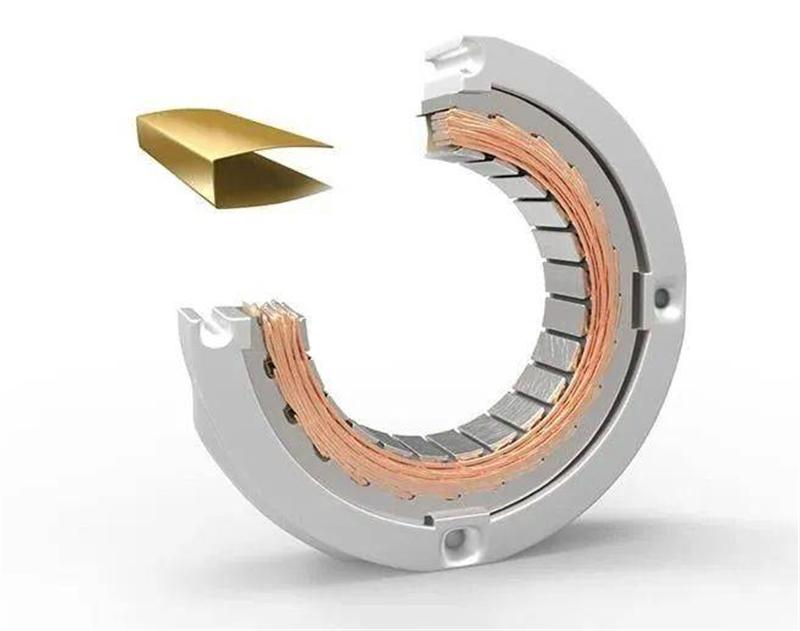
For automotive engineers and procurement specialists, the choice between PEEK, PI, PPS, and LCP is a critical decision that impacts performance, cost, and reliability. This PEEK vs PI vs PPS vs LCP analysis shows that PEEK serves as the “king of performance,” offering an unmatched balance for mission-critical applications. PI provides the ultimate thermal ceiling for extreme environments. PPS acts as the “cost-effective workhorse,” and LCP enables the “miniaturization of electronics.” The correct selection is not about which material is “best,” but which one aligns with the specific balance of performance, processability, and budget required for your next-generation automotive design.
 Carbon Fiber vs Glass Fiber Composites
 The Influence of Fiber Orientation on the Mechanical Performance of Composite Laminates
 The Multifunctionality of Polymer Composites
 Thermoplastic vs. Thermoset Composites