
Analysis of Aluminum Oxide Purity Issues—FAQ
In the global fields of advanced manufacturing and new materials, aluminum oxide (Al₂O₃) has become an indispensable base material due to its exceptional hardness, wear resistance, electrical insulation, and chemical stability. However, for engineers and procurement professionals, “alumina” is not a single, uniform category. Its intrinsic “genetic makeup”—chemical purity—directly determines the material’s ultimate performance in high-end sectors such as semiconductors, electronics, and healthcare. This article provides an in-depth analysis of alumina purity to assist with precise product selection and supply chain optimization.
Defining Applications: Purity Determines Application Limits
In industrial applications, the purity of alumina is typically expressed as the mass percentage of Al₂O₃. The application limits for alumina of different purity grades vary significantly:
General Industrial Grade (94%–99%): Primarily meets basic industrial needs, such as ordinary refractory materials, basic abrasives, and conventional wear-resistant components.
Advanced Ceramic Grade (99.5%–99.8%): Widely used in high-frequency circuit substrates, electronic packaging, artificial joints, and high-end cutting tools. This purity level effectively controls the glass phase at grain boundaries, enhancing mechanical strength and insulation properties.
High-purity/ultra-high-purity grade (≥99.99%, i.e., 4N and above): This serves as a key raw material for numerous cutting-edge technology fields. 5N-grade (99.999%) products are the core foundation for precision ceramic components in semiconductor equipment, sapphire crystals, lithium-ion battery separator coatings, transparent ceramics, and PDP phosphors.
Purity Standard Classification: Trace Impurities That Cannot Be Overlooked
In the realm of high-purity alumina at 4N and above, it is often not the 99.99% alumina that determines material performance, but rather the trace impurities comprising less than 0.01%. The industry typically controls impurity levels to the ppm (parts per million) or even ppb (parts per billion) level.
Sodium (Na₂O)—The “Invisible Killer” of Electrical Properties: Sodium ions migrate extremely easily under electric fields and at high temperatures, leading to ionic conductivity and significantly reducing volume resistivity. In semiconductor electrostatic chuck (ESC) applications, reducing the Na₂O content from 500 ppm to 50 ppm can improve the material’s resistivity at high temperatures by several orders of magnitude.
Iron (Fe₂O₃)—The “Colorist” of Optics and Appearance: Iron impurities are the primary coloring agents; even at a concentration as low as 0.01%, they cause sintered transparent ceramics to turn black or dark, severely affecting optical transmittance and the performance of luminescent materials.
Silicon (SiO₂) and Calcium (CaO)—“Disturbing Factors” in Microstructure: Excessive silicon and calcium impurities form low-melting-point glass phases at grain boundaries, which not only reduce the material’s creep resistance at high temperatures but also trigger abnormal grain growth during sintering, compromising the material’s density.
Factors Affecting Purity: Systemic Challenges from Raw Materials to Equipment
Achieving and maintaining high purity is a systematic endeavor; any oversight at any stage can undo all previous efforts:
Raw Material and Processing Contamination: In the traditional hydrolysis of metallic aluminum, when aluminum ingots are processed into aluminum foil or powder, wear on metal cutting tools introduces metallic impurities such as iron and nickel directly into the system. Once these inorganic impurities are introduced, they are extremely difficult to remove through conventional filtration or membrane separation, thereby limiting the achievable purity at the source.
Sintering and Heat Treatment Environments: High-temperature sintering is a critical step for purification and phase transformation. If the sintering furnace is not cleaned regularly or the temperature control curve is improperly designed, it will not only result in incomplete phase transformation but may also introduce contamination from the external environment.
Powder Dispersion and Agglomeration: High purity does not necessarily equate to high performance. If powder particles are severely agglomerated, even raw materials with a purity of 99.99% cannot be used to produce qualified products with a uniform microstructure. Particle dispersion, microstructure (e.g., spherical or flake-like), and sintering activity are the core technical challenges limiting the application of high-purity alumina.
Methods for Improving Purity: Process Innovation and Precision Testing
To overcome the purity bottleneck, leading global suppliers are upgrading their technologies in the following areas:
Advanced Synthesis Processes: Abandoning the highly polluting traditional thermal decomposition of ammonium aluminum sulfate, the alcohol-aluminum method (alcoholate hydrolysis) is now widely adopted. This method utilizes the reaction between high-purity metallic aluminum and alcohols; the alcohol-aluminum liquid is purified through distillation to remove impurities from the heads and tails fractions. Combined with ceramic membrane separation technology, it enables the stable production of 5N-grade ultra-high-purity alumina.
Raw Material Substitution and Domestic Production of Equipment: Efforts are underway to explore the use of refined industrial-grade aluminum sources as substitutes for expensive high-purity aluminum alcoholates, significantly reducing raw material costs. At the same time, the domestic production of key equipment—such as air-jet mills and sand mills—and the adoption of continuous calcination processes are being promoted, which enhance production efficiency while reducing both human-induced and equipment-related contamination.
Surface Modification and Composite Formulation: For specific applications (such as solid-state batteries), surface modification of the powder is achieved by adding specialized coupling agents, or by developing composite powders such as Al₂O₃/LLZO, to enhance the powder’s dispersibility and compatibility in polymer systems without compromising purity.
Scientific Purity Testing: The purity of high-purity alumina is not measured directly but is derived by “100% minus the total amount of all impurities.” Therefore, it is essential to employ high-precision testing methods, such as Inductively Coupled Plasma Optical Emission Spectroscopy (ICP-OES) with detection limits at the ppm/ppb level, to ensure that every Certificate of Analysis (CoA) is scientifically sound.
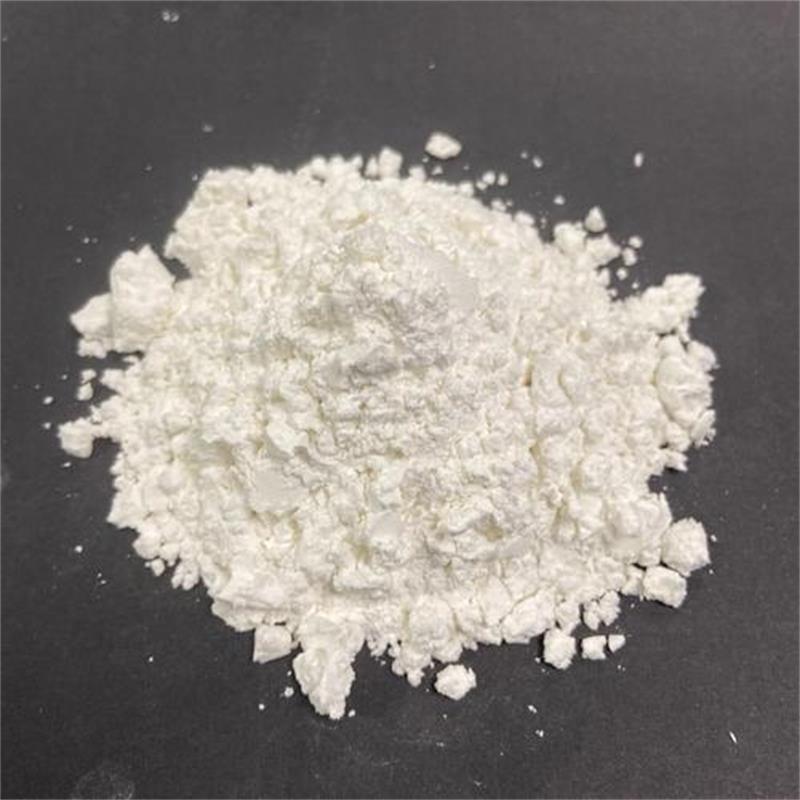
For engineers and procurement professionals, understanding the issue of alumina purity is the key to selecting high-end materials. When procuring materials, do not focus solely on the generic term “alumina.” Instead, clearly define the application’s tolerance for key impurities such as Na, Fe, and Si, require suppliers to provide detailed CoA reports, and evaluate their manufacturing processes and testing capabilities. Only by precisely matching the material’s “inherent properties” with the demanding external application conditions can the exceptional performance and reliability of the final product be ensured.
 What Is Polyimide (PI)
What Is Polyphenylene Sulfide (PPS)
What Is Polyimide (PI)
What Is Polyphenylene Sulfide (PPS)
 What is PEEK-for Engineers and Buyers
 Application Scope of Zirconia Ceramic Structural Components